


Plangud: What the Word Really Means
- September 20, 2026
- 0
Some search terms look as though they must be the name of a company, a product, or a newly invented digital concept. Plangud is one of those words.
Some search terms look as though they must be the name of a company, a product, or a newly invented digital concept. Plangud is one of those words.
Some search terms look as though they must be the name of a company, a product, or a newly invented digital concept. Plangud is one of those words. Its unfamiliar appearance can make it seem like a brand, username, website, or specialized technical term, especially to someone encountering it outside its original language.
The reality is much more grounded.
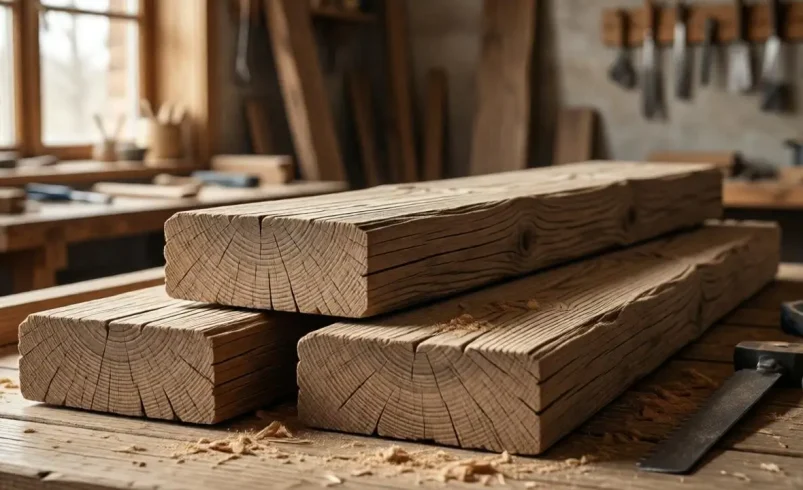
Plangud is an Estonian word associated with wooden planks or boards. In its natural context, it belongs to the vocabulary of timber, construction, woodworking, furniture, and other activities where boards are used as physical materials. It is not, in its original linguistic sense, the name of one particular product or company.
That straightforward meaning becomes less obvious once the word starts appearing in English-language online content. The distinctive spelling makes Plangud memorable, and memorable words can quickly take on new identities when they are used for websites, projects, digital publications, or branding.
This creates a useful distinction for anyone searching the term. There is the established meaning of plangud as an Estonian word, and there are newer uses of the same spelling in online contexts. Those uses should not automatically be treated as though they describe the same thing.
Understanding that difference makes the keyword much easier to interpret.
| Fact | Details |
|---|---|
| Name | Plangud |
| Type | Estonian word |
| Basic Meaning | Planks or wooden boards |
| Language | Estonian |
| Singular Related Form | Plank |
| General Context | Timber, woodworking, construction and materials |
| Material Association | Wood |
| Common Uses | Building, furniture, woodworking, outdoor structures and related projects |
| Brand Status | The word may also be used as a modern online name or brand |
| Geographic Association | Estonia |
| Original Meaning | Wooden planks or boards |
| Current Online Usage | May appear in linguistic, timber, construction and digital contexts |
| Person Associated With the Term | Not publicly available |
| Founder | Not publicly available |
When an unfamiliar word appears online, it is tempting to assume that it was invented for a modern brand.
Plangud certainly looks unusual to English-speaking readers.
The combination of letters does not resemble an ordinary English plural. It has a distinctly European appearance, and without knowing Estonian, it is difficult to guess what it means from the spelling alone.
That unfamiliarity is precisely what makes the term interesting.
In Estonian, the word belongs to the vocabulary used to describe wooden boards or planks. It therefore has a practical, physical meaning rather than an abstract digital one.
The simplest English interpretation is “planks” or “boards.”
Once that is understood, many of the places where the word can naturally appear begin to make sense.
A timber supplier can use the word when discussing boards.
A carpenter may encounter it while describing material.
A construction project can involve planks.
Furniture makers can work with the material.
Outdoor structures can require wooden boards.
Even cooking can enter the picture when wooden grilling or smoking boards are involved.
The word itself is not tied to one specific object or one particular design.
Its meaning comes from context.
At its core, Plangud is a plural form associated with plank, the Estonian word referring to a plank or board.
That makes the word fundamentally different from a brand name.
A brand normally points toward a particular business, service, product line, or organization. A common material word does not work that way.
English provides plenty of similar examples.
“Boards” can refer to wooden boards without identifying one manufacturer.
“Bricks” can describe construction material without referring to one company.
“Tiles” can describe a category of building products rather than a specific brand.
Plangud functions in a similar linguistic space.
It describes a type of material.
That is why context matters so much when interpreting it.
If the surrounding words concern timber, sawmills, furniture, buildings, flooring, woodworking, or construction, the material meaning is the natural interpretation.
If the same spelling appears as the title of a website, however, it may be functioning as a proper name rather than as an ordinary Estonian noun.
The spelling stays the same.
The meaning changes with the setting.
A plank sounds like one of the simplest materials in construction.
In reality, wooden boards have been useful for an enormous variety of purposes because wood can be cut, shaped, joined, finished, painted, treated, and adapted to different environments.
A board can become part of a wall, floor, roof structure, piece of furniture, fence, deck, shelf, workbench, garden structure, or decorative feature.
The exact role depends on the species of wood, dimensions, moisture content, surface finish, strength, and intended environment.
This is why the word Plangud can appear across several industries.
A carpenter and a construction worker may both use the same basic material while requiring very different specifications.
A furniture maker might care more about appearance, grain pattern, stability, and finish.
A builder may focus heavily on dimensions, strength, moisture resistance, and structural suitability.
A homeowner may simply want attractive boards for a garden project.
The word identifies the general material category, but it does not tell you everything about the particular boards.
That information comes from the surrounding description.
One of the easiest misunderstandings is to treat a word describing raw material as though it automatically describes a finished product.
A plank is a basic material.
What someone makes from that plank is another matter.
A wooden board can be processed into furniture, flooring, wall panels, shelving, outdoor structures, or decorative pieces. The finished object may have a completely different purpose from the original timber.
This distinction is important when searching for Plangud-related products.
If a listing uses the term, the buyer still needs to examine the specifications.
What kind of wood is being used?
How thick are the boards?
How wide are they?
What is their length?
Are they rough-sawn or finished?
Have they been dried?
Are they treated?
Are they intended for indoor or outdoor use?
These questions are far more useful than assuming that every product described with a similar word is identical.
The word establishes the basic category.
The specifications establish the actual product.
Wooden planks remain useful in construction because they combine relatively low weight with workability and strength.
The exact role of a board depends on the construction method.
Boards can serve structural purposes in some projects, while in others they may be primarily decorative or protective. They can also be used for temporary structures, platforms, fencing, framing-related work, or finishing.
However, not every plank is suitable for every construction task.
A board designed for decorative use should not automatically be treated as structural timber. Likewise, a piece of untreated wood may not be appropriate for prolonged outdoor exposure.
This is where the seemingly simple word Plangud becomes connected to a much larger world of material selection.
Wood is not one uniform substance.
Different species behave differently.
Different drying methods produce different results.
Different cuts can affect stability.
Moisture can cause expansion and contraction.
Surface treatment can influence durability.
And dimensions can determine whether a board is appropriate for a particular application.
The word may be simple, but the material it describes is anything but simplistic.
A search for Plangud may tell you what category of material you are looking at, but it cannot tell you whether a particular board is high quality.
Quality depends on details.
One of the most important is moisture.
Wood naturally interacts with its environment. Changes in moisture can cause boards to expand, contract, bend, or develop other forms of movement. Proper drying and storage therefore matter greatly when boards are being prepared for construction or furniture.
Grain is another consideration.
The appearance and direction of grain can affect how a piece looks and, depending on the application, how it behaves when cut or worked.
Knots and other natural characteristics are also important.
Some projects welcome visible knots because they contribute to a rustic appearance. Others require cleaner boards with fewer imperfections.
There is no universal definition of the “best” plank.
The appropriate board is the one that fits the purpose.
That is a useful principle to remember whenever Plangud appears in a product or timber-related context.
The journey of a wooden plank can be surprisingly long.
A tree begins as a living organism with a particular species, age, growth pattern, and environment. Once harvested and processed, its wood can be sawn into boards of different dimensions.
Those boards may then be dried, sorted, graded, transported, stored, sold, and eventually transformed into something useful.
A workshop may take a rough board and turn it into a table.
A builder may incorporate boards into a larger structure.
A craftsman may use selected pieces for a decorative project.
A homeowner may buy several boards for an outdoor renovation.
In each case, the original material is essentially the same category of object.
The final result is not.
That transformation is part of what makes woodworking so interesting. A simple plank can become something highly specialized once a skilled person begins cutting, joining, shaping, and finishing it.
Furniture is another area where wooden boards become particularly versatile.
Tables, benches, shelves, cabinets, worktops, beds, desks, and storage structures can all incorporate boards in different ways.
For furniture makers, appearance can be almost as important as physical properties.
Wood grain can become a central visual feature.
A long board with an attractive natural pattern may be used as a prominent tabletop. Smaller pieces can be joined together to create wider surfaces. Boards may also be planed, sanded, stained, painted, or coated to create a particular appearance.
This means that a term such as Plangud does not necessarily tell a furniture buyer exactly what they are getting.
The species and finish remain important.
Pine, oak, spruce, ash, birch, and other woods can produce very different results.
Even two boards made from the same species can look different because natural timber is not perfectly uniform.
That variation is one of the characteristics that separates real wood from many manufactured materials.
Outdoor projects create another set of requirements.
A board placed inside a dry room and a board exposed to rain, sunlight, temperature changes, and humidity face very different conditions.
Decking, fencing, garden structures, benches, sheds, raised platforms, and exterior decorative features all require some consideration of environmental exposure.
Wood may need suitable treatment or finishing depending on the application.
Storage also matters before installation.
Boards left exposed to poor conditions can absorb moisture unevenly, potentially affecting their shape and performance.
For anyone encountering Plangud in an outdoor-material context, the important question is therefore not simply whether the material is wood.
It is whether the particular wood and treatment are suitable for the intended environment.
That is a much more useful way to think about the term.
This is where Plangud becomes especially interesting in the online world.
Languages do not exist separately from the internet.
Words can be borrowed, repurposed, abbreviated, translated, branded, and transformed.
A distinctive foreign word can become attractive to someone creating a website because it looks memorable and is less likely to resemble a common English phrase.
Plangud has exactly the kind of visual identity that can attract this treatment.
It is short.
It is unusual to English readers.
It is easy to distinguish from generic terms.
And it already carries a real meaning in another language.
That creates an unusual situation.
A person searching for Plangud may be looking for the Estonian word.
Someone else may be looking for a website using Plangud as its name.
Another person may have encountered the term in a discussion about timber.
The search term is identical.
The intent is not.
There are now online uses of the Plangud name that move beyond its original material meaning.
A website or digital project can adopt almost any distinctive word as a brand.
When that happens, the name becomes a proper identity within that particular digital environment.
This does not erase the original linguistic meaning.
It simply creates another layer.
The same phenomenon happens constantly on the internet.
An ordinary word can become a company name.
A geographical name can become a website.
A foreign-language word can become a product identity.
A common noun can become a username.
Plangud fits comfortably into this broader pattern.
That is why it would be misleading to insist that every modern online use of the term must refer to wooden planks.
At the same time, it would be equally misleading to treat every use of the word as though it were a digital brand.
The surrounding context remains the deciding factor.
Fortunately, distinguishing the meanings is usually straightforward.
Look at the words surrounding Plangud.
If the text includes terms such as timber, wood, boards, sawmill, furniture, construction, carpentry, decking, flooring, or building materials, the Estonian material meaning is likely.
If the page includes words such as website, platform, digital, account, publishing, brand, services, or online content, the term may be functioning as a website or brand name.
The domain itself is another major clue.
A word appearing inside an Estonian-language timber listing should not be interpreted in the same way as the same word appearing in the title of an English-language website.
Context resolves much of the apparent mystery.
This is particularly important for searchers because search engines do not always understand exactly what a user intends. A short, unusual keyword can bring together results from completely unrelated contexts.
The reader has to separate them.
Plangud demonstrates how the internet can turn a simple word into a complicated search experience.
The original meaning is straightforward.
The online environment is not.
Once multiple websites begin using the same spelling, the search results can blend linguistic information, product descriptions, branding, digital publishing, and explanatory articles.
Someone who sees those results for the first time may assume that all of them are describing one subject.
They are not necessarily doing so.
The safest approach is to begin with the oldest and most concrete meaning that can be established, then examine how newer contexts use the term.
That creates a much clearer picture.
In this case, the material meaning provides the foundation.
The digital uses are additional interpretations rather than replacements for the original word.
A word describing planks does not tell you the type of wood.
It does not tell you the dimensions.
It does not tell you the quality.
It does not tell you whether the boards are treated.
It does not tell you whether they are suitable for furniture or structural construction.
It does not tell you whether they are intended for indoor or outdoor use.
And it certainly does not identify one particular manufacturer.
Those details must come from the product description or material specifications.
This may sound obvious, but it is an important distinction when unfamiliar foreign words appear in commercial listings.
A buyer may recognize a term and assume they understand the entire product.
Recognition is not specification.
A good purchase decision requires the details behind the word.
Wood also brings environmental questions into the discussion.
Timber is a renewable material when forests are responsibly managed, but “wood” alone does not tell you how sustainably a particular product was sourced.
Responsible forestry, harvesting practices, transportation, processing, durability, and eventual disposal or reuse all affect the broader environmental picture.
Long-lasting wooden products can have an advantage because a durable object may remain useful for many years.
Repairability can also matter.
A solid wooden table, for example, may be sanded, repaired, refinished, or modified rather than immediately discarded.
The environmental story of timber is therefore more complicated than simply calling wood either “green” or “bad.”
The source and lifecycle matter.
For buyers looking at products described with the Plangud term, sustainability questions should therefore focus on the actual timber rather than on the word itself.
The most useful way to approach Plangud is to treat it as a contextual term.
In language, it provides a way of referring to planks.
In construction, it can be associated with boards used as building materials.
In woodworking, it can appear alongside discussions of cutting, shaping, finishing, and joining timber.
In furniture, it can describe the raw material before it becomes a finished object.
Online, it can also function as a distinctive name.
None of these interpretations needs to cancel out the others.
They simply belong to different contexts.
That is why a good explanation of Plangud should resist the temptation to give the word one artificial definition and stop there.
The interesting part is precisely the way a single unusual spelling can move between language, material culture, commerce, and the modern internet.
There is something almost deceptively simple about a plank.
It is a piece of wood with relatively straight edges and a usable surface.
Yet that simplicity has allowed wooden boards to remain relevant across centuries of construction and craftsmanship.
They are easy to work with compared with many harder materials.
They can be cut using common tools.
They can be joined in countless ways.
They can be repaired.
They can be refinished.
They can be left natural or dramatically altered through paint, stain, oil, varnish, or other finishes.
Their appearance can also provide warmth that manufactured materials often attempt to imitate.
That combination of practicality and visual character explains why wooden boards continue to appear in homes, workshops, gardens, buildings, and furniture.
The Estonian word Plangud ultimately points toward that very ordinary but remarkably versatile material world.
A person searching Plangud may begin with a single question:
“What does this word mean?”
But answering that question opens several others.
Where does the word come from?
What does it describe?
How is it used?
Why does it appear in construction and woodworking?
Why does the same spelling appear online?
Is every website using the term referring to the same thing?
Those questions are useful because they move beyond a dictionary-style translation.
Knowing that Plangud relates to planks is the starting point.
Understanding the context in which planks are produced, sold, processed, and used provides the larger picture.
And recognizing the difference between the original Estonian word and modern digital uses prevents one of the most common problems with unfamiliar keywords: confusing a word with every identity that later adopts it.
Plangud is an Estonian word associated with wooden planks or boards. In ordinary material-related contexts, it refers to planks rather than a specific brand or individual product. The precise characteristics of the boards depend on the surrounding description, including their type of wood, size, finish, and intended use.
Yes. Plangud belongs to Estonian vocabulary and is associated with the plural idea of planks or boards. The word can therefore appear naturally in discussions involving timber, woodworking, construction, furniture, and other uses of wooden boards.
There is no established basis for treating Plangud primarily as the name of a public person. The strongest identifiable meaning is linguistic and material-related. If the word appears as part of an online identity or username, that would represent a separate use rather than evidence that Plangud is inherently a person’s name.
Plangud can be used as a modern digital name or brand, but that does not replace its original linguistic meaning. When the word appears as the name of a website or online project, the specific site should be considered separately from the Estonian word.
In its timber-related meaning, planks can be used for many purposes, including furniture, construction, shelving, flooring-related projects, fencing, decking, garden structures, decorative work, and other woodworking applications. The suitability of a particular board depends on its material properties and intended purpose.
No. Context matters. In an Estonian timber context, Plangud refers to wooden planks or boards. Online, the same spelling may also be adopted as a website, brand, project, or digital identity. Looking at the surrounding words usually makes the intended meaning clear.
No. The word itself does not establish a particular species of timber. It describes the board or plank category. Details such as pine, spruce, oak, birch, or another species would need to come from the specific material description.
Yes, in its material sense the word is naturally relevant to construction because wooden planks are widely used in building and finishing work. However, a particular board should only be used for a specific construction purpose when its dimensions, strength, treatment, and other properties are appropriate.
The unusual spelling makes the term distinctive, while its use in both language-related and modern online contexts can produce varied search results. People may search for the meaning of the Estonian word, investigate timber-related uses, or look for a website or brand using the same name.
Plangud is a good example of how a seemingly mysterious keyword can become much easier to understand once context is restored.
At first glance, it looks like a modern invented name. Searchers unfamiliar with Estonian may reasonably assume that it refers to a person, company, software product, or online platform.
Its original meaning is much simpler.
Plangud is associated with wooden planks or boards, placing it within the everyday vocabulary of timber and woodworking. That meaning connects the word to a remarkably broad physical world: construction, furniture, craftsmanship, outdoor structures, home projects, and countless other uses of wood.
The internet adds another layer.
Because distinctive words can become attractive names for websites and digital projects, Plangud can now appear in contexts that have little to do with timber. That does not make the original meaning obsolete. It simply demonstrates how language can travel into new environments.
For anyone searching the term, the most useful lesson is therefore to pause before assuming that every result refers to the same thing.
Look at the language.
Look at the surrounding words.
Look at the website or publication using the term.
Look at the product description if the word appears in a commercial setting.
Those small checks can turn a confusing search into a straightforward one.
In the end, the story of Plangud is less about a mysterious new concept and more about the flexibility of words. A term that has a practical meaning in one language can acquire new identities online, while its original meaning remains perfectly ordinary.
That combination is what makes Plangud worth understanding. Beneath the unfamiliar spelling is a simple reference to planks and boards, while around it sits a much newer digital world that has given the same word additional lives.
For More Visits: Worldmagazine