

How to Use Immorpos35.3 Software: Beginner’s Guide
- November 8, 2026
- 0
Finding an unfamiliar software name can leave beginners with several questions. They may want to know what the application does, where to download it, whether it works on
Finding an unfamiliar software name can leave beginners with several questions. They may want to know what the application does, where to download it, whether it works on
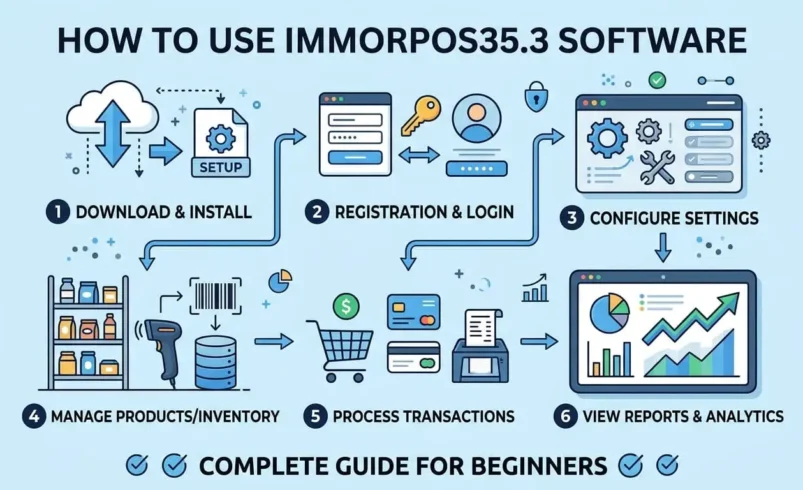
Finding an unfamiliar software name can leave beginners with several questions. They may want to know what the application does, where to download it, whether it works on their computer, and how to start using it without creating unnecessary problems. These questions are particularly important when the available instructions are incomplete or do not clearly identify the application’s publisher.
People searching for how to use Immorpos35.3 software may expect a straightforward installation tutorial followed by an explanation of its features. However, understanding the actual application should come before following any instructions. The name Immorpos35.3 does not have a sufficiently established public technical identity, verified developer, or consistent official manual to support a definitive description of its functions.
That does not mean someone researching the software has no practical way forward. A careful approach can help identify the application, evaluate its installation package, understand its available interface, and learn its documented functions. The important distinction is between general guidance for unfamiliar software and instructions confirmed specifically for Immorpos35.3.
This guide follows that practical learning process. It explains what to check before installation, how to approach an unfamiliar interface, how to test basic operations, and how to investigate common technical problems without relying on invented features or unsupported system requirements.
| Fact | Details |
|---|---|
| Software Name | Immorpos35.3 |
| Software Category | Not conclusively established through a consistent public technical description |
| Main Purpose | Its intended purpose requires confirmation from reliable product documentation or an identified publisher |
| Intended Users | Cannot be confirmed; potential users depend on the application’s actual purpose |
| Platform Compatibility | Requires verification against the operating system and publisher’s requirements |
| Installation Method | Depends on the authenticity, format, and instructions of the verified installation package |
| Interface | No verified standard interface or official dashboard has been established |
| Core Functions | Specific functions should only be accepted when demonstrated or documented by an identifiable publisher |
| Security Considerations | Verify the publisher, download source, file integrity, permissions, and security warnings |
| User Experience | Depends on the actual application, its design, performance, documentation, and compatibility |
| Documentation | A consistent official user manual has not been established |
| Beginner Recommendation | Identify and verify the application before downloading, installing, or entering personal information |
The first step in learning how to use Immorpos35.3 software is understanding exactly which application the name represents. Software tutorials are only useful when they match the product, version, and operating environment being used. Following instructions written for a different application can lead to confusion, incorrect settings, or unnecessary changes.
An unfamiliar name may appear in a download listing, a discussion, a software recommendation, or an installation file. These appearances do not automatically establish that the application is a recognized commercial product. Before proceeding, users should look for information that connects the name to an identifiable publisher and a clearly explained purpose.
A genuine software product should have some identifiable origin. Depending on the application, this may include a developer name, company website, product documentation, support contact, or an authorized distribution page.
Start by checking whether the publisher explains what Immorpos35.3 is designed to do. The explanation should be specific enough to distinguish the application from other programs. A description that only uses broad phrases such as advanced technology, improved performance, or smart functionality does not provide enough information to determine its actual purpose.
Also check whether the name is written consistently. A software version may include a product name followed by a version number, but similar-looking names can refer to completely different applications.
The number 35.3 appears to be part of the name being searched, but its meaning should not be assumed. It could represent a version, release identifier, internal build, or another naming element. Only the publisher’s documentation can establish what it means.
Version identification matters because software instructions can change between releases. A tutorial for one version may describe options that are unavailable in another. Similarly, a newer release may have different compatibility requirements or installation instructions.
Before using any tutorial, compare the product name and version shown in the instructions with the information displayed by the actual application or installation package.
Documentation is one of the most useful ways to understand unfamiliar software. It may explain the application’s purpose, supported operating systems, installation procedure, available functions, and known limitations.
If an official manual cannot be found, avoid treating unrelated online descriptions as authoritative instructions. The safest approach is to continue investigating the application’s identity rather than assuming that a tutorial for another program will work.
Once the application’s identity and intended purpose have been investigated, the next stage is preparing the computer. This is a general preparation process for unfamiliar applications, not a confirmed Immorpos35.3 setup procedure.
A few checks before installation can reduce compatibility problems and help protect existing files.
Start by identifying the operating system installed on your computer. Windows, macOS, and Linux use different software formats and installation methods. Even applications designed for the same operating system may support only particular versions.
On a Windows computer, users can open the Settings application and navigate to the system information section to check the installed Windows edition and system specifications. The exact location of these details may vary between Windows versions.
Compare the information with the requirements provided by the verified publisher. Do not assume that Immorpos35.3 supports Windows simply because a download page mentions a Windows installation file. Compatibility should be confirmed for the specific package.
Available storage is another basic consideration. Some applications require additional space during installation because temporary files are created before the final program files are placed on the computer.
Check the available space on the drive where the application will be installed. If the publisher provides storage requirements, compare them with your computer’s available capacity.
Do not delete important documents or system files simply to create installation space. If storage is limited, review ordinary temporary files and unused applications carefully.
Before installing unfamiliar software, consider backing up important documents and personal files. A backup can help protect information if the installation process causes an unexpected problem.
The type of backup depends on the user’s needs. Important files can be copied to an external storage device or a trusted cloud storage service.
For applications that work with existing business or personal records, it is particularly important to preserve the original information before allowing the software to modify or import anything.
Some applications require administrator permissions to install system-wide components. Others can be installed within an individual user account.
An administrator request should not automatically be accepted. First, confirm that the installation package comes from a trusted publisher and that the requested permissions are appropriate for the application’s purpose.
If an unfamiliar program asks for broad access without explaining why it needs it, stop and investigate before continuing.
There is no verified official Immorpos35.3 installation procedure that can be described as a guaranteed sequence of steps. The actual process will depend on whether a legitimate, identifiable installation package exists and what format it uses.
Nevertheless, beginners can follow several general precautions when installing unfamiliar software.
The preferred download location is the official website of the verified developer or an authorized software distributor. A legitimate publisher should provide enough information to identify the product and explain how its installation package should be obtained.
Be cautious of websites that advertise modified versions, unofficial installers, activation tools, or supposedly unlocked releases. Such packages may contain unwanted software or make changes that the user did not intend.
A download page should explain the product rather than relying only on attractive descriptions or claims about performance.
After downloading an installation package, check its name, file type, and publisher information where available.
On Windows, users can usually right-click an executable file, open its Properties, and inspect the Digital Signatures tab if one is present. A valid digital signature can help establish the publisher’s identity and indicate whether the signed file has been modified since signing.
However, the absence of a signature does not automatically prove that a file is malicious, and the presence of a signature does not guarantee that every aspect of a program is safe. It is one part of a wider verification process.
Use an up-to-date security application to scan the downloaded package. Windows users may use Microsoft Defender or another reputable antivirus solution.
If the security software identifies a serious threat, do not disable protection merely to continue installation. Investigate the detection and verify the package with the publisher.
Avoid instructions that tell users to turn off antivirus protection without a clear and independently verifiable reason.
If a verified publisher provides installation instructions, read them before starting. They may explain supported operating systems, required components, installation permissions, and recommended configuration.
Do not invent steps based on the appearance of another application’s installer. A setup wizard, command-line installation, or package manager may be appropriate for one program but completely unsuitable for another.
If the instructions do not match the downloaded package, stop and confirm that you have the correct version.
After confirming the application and completing a legitimate installation, beginners can begin exploring its interface. Since no verified standard Immorpos35.3 interface has been established, the following guidance applies to unfamiliar desktop and online applications generally.
The goal during initial exploration is to understand the available controls without changing important settings or entering sensitive information.
Look for an application information area if one is available. Depending on the program, this might be called About, Application Information, Product Details, or something similar.
Such an area may display the product name, version, publisher, or license information. These details can help users compare the installed application with its official documentation.
Do not assume that Immorpos35.3 has a particular menu name or location. Different applications organize this information differently.
Many applications use a navigation area to organize their functions. It may appear as a menu, sidebar, toolbar, or series of tabs.
Instead of clicking everything immediately, review the labels and try to understand how the application is organized. If an option is unfamiliar, look for an explanation in the product manual or help section.
This approach reduces the risk of accidentally changing important information.
A help section, user manual, or support page can be particularly valuable when learning a new program. These resources may explain what individual controls do and how to complete common tasks.
If the application has no visible help section, check the publisher’s official website or documentation area. Avoid downloading separate instruction files from unrelated websites unless their origin can be verified.
Advanced configuration options may affect the application’s behavior, permissions, storage, or connection settings.
Beginners should understand the purpose of a setting before changing it. If the application does not explain an option, leave it unchanged until reliable instructions are available.
One of the most effective ways to understand unfamiliar software is to begin with simple, low-risk activities. Instead of immediately using important business records or personal information, test the application with information that can be replaced.
This is a general learning strategy rather than a list of confirmed Immorpos35.3 functions.
Before testing anything, establish what the software is intended to accomplish. A document editor, accounting application, database tool, and security program all have different operating methods.
The first practical question should therefore be: What problem is this application designed to solve?
Once the purpose is understood, it becomes easier to identify which functions are relevant and which options can be ignored.
Choose a basic task described in the application’s documentation. Read the instructions, perform the task using sample information, and observe the result.
For example, if a verified application supports creating a document, a user might begin with a temporary test file rather than an important business document.
If the software performs a different task, follow the corresponding beginner exercise provided by its publisher.
After completing an operation, examine what changed. Check whether the application produced the expected result, whether any warning appeared, and whether the information was saved correctly.
If the result differs from the instructions, do not immediately repeat the operation several times. Review the application version, input information, and relevant documentation first.
A simple learning record can make future use easier. Write down the steps that worked, the settings that were changed, and any problems encountered.
This is especially useful when learning software with limited documentation. Keeping a record helps users avoid repeating unsuccessful actions and makes it easier to explain a technical problem to a support team.
File management is an important part of using many computer applications. Some programs create documents, others process existing files, and some store information in internal databases.
The exact file-handling capabilities of Immorpos35.3 are not established, so users should verify supported operations before attempting to import or export information.
Different applications support different file formats. A program may accept common formats such as CSV, PDF, or XLSX, while another may require a proprietary format.
Never assume that a file can be imported simply because it has a familiar extension. Check the software documentation for supported formats and any restrictions on file size or structure.
A file that looks correct may still contain incompatible fields or formatting.
If the application supports file imports, begin with a small sample that contains no sensitive information.
For example, a user learning a data-processing application could create a temporary spreadsheet with a few fictional records. This provides a controlled way to understand the import process without exposing real customer or personal information.
After the test, review the output carefully before using the same process with important records.
Keep original files separate from files modified by the application. This makes it easier to recover the original information if the software changes or damages a document.
For important records, use a backup location that is not automatically overwritten by the application.
When software modifies or processes information, compare the result with the original input. Check for missing entries, duplicated records, incorrect formatting, or unexpected changes.
Validation is particularly important when dealing with financial records, customer information, business documents, or other information where mistakes can have consequences.
Many applications allow users to adjust preferences according to their working habits. These may include language, display options, notifications, account settings, or file locations.
However, the availability of these controls depends on the actual software. No particular Immorpos35.3 settings menu or personalization feature should be assumed.
If the application provides a preferences area, read the available descriptions before changing anything.
Start with settings that are easy to understand and unlikely to affect important data. Display preferences, for example, may be less consequential than options controlling access permissions or data storage.
Make one change at a time so that any unexpected result can be connected to the relevant adjustment.
If the application uses user accounts, check what each account is allowed to do. Some systems distinguish between administrators, standard users, and users with limited access.
Only grant permissions necessary for the intended task. An application should not receive unrestricted access to files or accounts without a clear explanation.
Updates can improve software security, fix problems, and introduce new functions. However, users should obtain updates through the verified publisher or an authorized distribution channel.
Check that an update belongs to the same application and is intended for the installed version.
Avoid third-party update packages that cannot be connected to the original developer.
Software safety is not limited to the installation stage. An application may continue to access files, connect to online services, or process personal information after it has been installed.
Before using Immorpos35.3 or any unfamiliar application, consider what information it might access and whether that access is necessary.
Never enter important passwords into an application unless its identity and purpose have been verified.
Use unique passwords for online accounts and avoid sharing login information through untrusted messages or unofficial support channels.
If an unfamiliar application requests account credentials without explaining why, do not proceed until the request has been confirmed.
If the software collects or processes personal information, its publisher should explain the relevant data practices.
Look for details about what information is collected, how it is used, whether it is shared, and how long it is retained.
If these details cannot be established, avoid entering sensitive personal or business information.
A reliable antivirus solution and current operating system security updates can help reduce exposure to common threats.
Security tools should remain active during ordinary installation and use. Disabling them to bypass warnings can expose the computer to unnecessary risks.
Where possible, avoid giving unfamiliar software access to folders containing confidential documents, financial records, or private information.
Use a separate test folder for initial experiments. This makes it easier to control what the application can access and helps reduce the consequences of unexpected behavior.
Even legitimate applications can experience installation failures, compatibility problems, unexpected errors, or performance issues. Troubleshooting should begin with simple checks and move toward more specific investigation.
The following problems are general software issues. They are not confirmed Immorpos35.3-specific defects.
If an installation file does not open, first check whether the download completed successfully. A partially downloaded or damaged file may fail to run.
Confirm that the file format is compatible with your operating system and that the package came from a verified source.
If the publisher provides a checksum or file verification method, compare the downloaded package with the published information.
Do not repeatedly download the same file from unrelated websites in an attempt to make it work.
A compatibility warning may indicate that the application does not support the installed operating system or requires additional components.
Review the publisher’s system requirements and compare them with your computer. Check whether the application supports the operating system version currently installed.
Avoid forcing installation through unofficial workarounds unless the publisher explicitly documents and supports them.
Unexpected shutdowns can result from several issues, including insufficient resources, damaged files, software conflicts, or operating system problems.
Start by restarting the computer and checking whether the issue occurs again. If the application provides an error message or log, record it before making changes.
Check for verified updates and review the documentation for known compatibility problems.
Sometimes users follow a tutorial that describes an option missing from their application.
This may happen because the tutorial covers another version, another product, or a feature that is not available in the installed edition.
Compare the application name and version with the tutorial. If they do not match, find instructions specifically intended for the installed product.
If the application reports an error while opening or processing a file, check whether the file format is supported and whether the document is damaged.
Try a separate test file if the software’s documented functions support that type of operation. Preserve the original file and avoid repeatedly overwriting it.
If the issue continues, record the error message and contact the verified publisher or support provider.
Some problems require assistance from the developer or authorized provider. This is particularly true when an error involves licensing, account access, corrupted data, or system-level changes.
Provide the exact error message, application version, operating system details, and the steps that led to the problem. Avoid sharing passwords, private documents, or unnecessary personal information.
Learning unfamiliar software becomes easier when users understand which actions can create unnecessary problems. A few common mistakes are worth avoiding from the beginning.
A search result may display several websites offering files with similar names. The first result is not automatically the official source.
Check the publisher and download origin before opening an installer. If the source cannot be verified, do not treat the package as trustworthy.
A tutorial may use a similar name but describe a completely different application. Even small differences in version or product identity can make instructions unsuitable.
Always confirm that the guide matches the software installed on your computer.
Descriptions of modern software often mention dashboards, automated tools, integrations, and reporting systems. These features should not be attributed to Immorpos35.3 without evidence.
Use the actual application and its documentation to establish which functions are available.
Beginners sometimes use real business information or personal documents before understanding how a program works.
A better approach is to begin with fictional sample information. This makes it easier to test the application without exposing valuable records.
Changing multiple settings makes troubleshooting more difficult because the user may not know which adjustment caused a problem.
Make small changes individually and record the original configuration where possible.
A warning from an operating system or antivirus application should not be dismissed simply because the software is unfamiliar or difficult to install.
Investigate the warning and confirm the file’s origin before continuing.
Hypothetical examples can help beginners understand how to approach an unfamiliar application. The situations below illustrate general software-learning practices. They are not actual Immorpos35.3 user experiences and do not demonstrate verified features.
Imagine a user notices a file named Immorpos35.3 on a Windows computer. They do not remember downloading it and want to know whether it is safe.
Rather than opening the file immediately, they inspect its location, file type, and available publisher information. They check whether the application is listed in installed programs and look for documentation that explains its purpose.
If the origin remains unclear, they avoid running the file until its identity can be established.
This example demonstrates why identification should come before installation or use.
Consider someone who finds an installation package on a third-party download website. The page describes the program as useful but does not identify a developer.
The user searches for an official publisher and compares the product details. If no reliable connection can be established, they do not assume that the download is legitimate.
This prevents an attractive download page from being mistaken for an authorized distribution source.
Suppose a verified application includes a documented function for processing files. A beginner wants to understand how that function works.
Instead of uploading customer records, they create a small sample containing fictional names and basic information. They follow the official instructions, review the output, and compare it with the original file.
This allows the user to understand the process without risking confidential information.
Imagine an application stops during an operation and displays an error message.
The user writes down the exact wording, notes the operating system and software version, and records what they were doing when the problem occurred.
They then compare the error with the application’s documentation or provide the details to verified technical support.
This creates a clearer troubleshooting process than repeatedly clicking the same option.
A beginner reads a tutorial that describes a particular control. When they open their application, the control is not visible.
Instead of assuming that the application is broken, they check the product version and compare the tutorial with official documentation.
They discover that the instructions may apply to a different release or product edition.
This demonstrates why accurate version identification is essential when learning software.
Once the application’s identity has been confirmed, beginners can develop a simple learning routine. A structured process makes it easier to understand unfamiliar functions without becoming overwhelmed.
Begin by reading the product description and identifying the problem the application is designed to solve.
Write down its main purpose in simple language. If the publisher cannot explain the product clearly, do not move directly to advanced operations.
Check the supported operating system, installation method, storage requirements, permissions, and any additional components mentioned by the publisher.
This helps establish whether the computer is suitable for the application.
After a safe installation, identify the available navigation areas and help resources. Avoid changing advanced options until their purpose is understood.
Take time to learn the application rather than attempting every available function immediately.
Choose one documented beginner operation and test it with non-sensitive information.
Review the output, compare it with the expected result, and record any problems.
Only move to more complex operations after the basic process is understood. Read the relevant instructions before working with important files, account settings, or system permissions.
Keep the application and operating system updated through trusted channels. Review permissions periodically and maintain backups of important information.
This routine can be applied to many unfamiliar software products, including applications whose documentation is limited.
Immorpos35.3 is a software name that does not have a sufficiently established public technical description to confirm its exact category or purpose. Anyone researching it should first identify the publisher and locate reliable product documentation before assuming what it does.
To understand how to use Immorpos35.3 software, first confirm the application’s identity, publisher, version, and supported operating system. If a legitimate installation package and official instructions are available, follow those instructions, explore the interface carefully, and begin with simple tests using non-sensitive information. Specific operating procedures cannot be confirmed without verified product documentation.
Its suitability for beginners cannot be established without knowing its actual purpose, interface, and available documentation. A beginner-friendly application generally provides clear instructions, understandable controls, and accessible support. Check these factors before deciding whether the software is appropriate for your experience level.
Check the product name and version displayed by the publisher, download page, or application information section. Compare these details with the installation package and any available manual. Do not assume that every file containing the name Immorpos35.3 represents the same product or release.
Users should obtain software from an identifiable official developer or authorized distributor. However, an official Immorpos35.3 download location has not been established here. Avoid unofficial installers, modified packages, and websites that cannot demonstrate a reliable connection to the software publisher.
Check the publisher, download source, file type, digital signature where available, security scan results, operating system compatibility, and installation requirements. Back up important information and review any permission requests before proceeding. Do not install an unidentified package simply because it uses the Immorpos35.3 name.
Begin by recording the exact error message and checking the application version, operating system, and installation source. Compare the problem with relevant documentation and check whether the package is compatible with the computer. If the issue continues, contact a verified support provider rather than relying on instructions for an unrelated application.
Windows compatibility has not been conclusively established. Users should look for an official system requirements page or a verified Windows installation package before attempting to install it. A third-party website claiming Windows support is not sufficient proof of compatibility.
Its internet requirements are not clearly established. Some applications work entirely offline, while others need an internet connection for account access, updates, synchronization, or online services. The actual requirements should be confirmed through the publisher’s documentation.
Check whether the download comes from a verified publisher or authorized distributor. Inspect available publisher information, scan the file with updated security software, and review any operating system warnings. Avoid packages that request unnecessary permissions or require disabling antivirus protection without a convincing explanation.
Learning unfamiliar software should begin with understanding what the application actually is, not with blindly following installation instructions. This is particularly important when researching Immorpos35.3 because its exact identity, intended purpose, and technical capabilities are not sufficiently established to support a conventional feature-by-feature tutorial.
A sensible learning process involves verifying the publisher, checking the installation package, reviewing system compatibility, and locating instructions that genuinely match the application. Once its identity has been confirmed, beginners can explore the available interface, practice documented operations with sample information, and gradually move toward more advanced tasks.
Security deserves equal attention throughout the process. Keeping backups, limiting permissions, avoiding suspicious downloads, and protecting sensitive information can prevent many common software-related problems.
Ultimately, the best way to approach Immorpos35.3 is to let verified information guide each step. A clear understanding of the application and its documented capabilities is far more valuable than relying on imagined features or installation procedures that may not apply to the software being used.
For More Visits: Worldmagazine