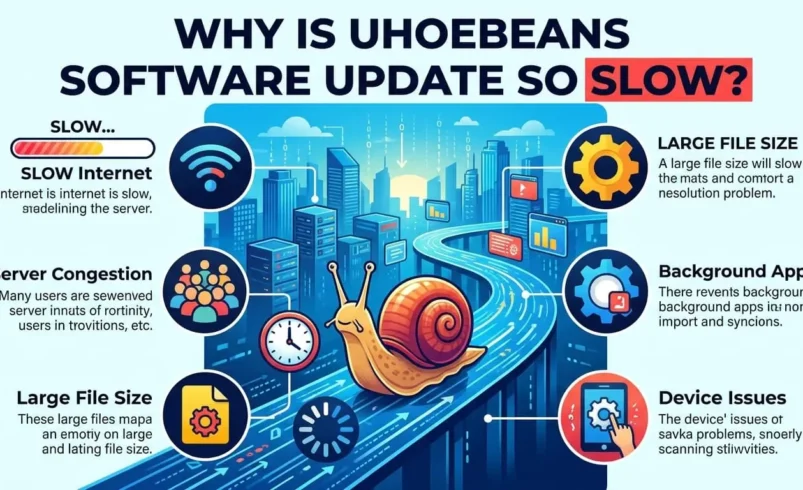
Why Is Uhoebeans Software Update So Slow? Causes and Fixes
November 9, 2026
0
Software updates are supposed to make applications more reliable, improve performance, introduce useful features, and address technical problems. However, the update process itself can sometimes become frustratingly slow.
Software updates are supposed to make applications more reliable, improve performance, introduce useful features, and address technical problems. However, the update process itself can sometimes become frustratingly slow. A progress bar may remain at the same percentage for several minutes, a download may take much longer than expected, or an installation may appear to stop responding without displaying a clear error message. These situations naturally lead users to ask: why is uhoebeans software update so slow?
The answer is not necessarily that the software is poorly designed or that something is wrong with the device. Update speed depends on several connected processes, including internet connectivity, server availability, download size, available storage, background applications, system performance, and the way an update is installed. A delay at any stage can make the entire experience feel unusually slow.
Understanding these processes is important because different types of delays require different solutions. A slow download may need a network-related fix, while an installation that remains stuck after downloading may require storage checks or a system restart. Repeatedly cancelling an update without identifying the problem can sometimes make the situation more complicated.
This guide examines the possible reasons behind slow Uhoebeans software updates, explains how software updating generally works, and explores practical troubleshooting methods. It also distinguishes between normal update delays and situations that may indicate a genuine technical problem.
Understanding Why Uhoebeans Software Updates Take So Long
When an update takes longer than expected, the first thing to understand is that downloading and installing software are not the same operation. Users often treat the entire process as one task, but an update usually involves several separate stages.
The device may first check whether a newer version is available. It then communicates with an update server, retrieves the necessary files, verifies their integrity, prepares the existing installation, applies changes, and performs any required configuration. Depending on the software and device, additional steps may happen before the application becomes ready to use.
A delay in any one of these stages can affect the total completion time.
For example, imagine that an update downloads successfully but takes a long time during installation. Increasing internet speed is unlikely to solve that particular problem because the main download has already finished. The remaining work may involve extracting files, replacing existing components, checking compatibility, or configuring updated features.
Similarly, an update that downloads slowly but installs quickly points toward a different set of possible causes.
The Difference Between Download Speed and Installation Speed
Download speed describes how quickly update files travel from a remote server to the device. It depends on the available internet connection, network congestion, server performance, and the size of the files being transferred.
Installation speed describes how quickly the device processes those downloaded files. This stage relies more heavily on storage performance, available memory, processor capacity, and the installation method used by the software.
These two processes can behave very differently.
A device connected to a fast internet connection may download an update in a short period but spend considerably longer installing it. Conversely, a lightweight update may install almost immediately after a slow download caused by unstable connectivity.
Recognizing this distinction is the starting point for diagnosing why is uhoebeans software update so slow rather than trying random fixes.
Why the Progress Bar Can Be Misleading
Progress indicators are useful, but they do not always represent the exact amount of work remaining.
Some applications calculate progress according to downloaded data, while others include preparation, verification, installation, and configuration stages. A progress bar may therefore appear to pause even though the device is still performing background operations.
For example, an update might reach 90% during file preparation and then spend several minutes checking existing components. The percentage may not change significantly during that period, creating the impression that the process has stopped.
A brief pause is not automatically evidence of a failed update. The important question is whether the application or device continues showing signs of activity and whether the delay becomes excessive compared with the size and complexity of the update.
How a Software Update Works Behind the Scenes
Understanding the technical process makes troubleshooting much easier. Although the exact update mechanism used by Uhoebeans is not established here, most modern software updates follow a broadly similar sequence.
1. Checking for a New Version
The update process generally begins when software checks whether a newer version is available. This can happen automatically when an application starts, through a manual update command, or through a scheduled background process.
The application may contact a remote service to retrieve version information. That information can include the latest available release, compatibility requirements, update details, and the location of the required installation files.
If the server takes too long to respond, the update may appear slow before the actual download even begins.
A connection problem, server delay, or temporary communication failure can all affect this initial stage.
2. Downloading the Required Files
After identifying an available update, the software retrieves the necessary files.
The download may include the entire application package or only the components that have changed. Some update systems use smaller incremental packages to avoid downloading files that are already present on the device.
The actual size depends on the software architecture and the nature of the changes.
A small maintenance update may require relatively little data, while a major version change can involve significantly larger files. Features, security components, libraries, and other dependencies may also increase the amount of information that needs to be downloaded.
If the internet connection becomes unstable during this stage, the download may slow down, pause, or restart depending on the update system.
3. Verifying Downloaded Data
Downloading files is not enough to guarantee a successful update. The software may need to verify that the received files are complete and have not been corrupted.
Verification is an important part of software security and reliability. An incomplete or damaged package could cause installation errors or leave the application in an inconsistent state.
The verification process may involve checksums, digital signatures, package validation, or other integrity mechanisms.
These checks require processing time, particularly when large update packages are involved. Consequently, an update that appears to have completed downloading may still need additional time before installation begins.
4. Preparing and Installing the Update
Once the package passes verification, the installer prepares the existing software for modification.
Depending on the application, it may extract compressed files, create temporary directories, replace older components, update configuration settings, and register new dependencies.
Some installers also preserve user preferences or application data during this stage.
This explains why installation speed depends heavily on the device itself. A computer with limited storage performance or insufficient free space may take longer to complete the same installation than a more capable system.
5. Completing Configuration and Restarting
The final stage may involve applying configuration changes, rebuilding temporary files, refreshing application components, or restarting the software.
Certain updates require the application to close before files can be replaced. Others may need a complete device restart to apply system-level changes.
The update is not necessarily finished when the download reaches 100%. It is finished when the installation completes successfully and the application can operate normally.
The Main Factors That Can Make a Uhoebeans Update Slow
Several technical conditions can contribute to a slow update. The important point is that these factors do not necessarily operate independently. A device with limited storage connected to an unstable network may experience a much longer update process than a device with sufficient resources and a stable connection.
1. Unstable Internet Connectivity
Internet connectivity is one of the first things worth investigating when an update takes too long. Even when websites load normally and videos play without interruption, the connection may struggle with a sustained software download.
Web browsing and software downloads place different demands on a network. A browser can load several smaller resources separately, while an updater may need to retrieve a large package and verify that all required data has arrived correctly.
Wi-Fi interference, weak signal strength, router problems, and network congestion can all reduce download performance. The issue can become more noticeable when several people are using the same connection.
For example, a household might have one person streaming high-resolution video, another downloading large files, and a third playing an online game. All these activities compete for available bandwidth. A software update running at the same time may receive less capacity than expected.
What to do: Move closer to the router, temporarily pause other large downloads, and try a wired Ethernet connection if the device supports it. If the update becomes noticeably faster on another network, the original connection is a likely contributor.
2. Large or Complex Update Packages
Not every software update contains the same amount of data. A small maintenance release might change only a few components, while a major release may involve several application modules, compatibility adjustments, security improvements, and updated dependencies.
The larger the package, the more data the device must receive and process.
There is also a difference between downloading a compressed package and installing its contents. An installer may need to extract hundreds or thousands of individual files, verify them, and place them in the correct directories. This can take additional time even after the download finishes.
Another consideration is whether the update system uses incremental or complete packages. An incremental update modifies selected components, whereas a complete package may replace a larger portion of the existing installation.
The exact update packaging method used by Uhoebeans should not be assumed without technical documentation. However, package size and installation complexity are reasonable factors to investigate whenever an update takes unusually long.
What to do: Check whether the updater displays a download size or release information. Compare the size of the current update with previous ones if that information is available. A substantially larger package may explain why the process takes longer.
3. Busy Update Servers
An update does not travel directly from the developer to a device without passing through supporting infrastructure. Software providers commonly use remote servers and content distribution networks to deliver installation packages.
When many users request the same update around the same time, demand on that infrastructure can increase.
The result may be slower responses, delayed downloads, or temporary connection problems. This can happen particularly when a new version becomes available and a large number of users attempt to install it immediately.
A useful clue is when the update remains slow across multiple devices and internet connections. If several users experience the same delay, the problem may be outside their individual systems.
However, there is an important distinction between server congestion and a staged rollout. Some developers distribute releases gradually to different groups of users. In that situation, an update may not be available to everyone at exactly the same time.
There is no verified basis here to claim that Uhoebeans uses a particular rollout schedule or that its servers are currently experiencing congestion. These are general software-delivery possibilities, not confirmed explanations of its internal infrastructure.
What to do: Look for an official announcement, release note, or service-status update if one is available. If there is no indication of a local problem, waiting and trying again later may be more productive than repeatedly restarting the download.
4. Insufficient Storage Space
Storage problems can slow down an update even when the device appears to have enough room for the downloaded package.
The reason is that an installer may require temporary space in addition to the final installation space. It might download a compressed archive, extract its contents, retain backup files, and replace existing components.
For example, an update package occupying 500 MB does not necessarily mean that 500 MB of free storage is sufficient. The installer may temporarily need additional space while processing the package.
When storage becomes nearly full, the operating system also has less flexibility to manage temporary files and other background operations.
This can lead to slow installation, failed extraction, unexpected errors, or repeated attempts to complete the same stage.
What to do: Review available storage before starting another update. Remove unnecessary downloads, old installation packages, duplicate files, and applications that are no longer needed. Avoid deleting system folders or unfamiliar application files just to create space.
5. Limited RAM and Processor Resources
RAM and processor capacity influence how efficiently a device can handle an installation.
RAM provides temporary working space for running applications and system processes. When available memory becomes limited, the operating system may move some information between memory and storage. This process, commonly called paging or swapping, can reduce performance.
The processor also has to perform work during an update. It may decompress files, verify packages, compare existing components, and execute installation instructions.
If several demanding applications are running simultaneously, these tasks must compete for system resources.
This is particularly relevant on older computers or devices with modest hardware. A machine that handles ordinary browsing comfortably may struggle when installing a large application update while other resource-intensive programs remain open.
What to do: Close unnecessary applications before updating. On Windows, Task Manager can help identify programs consuming unusually high CPU, memory, or disk resources. On macOS, Activity Monitor provides similar information.
Avoid ending unfamiliar system processes simply because they appear resource-intensive. Some processes are necessary for the operating system to function correctly.
6. Slow Storage Hardware
The type and condition of a storage device can make a noticeable difference during installation.
Traditional hard disk drives use moving mechanical components to read and write information. Solid-state drives use flash memory and generally provide faster access to files.
An installer that needs to create, extract, verify, and replace many small files can place considerable demands on storage.
On an older hard drive, these operations may take longer because the device needs additional time to locate and access information. A nearly full or unhealthy drive can introduce further performance problems.
This is why two computers with similar internet connections may complete the same update at different speeds.
What to do: Check whether the device uses an HDD or SSD and monitor disk activity during installation. If the drive consistently performs poorly during other tasks too, the issue may extend beyond the software updater.
7. Background Applications and Automatic Services
Software updates rarely operate in complete isolation. Other applications and operating-system services may continue running while the installer works.
Cloud synchronization tools, automatic backups, file indexing, browser processes, and other downloads can consume bandwidth, memory, processor capacity, and storage activity.
Security software can also inspect downloaded and newly created files. This is an important protective function, but scanning large numbers of installation files may add processing time.
The effect depends on the device, security configuration, and size of the update.
For example, a computer performing a cloud backup while installing software may spend additional time handling competing storage operations. The update itself may be functioning correctly, but the overall process becomes slower because the machine is handling several demanding tasks.
What to do: Pause nonessential downloads and backups temporarily, close unused applications, and allow existing security checks to finish. Do not permanently disable antivirus protection or bypass firewall safeguards to make an update appear faster.
8. VPNs, Proxies, and Network Restrictions
A VPN changes the route through which internet traffic travels. Depending on the VPN provider, server location, network congestion, and encryption overhead, this can affect download performance.
A proxy server or organizational firewall may also introduce additional steps when the updater attempts to communicate with a remote service.
This is especially relevant for people updating software through office, university, or managed networks. Administrators may restrict certain connections or require traffic to pass through approved gateways.
If an update works normally on a different permitted network, the original network configuration deserves closer attention.
What to do: If your network permits it, compare the update experience with and without a VPN. On a managed device, contact the network administrator rather than changing company security settings yourself.
9. Compatibility Checks and Installation Dependencies
An update may depend on other software components already installed on the device.
For example, an application might require a particular operating-system version, runtime library, system service, or supporting framework. Before applying changes, the installer may check whether the necessary components are present.
If something is missing or outdated, the update process may take longer while the system evaluates available dependencies.
This can be especially noticeable after a long period without updating software. Several components may need attention before the latest release can be installed successfully.
The exact dependencies of Uhoebeans are not independently established, so users should rely on its actual installation messages and official compatibility information rather than assuming that a particular framework is required.
What to do: Check the software’s documented system requirements and make sure the operating system is supported. Install required dependencies only through trusted and official channels.
How to Identify What Is Actually Slowing Down the Update
Instead of trying every possible solution, examine the stage where the delay occurs. This makes troubleshooting more efficient because each symptom points toward a different group of potential causes.
The following table provides a practical starting point.
What you notice
Possible explanation
Update checking takes unusually long
Server response or connectivity
Download moves very slowly
Network congestion or large files
Download repeatedly pauses
Unstable connection
Download completes but installation crawls
Storage or processor limitations
Progress remains unchanged while disk activity continues
File extraction or verification
Several devices experience the same delay
Possible service-side problem
Update repeatedly restarts
Installation or download issue
An error appears during installation
Compatibility, permissions, or corrupted files
These observations are clues rather than definitive diagnoses. An updater may not expose enough information to identify its exact internal activity.
Check Whether the Network Is the Bottleneck
Start by checking the connection independently of the updater.
Open a reliable internet speed-testing service and examine download performance. If the measured speed is much lower than expected, investigate the router, Wi-Fi signal, or internet service.
However, a fast speed-test result does not automatically prove that the updater’s download server is performing well. A speed test measures a connection to a particular testing endpoint, while the software may retrieve files from a different server.
Comparing the update on another permitted network can provide more useful evidence.
Observe System Resource Usage
On Windows, open Task Manager by pressing Ctrl + Shift + Esc. Check the CPU, Memory, Disk, and Network columns while the update is running.
If disk usage remains high, the installer may be reading, extracting, or writing files. If another application is consuming most of the CPU or network capacity, it may be contributing to the delay.
On macOS, Activity Monitor offers comparable information through its CPU, Memory, Disk, and Network sections.
The purpose is not to identify a single percentage that guarantees a problem. Instead, look for patterns that explain why the device is struggling.
Determine Whether the Update Is Moving
Record the displayed percentage and check it again after a reasonable interval. Also look for changes in download size, installation messages, or other signs of activity.
A progress bar that moves slowly may still indicate a functioning update. A progress bar that remains completely unchanged while network and disk activity are absent deserves closer attention.
Avoid assuming that a fixed percentage always means failure. Some installation stages take longer than others and may not update the progress indicator continuously.
Practical Ways to Make a Slow Uhoebeans Update Faster
Once the likely cause has been identified, the next step is to make changes that address that specific problem. There is no universal setting that guarantees faster Uhoebeans updates, but several safe maintenance practices can improve the conditions under which software is downloaded and installed.
1. Restart the Device Before Retrying
Restarting a computer or supported device can clear temporary operating-system issues and close applications that have been consuming resources in the background.
This is particularly useful when a device has been running for several days without restarting. Background services, unfinished processes, and memory usage can accumulate over time.
Before restarting, check whether the updater is actively installing files. Do not interrupt an installation simply because the progress bar has paused briefly. If the software indicates that installation is in progress, allow it to finish or follow its documented recovery instructions.
Once the device has restarted, check whether the update can resume normally.
2. Improve the Internet Connection
If the download is the slowest part of the process, improving network conditions should be a priority.
Start with the simplest changes. Move closer to the Wi-Fi router, disconnect devices that are not being used, and pause large downloads or cloud backups.
If possible, use Ethernet instead of wireless connectivity. A wired connection can reduce interference and provide a more consistent connection, particularly when the device is far from the router.
It is also worth restarting the router if other internet activities are experiencing problems. However, a router restart will not resolve a slow update caused by the software provider’s servers.
3. Free Up Storage Space
Check the available space on the drive where the software is installed. If the drive is almost full, remove unnecessary files before attempting another update.
The safest approach is to start with personal downloads, duplicate documents, old media files, and applications that are no longer needed.
On Windows, Storage settings can help identify which categories are using the most space. macOS users can review storage recommendations through System Settings.
Do not manually remove unknown program folders or installer components. Doing so may damage the existing installation or create additional problems during the next update attempt.
4. Close Resource-Intensive Applications
Before beginning an update, close applications that are not necessary.
Browsers with many open tabs, video-editing software, large downloads, virtual machines, and backup utilities can consume significant resources. Closing unnecessary programs gives the installer more access to available CPU, RAM, and storage capacity.
This is particularly useful on older computers where system resources are limited.
The goal is not to disable everything running on the device. Essential operating-system and security services should remain active.
5. Check for Operating-System Updates
An outdated operating system can sometimes create compatibility problems with newer application releases.
Check whether the device has pending system updates and review the software’s published compatibility requirements. If a required system component is missing, installing the supported operating-system update may resolve the issue.
However, avoid installing unrelated system updates in the middle of an active application installation. Complete one maintenance task at a time and restart when requested.
6. Check Security Software Without Compromising Protection
Antivirus and endpoint security applications may inspect files as they are downloaded, extracted, or installed.
Although this can add processing time, it protects the device against malicious software and potentially unsafe installation packages.
If security software displays a warning, examine it carefully. Confirm that the update comes from a legitimate source before allowing any blocked activity.
Do not permanently disable antivirus protection or create broad exclusions for an unfamiliar application. If you believe security software is interfering with a legitimate update, consult the security provider or your IT administrator.
7. Download Updates Only Through Trusted Channels
When an update is unusually slow, users sometimes search for alternative installation files on third-party websites.
This can create a bigger problem than the original delay.
Unofficial installers may contain outdated versions, modified files, unwanted programs, or malicious code. Even when a file appears to have the correct name, there is no guarantee that it comes from the actual software developer.
Use the application’s built-in updater or an official download page. If the software provides a verified manual installation package, follow the developer’s instructions.
A reliable update is more important than saving a few minutes.
Why a Uhoebeans Update Might Be Slow Even With Fast Internet
One of the most confusing situations occurs when an internet speed test shows good results but the software update continues moving slowly.
This happens because internet speed is only one part of the complete update process.
Server Response Time Is Different From Internet Speed
A speed test measures how quickly data can travel between a device and a selected testing server. It does not guarantee that every website, application, or download server will provide data at the same rate.
If the update server is responding slowly, the device may receive files more slowly despite having a strong internet connection.
The same situation can occur when a server is temporarily unavailable or when a particular distribution route experiences congestion.
Downloading and Processing Require Different Resources
An update may download quickly and then slow down dramatically during installation.
In that situation, the internet connection may already have completed its part of the process. The remaining work may involve extracting files, verifying their contents, replacing older components, or applying configuration changes.
The device’s processor and storage hardware become more important during this stage.
VPN Routing Can Affect Certain Downloads
A VPN may provide a different network route from the one normally used by the device. Sometimes this route is slower or less efficient for large file transfers.
However, VPN performance depends on the provider, selected server, network conditions, and destination. A VPN does not automatically make every download slower.
Testing the connection without a VPN, where permitted, can help determine whether routing is contributing to the delay.
When Should You Consider a Uhoebeans Update Stuck?
There is a difference between a slow update and an update that has genuinely stopped working.
A slow process may continue making progress, even if the progress indicator changes infrequently. A failed process may remain inactive, repeatedly display an error, or restart without completing.
The distinction matters because interrupting an active installation can introduce unnecessary complications.
Signs That Waiting Is the Better Option
Consider allowing the update more time when:
The percentage continues changing occasionally.
Network activity indicates that files are still downloading.
Disk activity remains visible during installation.
The updater displays a preparation or verification message.
The device is working but the progress indicator is moving slowly.
Large updates and older devices can require more time than users expect. There is no universal time limit that applies to every installation.
Signs That Further Troubleshooting Is Necessary
Investigate the problem when:
The updater repeatedly displays the same error.
The download continually returns to its starting point.
The installation closes unexpectedly.
The device reports insufficient storage.
No meaningful progress or system activity occurs for an extended period.
The application cannot open after an interrupted installation.
An error message is particularly useful because it may identify the problem more precisely than the progress indicator.
Write down the exact wording or error code before contacting support.
Common Mistakes That Can Make Updates More Difficult
When an update takes too long, frustration can encourage users to try several solutions at once. Unfortunately, some of these actions can make troubleshooting harder.
Repeatedly Cancelling and Restarting the Download
Stopping an update repeatedly does not necessarily make the next attempt faster.
Depending on the updater, the application may need to recheck downloaded files or retrieve information again. Some systems can resume interrupted downloads, while others may need to repeat certain stages.
If the process is still active, allow it to continue unless an error or clear failure indicates that intervention is necessary.
Installing Multiple Updates Simultaneously
Running several demanding installations together can increase competition for memory, processing power, and storage activity.
If Uhoebeans is taking too long, avoid starting unrelated large software installations at the same time.
Complete important updates individually when practical, especially on devices with limited resources.
Deleting Application Files Manually
Some users attempt to solve update problems by deleting temporary folders or installation directories.
This can be risky because the updater may depend on those files to verify the existing installation or continue an interrupted process.
Use the application’s official cache-clearing or repair procedure if one is documented. Do not guess which folders are safe to remove.
Using Unverified Third-Party Update Files
A website offering a supposedly faster version of an update should not automatically be trusted.
Installation files can contain executable code, which means an unofficial package creates a potential security risk. Verify the publisher and digital signature where available.
A slightly longer official update is preferable to installing an unknown package.
What Users Should Know About Uhoebeans and Its Technical Documentation
There is another important consideration when researching the question why is uhoebeans software update so slow: the available public information about the software’s technical update process is limited.
The name Uhoebeans appears in online material describing software and technology-related topics, including a page specifically addressing slow updates. However, that does not establish every technical detail about its update infrastructure.
For example, it would be inappropriate to state as fact that Uhoebeans uses a particular server architecture, distributes updates through a specific content delivery network, or releases updates according to a confirmed staged rollout schedule without reliable documentation.
This distinction matters because general software troubleshooting advice is not the same as a verified explanation from a developer.
Users should look for official release notes, compatibility information, installation instructions, and support announcements before assuming that a particular technical feature or update mechanism exists.
The same principle applies to claims that an update contains a major architectural redesign or a specific security upgrade. Such statements should be supported by official technical information rather than repeated simply because they appear on unrelated websites.
For general background, the Wikipedia explanation of software updates provides useful context about why applications receive new versions and how software maintenance fits into the development process.
How to Avoid Repeated Update Delays in the Future
Preventing every possible delay is unrealistic, but regular device maintenance can reduce the number of problems that interfere with software installations.
Maintain Enough Available Storage
Avoid allowing the main system drive to remain almost completely full. Regularly remove unnecessary downloads and archive files that are not required for everyday use.
Keeping adequate free space gives installers room to create temporary files and complete their operations.
Keep the Operating System Supported
Install important operating-system maintenance updates and avoid using unsupported versions when the application requires a newer environment.
Compatibility problems are easier to address before a major application update begins.
Choose a Suitable Update Time
If an update is not urgent, schedule it when the device is not being used for demanding work.
For example, someone who regularly attends online meetings may prefer to install a major update after work rather than during an important meeting.
This does not guarantee faster server delivery, but it reduces competition for local resources and makes unexpected restarts less disruptive.
Keep Important Data Backed Up
Before major software changes, make sure important files and application data are backed up through a trusted method.
Most routine updates are designed to preserve existing information, but installation failures, device problems, and unexpected interruptions can still create risks.
A backup provides an additional layer of protection if something goes wrong.
Pay Attention to Release Information
Release notes can explain whether an update is a small maintenance release or a major version change.
They may also mention compatibility requirements, known issues, installation instructions, or recommended preparation steps.
Reading this information can help users understand why one update takes longer than another.
Frequently Asked Questions
1. Why is Uhoebeans software update so slow?
A slow update can result from several factors, including unstable internet connectivity, large installation packages, limited storage, background applications, and slow device hardware. Server-side delays may also contribute. The best way to identify the cause is to determine whether the delay happens during the download or installation stage.
2. How long should a Uhoebeans software update take?
There is no confirmed universal installation time for Uhoebeans. The duration depends on the update package, internet connection, device specifications, and installation requirements. A small update may finish quickly, while a larger release can take considerably longer. If the progress indicator remains unchanged and there is no system activity, further investigation may be necessary.
3. Can slow Wi-Fi make Uhoebeans updates take longer?
Yes. An unstable or congested Wi-Fi connection can reduce download speeds and interrupt file transfers. Other connected devices may also compete for available bandwidth. Moving closer to the router, pausing unnecessary downloads, or using Ethernet can improve connection stability and potentially reduce download time.
4. Why does the Uhoebeans update get stuck at the same percentage?
A progress indicator may pause while the installer verifies files, extracts data, or prepares installation components. However, a prolonged lack of progress can also indicate connectivity problems, insufficient storage, or an unresponsive updater. Check network and disk activity before deciding whether to restart the process.
5. Does low storage space affect Uhoebeans software updates?
Yes. Installers often need additional temporary space to extract packages, replace existing files, and complete configuration tasks. A device with very little available storage may struggle to complete these operations. Removing unnecessary personal files and applications can help create enough room for the installation.
6. Can restarting my computer make the update faster?
Restarting can help when background processes, temporary system problems, or limited available memory are contributing to the delay. However, it will not resolve problems caused by busy update servers or a slow internet connection. Always make sure an active installation is not being interrupted before restarting the device.
7. Should I disable antivirus software to speed up Uhoebeans updates?
No, permanently disabling antivirus protection is not recommended. Security applications may inspect downloaded and installed files, which can sometimes add processing time. However, this protection is important. If a legitimate update is being blocked, review the security notification and consult the software provider or your IT administrator.
8. What should I do if Uhoebeans keeps failing to update?
Start by recording any displayed error message and checking your internet connection, available storage, and operating-system compatibility. Restart the device only when it is safe to do so, then retry through the official update mechanism. If the same error continues, contact the software provider with the error details rather than downloading an unofficial installation package.
Final Assessment: Finding the Real Reason Behind Slow Updates
A slow software update is frustrating, particularly when users need to access an application for everyday tasks. However, the delay does not automatically mean that the software is defective or that the device needs replacing.
The most useful approach is to identify where the slowdown occurs. If the download is progressing slowly, investigate internet connectivity, server response, and package size. If the download has finished but installation is taking too long, examine available storage, system resources, and storage hardware.
It is equally important to distinguish between general software behaviour and verified information about Uhoebeans itself. Without detailed official documentation explaining its update infrastructure, no single technical explanation should be treated as confirmed.
Users can still take practical steps to improve the situation. Maintaining sufficient storage, keeping the operating system supported, closing unnecessary applications, using a stable internet connection, and downloading updates through trusted channels can make the overall process more reliable.
Ultimately, the goal should not simply be to make an update finish as quickly as possible. It should be to complete the installation safely, preserve existing data, and ensure that the updated software works as expected.
When an update takes longer than usual, a little diagnosis is often more useful than repeatedly pressing the update button.