La Roche-Posay vs Neutrogena: Which Is Better for Acne?
November 15, 2026
0
College life can make skincare surprisingly difficult. Between lectures, assignments, part-time jobs, social activities, and limited spending money, maintaining a complicated beauty routine is rarely practical. Acne can
College life can make skincare surprisingly difficult. Between lectures, assignments, part-time jobs, social activities, and limited spending money, maintaining a complicated beauty routine is rarely practical. Acne can make the situation even more frustrating. One week, the skin may look relatively clear; the next, breakouts appear around the forehead, cheeks, or chin. Choosing products becomes another challenge, especially when some brands are considerably more expensive than others.
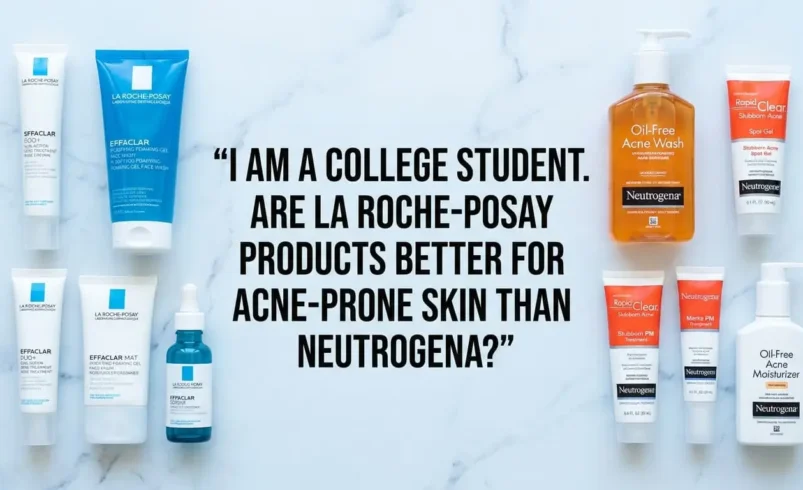
Two names that frequently appear in acne skincare discussions are La Roche-Posay and Neutrogena. Both offer products designed for blemish-prone skin, but they approach skincare through different product ranges, formulations, and price positions. That leads to an important question: i am a college student. are la roche-posay products better for acne-prone skin than neutrogena?
The honest answer is that neither brand is automatically better for everyone. La Roche-Posay may appeal to students looking for particular Effaclar treatments and skincare products designed with skin comfort in mind. Neutrogena offers a broad selection of acne cleansers and treatments, including products containing familiar active ingredients. The right choice depends on the specific formula, the type of acne, skin sensitivity, and how much a student can reasonably spend.
Rather than choosing a brand because of its reputation or packaging, it makes more sense to compare the ingredients and select products that address the actual problem.
Quick Comparison: La Roche-Posay vs Neutrogena
Fact
Details
Brands
La Roche-Posay and Neutrogena
Main Concern
Acne-prone skin
Target Audience
College students
Product Categories
Cleansers, treatments, moisturizers
Important Ingredients
Salicylic acid, benzoyl peroxide, adapalene
Skin Types
Oily, dry, combination, sensitive
Budget Consideration
Affordable versus premium options
Comparison Focus
Ingredients, effectiveness, compatibility
Overall Winner
Depends on individual skin needs
Why Acne-Prone Skin Needs More Than a Good Cleanser
A common skincare mistake is assuming that acne can be solved simply by washing the face more frequently. Cleansing is important, but acne develops through several interacting processes. These include excess oil production, clogged hair follicles, inflammation, and the activity of acne-associated bacteria.
The skin naturally produces sebum, an oily substance that helps maintain its protective surface. However, when dead skin cells and sebum accumulate inside pores, blockages can develop. These may appear as whiteheads or blackheads. When inflammation becomes involved, red bumps and sometimes deeper, more painful blemishes can form.
This condition is commonly known as acne vulgaris. Its severity varies from person to person, and different types of acne may respond to different treatments.
A cleanser can remove surface oil, sweat, sunscreen, and dirt, but it may not be enough to address persistent clogged pores or inflammatory breakouts. That is why acne skincare often includes a suitable treatment alongside gentle cleansing and moisturizing.
The Role of Oil and Clogged Pores
Students with oily skin may notice that their faces become shiny during long days on campus. Hot weather, physical activity, and individual oil production can contribute to that feeling. However, removing every trace of oil is not the goal.
Harsh cleansers and frequent scrubbing can leave the skin irritated and uncomfortable. A better approach is to use a cleanser that removes everyday buildup without making the skin feel excessively tight.
Why Inflammation Matters
Not every blemish is simply a blocked pore. Inflamed pimples can be red, tender, and more noticeable. Ingredients such as benzoyl peroxide are commonly used in acne treatments because they target acne-associated bacteria and help reduce inflammatory breakouts.
Students should avoid treating every skin concern with the same product. Blackheads, whiteheads, and inflamed pimples do not always require identical approaches.
Protecting the Skin Barrier
The skin barrier helps retain moisture and protects against external irritation. Strong acne treatments can sometimes cause dryness, peeling, redness, or sensitivity, particularly when several active ingredients are introduced together.
A moisturizer is therefore not an unnecessary extra for acne-prone skin. It can help support comfort while a treatment is being used. The American Academy of Dermatology explains why moisturizers can be useful alongside treatments such as salicylic acid, benzoyl peroxide, and adapalene in its guide to moisturizer and acne.
Getting Familiar With La Roche-Posay and Neutrogena
La Roche-Posay: Dermatology-Inspired Skincare and Effaclar
<text>La Roche-Posay</text> is a skincare brand known for products developed around different skin concerns, including dryness, sensitivity, and acne. Its Effaclar collection is particularly relevant to people dealing with oily or blemish-prone skin.
The Effaclar range includes different types of products rather than one universal acne solution. Depending on the market and product version, shoppers may find facial cleansers, exfoliating treatments, moisturizers, and targeted acne medications.
Some Effaclar products use salicylic acid to help address clogged pores, while others contain benzoyl peroxide or adapalene. These ingredients serve different purposes, so students should read the active ingredient panel instead of assuming that every product in the collection works in the same way.
For example, the brand’s US Effaclar acne treatment system lists a 2% salicylic acid cleanser and a benzoyl peroxide treatment. Its Effaclar Adapalene Gel contains 0.1% adapalene. These are distinct treatments with different uses and potential irritation risks.
La Roche-Posay may be attractive to students who want to explore a coordinated skincare range. However, buying an entire collection is not necessary. A student may only need one appropriate acne treatment, a gentle cleanser, and a moisturizer.
The brand’s premium positioning can also make its products more expensive than some alternatives. That does not automatically mean every formula will produce better results.
Neutrogena: Accessible Options for Everyday Acne Care
<text>Neutrogena</text> offers a broad skincare range that includes cleansers, moisturizers, sunscreens, and targeted acne treatments. Its acne products cover several familiar ingredients, making the brand worth considering for students who want to compare different treatment formats.
Depending on the product and market, Neutrogena’s acne range includes salicylic acid cleansers, benzoyl peroxide treatments, adapalene gel, and blemish patches. These products address different concerns, from clogged pores to inflammatory breakouts.
For example, the brand’s US acne collection lists Oil-Free Acne Wash products, targeted treatments, and adapalene 0.1% gel. Its product portfolio also includes benzoyl peroxide formulations. Availability and product names can vary between countries, so students should check the packaging and local product information.
One advantage of a broad product range is flexibility. Someone dealing mainly with blackheads may look for a salicylic acid cleanser, while another person with recurring inflamed pimples may consider a benzoyl peroxide treatment.
Neutrogena is often positioned as a more accessible option for everyday skincare shopping, although individual products and local prices vary. Students should still compare the formula, quantity, and cost rather than assuming that every Neutrogena product is inexpensive or suitable for sensitive skin.
Breaking Down the Ingredients That Matter
The most useful way to compare La Roche-Posay vs Neutrogena is to understand what their active ingredients actually do. Brand names can influence purchasing decisions, but the formulation determines what a product is designed to address.
Salicylic Acid: Helpful for Blackheads and Whiteheads
Salicylic acid is a beta-hydroxy acid used in many acne cleansers and leave-on treatments. It helps exfoliate inside pores and remove the buildup associated with clogged follicles.
It may be particularly useful for students who notice blackheads, whiteheads, or small bumps related to blocked pores. Both La Roche-Posay and Neutrogena offer products containing salicylic acid, although the concentration, supporting ingredients, and product format differ.
A cleanser containing salicylic acid may be convenient for someone who prefers a wash-off treatment. A leave-on product provides a different type of exposure and may not suit everyone equally well.
Salicylic acid can also cause dryness or irritation, especially when combined with other exfoliating products. Starting with one product and following its instructions is generally more sensible than using several acid-based treatments together.
Benzoyl peroxide is a widely used acne-fighting ingredient. It helps reduce acne-associated bacteria and is commonly included in products designed for inflamed pimples.
Both brands offer benzoyl peroxide options in their acne ranges. However, the concentrations and formulas are not necessarily identical. La Roche-Posay’s US Effaclar treatment system, for example, lists a 5.5% benzoyl peroxide treatment, while Neutrogena offers products with different benzoyl peroxide strengths.
A higher concentration does not automatically mean a better result. Stronger products can increase irritation and dryness, particularly for someone who is new to acne treatments.
Benzoyl peroxide may also bleach towels, pillowcases, and clothing. Students should allow treated skin to dry and follow the product’s directions to reduce accidental fabric discoloration.
Adapalene: A Retinoid for Persistent Clogged Pores
Adapalene is a topical retinoid used to treat acne. It helps regulate skin-cell turnover and prevent the buildup that contributes to clogged pores. It can be useful for blackheads, whiteheads, and recurring acne.
Both brands offer adapalene 0.1% products in the US market. This means students should not assume that one brand has a unique advantage simply because it offers a retinoid treatment.
Adapalene can cause dryness, peeling, redness, or irritation, particularly during the early stages of use. It should be introduced gradually according to the product instructions or a healthcare professional’s advice. A moisturizer and daytime sun protection are important parts of a routine that includes a topical retinoid.
People who are pregnant or planning pregnancy should consult a healthcare professional before using topical retinoids.
Niacinamide: Supporting the Skin’s Overall Appearance
Niacinamide is a form of vitamin B3 used in skincare formulations. It is associated with supporting the skin barrier and improving the appearance of uneven tone and redness.
It is not a replacement for established acne treatments such as benzoyl peroxide or adapalene. However, it may be a useful supporting ingredient in a broader routine.
Students should look at the complete formula rather than buying a serum solely because it contains niacinamide. A simple moisturizer that suits the skin may be more useful than adding another product unnecessarily.
Ceramides: Supporting the Skin Barrier
Ceramides are lipids naturally present in the outer layer of the skin. They help maintain the skin barrier and reduce moisture loss.
A moisturizer containing ceramides may be helpful when acne treatments leave the skin dry or uncomfortable. However, ceramides do not directly replace acne medication. Their role is mainly supportive.
Students with acne-prone skin should look for a moisturizer that feels comfortable and is labeled non-comedogenic or formulated not to clog pores.
How the Two Brands Compare Across Different Skin Types
Oily Acne-Prone Skin
Students with oily skin may prefer lightweight cleansers and moisturizers that do not leave a heavy residue. Salicylic acid can be useful when clogged pores and blackheads are a major concern.
Both brands offer products designed for oily or blemish-prone skin. La Roche-Posay’s Effaclar collection may appeal to shoppers looking for a coordinated range, while Neutrogena provides several acne cleanser and treatment formats.
The better option is the one that removes excess oil without leaving the skin irritated. A face that feels extremely tight after cleansing is not necessarily cleaner or healthier.
Sensitive Acne-Prone Skin
Sensitive skin requires a more cautious approach. Strong exfoliants, fragranced products, and multiple active ingredients can cause discomfort in some people.
La Roche-Posay offers products positioned for different skin concerns, including sensitive skin. However, the brand name alone does not guarantee that every Effaclar formula will be suitable for every sensitive-skin user.
Neutrogena also has products labeled for sensitive skin, but its acne range includes active treatments that can still cause dryness or irritation.
Students should check the full ingredient list, introduce one new product at a time, and discontinue a product if it causes significant irritation. Persistent burning, swelling, or a rash deserves professional advice.
Combination Skin
Combination skin can be oily in some areas and dry in others. A student may notice shine around the forehead and nose while the cheeks feel tight.
A balanced routine is often more useful than choosing the strongest available acne cleanser. A gentle cleanser, lightweight moisturizer, and targeted acne treatment can help avoid treating the entire face as though it has identical needs.
Either brand may fit this type of routine, depending on the formulas selected.
Dry Acne-Prone Skin
Dry skin can still develop acne. Using harsh cleansers in an attempt to remove every blemish may make discomfort worse.
Students in this situation should prioritize a gentle cleanser and a moisturizer that supports the skin barrier. An acne treatment can be added carefully rather than relying on repeated exfoliation.
If a product causes persistent peeling or irritation, it may be too aggressive or may need to be used differently under professional guidance.
Blackheads, Whiteheads, and Inflammatory Breakouts
The type of breakout is an important part of the decision.
Blackheads and whiteheads: Salicylic acid or a retinoid such as adapalene may be useful.
Inflamed pimples: Benzoyl peroxide may be a suitable option.
Recurring clogged pores: A retinoid may help prevent new blockages over time.
Post-acne marks: Some treatments can gradually improve the appearance of discoloration, but persistent or deep marks may need professional assessment.
Choosing a product based on the actual concern is more effective than buying a complete collection because it carries a familiar brand name.
The College Budget Test: Is Expensive Skincare Actually Worth It?
College students often have to balance skincare with transportation, meals, tuition, books, accommodation, and other expenses. Spending a large amount on several premium products may not be realistic.
This is where Neutrogena can be an attractive starting point. Its product range includes everyday acne cleansers and targeted treatments that may offer a more budget-conscious route, depending on local availability and pricing.
La Roche-Posay may justify a higher price for a particular formula that suits someone’s skin better. But paying more does not automatically make a product more effective. A less expensive treatment containing an appropriate active ingredient may be perfectly reasonable.
Compare Cost Per Use, Not Just the Bottle Price
A larger bottle may offer better value if the formula suits the skin and the product is used consistently. A small, expensive treatment may still be worth considering if only a small amount is required each time.
Students can compare:
The price of the product in their local market.
The quantity included in the package.
How often the product needs to be used.
Whether the product serves a necessary purpose.
Whether a simpler alternative contains a similar active ingredient.
Prices can differ substantially by country, retailer, import costs, and product size. Rather than relying on a universal price comparison, check current local listings before buying.
Spend on the Essentials First
A practical student skincare budget should prioritize the basics:
A gentle cleanser.
A moisturizer suitable for acne-prone skin.
Broad-spectrum sunscreen with SPF 30 or higher.
One appropriate acne treatment if needed.
There is no requirement to buy a cleanser, toner, serum, exfoliant, spot treatment, mask, and moisturizer from the same brand. A routine can combine products from different companies as long as the formulas are compatible and the skin tolerates them.
A Realistic Skincare Routine for a Busy College Student
A useful routine should be simple enough to maintain during exams, early lectures, and busy weekends. Consistency matters more than having a long list of products.
Morning Routine
Step 1: Cleanse gently.
Wash the face with a gentle cleanser. If the skin is very dry or sensitive, a water rinse may be sufficient on some mornings. Avoid scrubbing or using very hot water.
Step 2: Apply moisturizer.
Use a lightweight, non-comedogenic moisturizer. The purpose is to maintain comfort and support the skin barrier, not to make the face feel greasy.
Step 3: Use sunscreen.
Apply broad-spectrum sunscreen with SPF 30 or higher. This is especially important when using acne treatments that may increase irritation or when dealing with post-acne discoloration.
Evening Routine
Step 1: Remove sunscreen and daily buildup.
Cleanse gently to remove sunscreen, oil, sweat, and dirt. If wearing makeup or water-resistant sunscreen, follow an appropriate removal routine without aggressive rubbing.
Step 2: Apply one acne treatment.
Choose a suitable treatment based on the main concern. This could be salicylic acid for clogged pores, benzoyl peroxide for inflamed breakouts, or adapalene for recurring acne.
Do not begin several strong treatments at the same time. Follow the instructions on the product and introduce it gradually.
Step 3: Moisturize.
Apply moisturizer to reduce dryness and support the skin barrier. If a treatment causes persistent irritation, reconsider how it is being used and seek professional advice.
How to Introduce New Products
Students should avoid changing their entire routine in one evening. Introduce one new product at a time so it is easier to identify what helps and what causes irritation.
Start according to the product’s directions, and avoid combining multiple exfoliating products without guidance. If a product causes a significant reaction, stop using it rather than trying to push through the discomfort.
Common Skincare Decisions That Can Make Acne Worse
Over-Exfoliating the Skin
Using several exfoliating cleansers, toners, and serums can damage the skin barrier and cause irritation. More exfoliation does not necessarily mean fewer breakouts.
Mixing Too Many Active Ingredients
Combining salicylic acid, benzoyl peroxide, adapalene, and other strong treatments without a plan can make skin dry and uncomfortable. A simple routine with one suitable treatment is a better starting point for many students.
Skipping Moisturizer
Some people avoid moisturizer because they believe it will make oily skin worse. However, acne treatments can cause dryness, and a suitable non-comedogenic moisturizer can help improve comfort.
Buying Products Because of Social Media Trends
A product that works well for one influencer may not suit another person’s skin. Lighting, filters, editing, sponsorships, and individual skin differences can all affect how a product appears online.
Expecting Immediate Results
Acne treatments need time. Switching products every few days makes it difficult to judge whether a treatment is helping. Students should follow the product directions and allow a reasonable period for assessment.
Which Brand Makes More Sense for Different Student Needs?
There is no single winner for every college student. The following comparisons provide a practical starting point.
Student’s Priority
What to Consider
Lower-cost everyday acne care
Compare Neutrogena’s acne cleansers and treatments available locally
Effaclar product preferences
Explore the specific La Roche-Posay formula and its active ingredients
Oily skin and clogged pores
Look for a suitable salicylic acid product
Inflamed pimples
Consider an appropriate benzoyl peroxide treatment
Persistent blackheads and whiteheads
Discuss adapalene or another suitable retinoid with a healthcare professional
Sensitive skin
Prioritize gentle formulas and introduce treatments slowly
Dry acne-prone skin
Focus on moisturizer and avoid overly aggressive cleansing
For students prioritizing affordability, Neutrogena may be a sensible first brand to explore. Its acne range includes several treatment types, and a student may be able to find an appropriate product without purchasing an expensive collection.
For students who prefer the Effaclar range or find a particular La Roche-Posay formula more comfortable, the higher cost may be worthwhile. The important question is whether that individual product offers something useful for the student’s skin.
For sensitive skin, neither brand should be selected automatically. Check the complete formula, avoid unnecessary fragrance or harsh combinations if they trigger irritation, and choose products according to personal tolerance.
A student with persistent, painful, or scarring acne should not rely on brand comparisons alone. A dermatologist can help identify an appropriate treatment plan.
What Results Should Students Realistically Expect?
Acne treatment is not an overnight process. Some products may improve the appearance of oiliness or individual blemishes relatively quickly, but reducing recurring acne usually requires consistent use over time.
The American Academy of Dermatology advises giving an appropriate acne treatment time to work. Its guidance on adult acne treatments discusses common over-the-counter ingredients and recommends using a suitable treatment consistently rather than repeatedly changing products.
Students should also understand that different acne concerns may improve at different rates. Surface oiliness, clogged pores, inflamed pimples, and post-acne marks are not identical problems.
If acne becomes painful, produces deep nodules, leaves scars, or affects confidence and daily life, professional help is worthwhile. A dermatologist may recommend prescription treatments or a combination approach that goes beyond ordinary cleansers and cosmetic skincare products.
Frequently Asked Questions
1. Are La Roche-Posay products better than Neutrogena for acne?
Not automatically. Both brands offer products with established acne ingredients, including salicylic acid, benzoyl peroxide, and adapalene in selected ranges. The best choice depends on the specific product, the type of acne, skin sensitivity, and budget. Compare active ingredients rather than relying only on brand reputation.
2. Is La Roche-Posay worth the extra money?
It can be worth the additional cost if a particular formula suits your skin, fits your routine, and provides something you need. However, a more expensive product is not automatically more effective. College students should compare ingredients, product quantity, and local prices before deciding.
3. Which brand is better for oily acne-prone skin?
Both brands offer products for oily and acne-prone skin. Salicylic acid may be useful for clogged pores and blackheads, while a suitable moisturizer can help prevent excessive dryness. Choose a formula that cleans effectively without leaving the skin tight or irritated.
4. Can college students use both brands together?
Yes. Skincare routines do not have to use products from one brand only. For example, someone might prefer a cleanser from Neutrogena and a moisturizer from La Roche-Posay. The important consideration is whether the ingredients work well together and whether the routine remains gentle enough for the skin.
5. Which brand offers affordable acne cleansers?
Neutrogena is often worth checking first for students looking for budget-conscious acne cleansers. However, prices vary by location, retailer, size, and availability. Compare the cost per use and active ingredients rather than assuming every product from one brand is cheaper.
6. Is Neutrogena suitable for sensitive skin?
Some Neutrogena products are formulated for sensitive skin, but suitability depends on the individual formula. Acne treatments containing salicylic acid or benzoyl peroxide can still cause dryness or irritation. Check the ingredient list and introduce new products gradually.
7. Does La Roche-Posay help with acne marks?
Some products may help improve the appearance of uneven tone or post-acne discoloration, depending on their ingredients. However, acne marks and active acne are different concerns. Sunscreen is important, and persistent discoloration or scarring may benefit from professional dermatological advice.
8. What ingredients should students look for in acne products?
Salicylic acid may help with clogged pores and blackheads. Benzoyl peroxide is commonly used for inflamed acne, while adapalene helps prevent clogged pores and recurring breakouts. Niacinamide and ceramides may support the skin barrier, but they are not substitutes for an appropriate acne treatment.
9. How long does acne skincare take to work?
Results vary according to the treatment, acne type, and individual skin response. Many acne treatments require several weeks of consistent use before improvement becomes clear. Avoid switching products too frequently, and follow the directions provided with each treatment.
10. Should students consult a dermatologist for persistent acne?
Yes. Professional advice is particularly important for painful, deep, persistent, or scarring acne, or when over-the-counter treatments are not helping. A dermatologist can assess the condition and recommend a treatment plan suited to the individual’s needs.
Final Decision: Spending Smart on Acne-Prone Skincare
Choosing between La Roche-Posay and Neutrogena is less about finding the most prestigious brand and more about identifying the formula that addresses a student’s actual skin concerns. Both offer acne-focused products, and both have options containing ingredients commonly used in acne care.
La Roche-Posay may justify its higher price when a specific Effaclar product suits the skin and fits the student’s needs. Neutrogena may be a sensible alternative for students who want to explore familiar acne ingredients while keeping an eye on everyday spending.
The most practical approach is to start with the basics: a gentle cleanser, a suitable moisturizer, sunscreen, and one targeted acne treatment when needed. Avoid buying several active products at once, and give a suitable routine enough time to show whether it is helping.
For a college student managing classes, expenses, and breakouts, the best skincare routine is not necessarily the most expensive or complicated one. It is the routine that is affordable, comfortable, consistent, and appropriate for the skin. If acne is persistent or severe, a dermatologist’s guidance is a better investment than repeatedly purchasing new products.