
CrackStreams 2.0: What the Name Really Means
- September 29, 2026
- 0
Searching for CrackStreams 2.0 usually starts with a straightforward question: what exactly is this name referring to? A viewer may encounter the phrase while looking for live sports,
Searching for CrackStreams 2.0 usually starts with a straightforward question: what exactly is this name referring to? A viewer may encounter the phrase while looking for live sports,
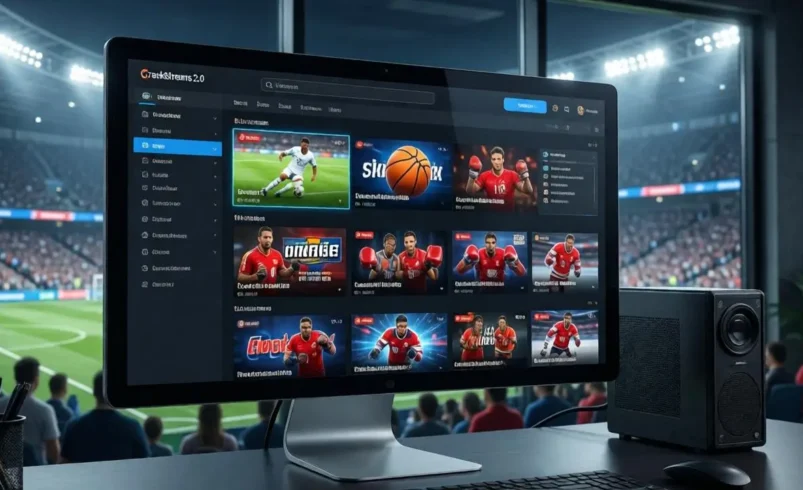
Searching for CrackStreams 2.0 usually starts with a straightforward question: what exactly is this name referring to? A viewer may encounter the phrase while looking for live sports, while another person may see it mentioned alongside CrackStreams, sports-streaming websites, or changing domain names. The difficulty is that the name does not necessarily identify one clearly defined, universally recognized service.
The term is generally associated with the broader world of unofficial online sports streaming. CrackStreams became known online as a name connected with access to live sporting events, and the addition of “2.0” has subsequently appeared in discussions about newer versions, replacement sites, mirrors, or similarly branded services. That does not automatically establish that every website using the name belongs to one operator or represents an official successor.
This distinction matters because sports-streaming websites can change addresses, disappear, reappear under different domains, or be replicated by unrelated parties. A familiar name by itself is therefore not enough to establish authenticity, ownership, licensing, or safety.
For someone researching CrackStreams 2.0, the more useful question is not simply where the name appears. It is what the name represents within the changing online sports-viewing ecosystem, why audiences search for it, and what should be considered before interacting with an unfamiliar streaming website.
| Fact | Details |
|---|---|
| Name | CrackStreams 2.0 |
| Type | A term associated with unofficial online sports-streaming services and similarly branded websites |
| Category | Online sports streaming / digital media |
| Main Purpose | Commonly associated with finding live sports broadcasts through websites outside conventional television and licensed streaming platforms |
| Associated Content | Live sporting events and links or pages associated with sports broadcasts |
| Target Audience | People searching online for convenient access to live sports coverage |
| Platform Format | Primarily web-based services, domains, mirrors, or similarly named streaming pages |
| Sports Commonly Associated | Football, basketball, baseball, hockey, boxing, MMA, and other major live sporting events |
| Launch / Emergence | The “2.0” label should not be treated as proof of a formally documented software-style version launch |
| Current Status | The name can refer to changing or similarly branded online properties rather than one consistently identifiable platform |
| Geographic Reach | Online availability can cross borders, while broadcast rights and accessibility vary by country |
| Key Characteristics | Strong association with live sports searches, unofficial streaming, changing domains, and uncertainty surrounding individual websites |
The most important thing to understand about CrackStreams 2.0 is that “2.0” should not automatically be interpreted as a conventional product version.
In technology, a 2.0 label normally suggests a defined second generation of a product. A company might launch version 2.0 of an application, publish a formal update, and document the changes. Online streaming communities do not always work that way. A number attached to a familiar name can instead become part of the branding used by a replacement domain, mirror, clone, or independently operated website.
That makes the terminology unusually confusing.
CrackStreams itself became associated with websites offering access to online sports streams. As domains and individual sites changed over time, the CrackStreams name continued to circulate among people searching for live sports. Variations of the name could therefore appear in search queries, social posts, discussion forums, or links shared between users.
CrackStreams 2.0 can consequently be understood more safely as a search term and naming pattern within the unofficial sports-streaming ecosystem, rather than assuming there is one officially documented product called CrackStreams 2.0 with a clearly established development history.
This distinction also explains why two websites carrying similar branding may look alike while having no demonstrable connection. A logo, page layout, domain name, or reference to a previous CrackStreams site is not sufficient evidence of common ownership.
For readers, that means the name itself should be treated as a starting point for investigation rather than a guarantee of identity.
The appeal of terms such as CrackStreams 2.0 comes largely from the nature of live sports.
A recorded television program can often be watched later. A live football match, basketball game, boxing contest, or MMA event is different. Viewers care about watching the action as it happens. If they do not have access to the relevant broadcaster, subscription, regional package, or television channel, they may begin searching the internet for alternatives.
That creates demand for phrases involving live sports streaming, sports schedules, online broadcasts, and specific event searches.
Football is one obvious example. Major matches can be spread across different broadcasters and subscription packages depending on the country. Basketball has similar complications, particularly when league coverage, regional broadcasts, and national television arrangements overlap.
Baseball, hockey, boxing, and MMA generate similar searches. A viewer interested in a particular fight may be searching for a broadcast shortly before the event begins. Someone following a hockey game might search for live coverage after discovering that the game is unavailable through the service they normally use.
The search behavior is therefore not necessarily about one particular website. It is also a reflection of a broader problem: sports broadcasting rights are fragmented.
A viewer may know exactly which game they want to watch without knowing which company legally carries it in their location.
That gap between audience demand and broadcast availability has helped unofficial sports-streaming websites attract attention over the years.
One of the easiest mistakes to make when researching CrackStreams 2.0 is treating the keyword as though it identifies a single permanent website.
Web-based services do not have the same identity structure as traditional television networks. A television channel generally has a recognizable corporate entity, a stable brand, published programming, and established distribution relationships.
An unfamiliar streaming domain may offer none of those things.
A website using the CrackStreams name might be:
Without reliable evidence, it is not possible to assume that all of these properties are operated by the same people.
That is especially important when assessing statements about ownership. A website displaying a familiar logo does not prove that the original operators created it. Likewise, a domain containing “CrackStreams” does not automatically prove that it is an authentic successor.
People can encounter unofficial sports-streaming websites through search engines, social media discussions, online communities, advertisements, links shared by other users, or references embedded in sports-related conversations.
A particularly common feature of this ecosystem is the changing domain.
When a website becomes inaccessible, a replacement address may circulate. A mirror may appear. A similarly named site may begin attracting visitors. Search results may continue displaying old pages even after a particular domain has changed or disappeared.
This creates a chain of names that can be difficult for ordinary viewers to distinguish.
The situation becomes even more complicated when several websites use nearly identical branding. One may use a different domain extension, another may add a number, while another might add terms such as “live,” “official,” “new,” or “2.0.”
Those labels are branding choices, not independent proof of authenticity.
Readers should therefore avoid assuming that a newly discovered site is legitimate simply because its name resembles one they previously encountered.
The popularity of online sports-streaming searches can be understood by looking at what viewers expect from any streaming platform.
The first question is simple: is the desired event actually available?
Sports audiences often search for a particular match, fight, race, or game rather than a general entertainment catalog. The value of a platform therefore depends heavily on what it can legitimately provide.
A stream that constantly stops, buffers, or disappears is frustrating during a live event. Viewers naturally look for stable playback and predictable access.
Reliability also includes the website itself. A page that repeatedly redirects or opens unexpected tabs creates a very different experience from a conventional streaming service.
Modern viewers have become accustomed to high-definition broadcasts. Resolution, frame rate, compression, and latency can all affect the experience.
Sports are particularly sensitive to quality problems because fast movement makes visual artifacts and delays easier to notice.
People watch sports on televisions, laptops, phones, tablets, and streaming devices. Legitimate platforms increasingly design their services around multiple screens.
A website that works on a desktop computer may not provide an equivalent experience on a mobile device or television.
Advertising is common across online media, but the way advertisements behave matters.
A conventional streaming provider may show commercials within a defined interface. Unfamiliar websites can sometimes use aggressive advertising systems that produce pop-ups, redirects, fake alerts, or misleading buttons.
A viewer should also consider what information a website requests.
A service that demands unnecessary personal details, encourages unknown downloads, or asks users to install questionable software deserves additional scrutiny.
Legitimate streaming platforms may require accounts because subscriptions, authentication, licensing, and personalized services are part of their business models.
An unfamiliar site making unusual demands for personal information should be treated cautiously rather than assuming that registration is normal.
The larger story behind CrackStreams 2.0 is the transformation of sports broadcasting itself.
For decades, sports audiences largely depended on television networks and cable or satellite packages. Online video gradually changed that model. Broadcasters began placing live programming on websites and apps, while leagues developed their own digital products.
Streaming platforms then made sports viewing increasingly flexible. A viewer could watch from a laptop, smartphone, connected television, or another internet-enabled device without relying entirely on a traditional television package.
This development created significant benefits for audiences, but it also introduced fragmentation.
One event may be available through one broadcaster while another event is carried by a different service. Regional restrictions can further complicate access. Subscription packages may differ from country to country.
For people who simply want to watch their favorite team or athlete, this complexity can be frustrating.
Unofficial sports-streaming websites exist within that tension. They attract attention partly because they are presented as a simpler route to live sports. At the same time, their unofficial nature can create questions about licensing, reliability, privacy, advertising, and security.
The growth of legitimate digital sports broadcasting has not eliminated those searches. Instead, it has created a more complicated marketplace in which viewers must distinguish between licensed services and websites operating outside conventional broadcasting arrangements.
For broader technology and media discussions, readers can also explore coverage of changing digital entertainment habits through World Magazine, where technology and internet-related topics provide additional context around how online media continues to evolve.
A changing domain can be particularly confusing for someone who remembers an older sports-streaming website.
Imagine a viewer visiting a familiar address and finding that it no longer works. They search for the old name and discover several results. One claims to be the “new” version. Another describes itself as a mirror. A third uses almost identical branding.
Which one is authentic?
The name alone cannot answer that question.
Domain changes can happen for many reasons across the wider internet. Websites can move voluntarily, rebrand, change infrastructure, lose a domain, or create additional domains. In the unofficial streaming environment, changing addresses may also be associated with attempts to maintain visibility when particular websites become unavailable.
For users, the practical lesson is straightforward: a new domain should be evaluated as a new website until its identity and legitimacy can be independently established.
The presence of familiar branding does not remove that responsibility.
The security risks surrounding unofficial streaming websites deserve attention because they can affect users even when the visitor’s only intention is to watch a sporting event.
One common problem is misleading advertising.
A page may contain a large button that appears to start a video but actually opens an advertisement or another website. Several buttons may look similar, making it difficult to determine which element belongs to the player.
Aggressive redirects can create another problem. A user may attempt to close one page and unexpectedly receive another tab or browser window.
Suspicious download prompts are particularly concerning. A video stream should not normally require an unfamiliar executable program merely to begin playback. A prompt asking a visitor to install unknown software should be treated with caution.
Fake browser notifications are another issue. Some websites may encourage visitors to enable notifications while presenting the request as necessary for video playback or access to content. Granting unnecessary notification permissions can result in unwanted messages appearing later.
Phishing is a separate concern. A page can imitate the appearance of a legitimate service and request login information, payment details, or other sensitive data.
These problems are not unique to CrackStreams 2.0 as a phrase. They are broader risks associated with interacting with unfamiliar websites, particularly websites that have limited transparency about their operators.
Basic digital hygiene therefore matters:
These steps are useful regardless of which sports-streaming site someone encounters.
Sports broadcasts involve more than the game itself.
The footage, commentary, graphics, production, and distribution arrangements can involve multiple rights holders. Broadcasters and streaming providers may acquire permission to transmit particular competitions or events in defined territories.
That is why there is a distinction between authorized sports broadcasts and streams distributed without the necessary rights.
An authorized provider has a contractual or otherwise recognized basis for distributing the broadcast. An unauthorized stream may reproduce or redistribute the content without permission.
The legal treatment of unauthorized streaming varies by jurisdiction, and laws can address different activities in different ways. Rules concerning operators, distributors, and viewers are not necessarily identical.
The relevant legal concepts also extend beyond streaming itself. Copyright is a broader area of law covering creative works and their use. Readers looking for general background can consult the Wikipedia article on copyright.
This does not turn a general discussion into legal advice. Anyone facing a specific legal question should consult the applicable laws in their jurisdiction and, where necessary, a qualified legal professional.
For ordinary viewers, the key distinction is simply understanding whether a sports broadcast is being provided by an authorized service.
Official sports-viewing options offer something that an unfamiliar streaming domain generally cannot establish through branding alone: a clearer relationship with the rights holder or licensed broadcaster.
Depending on the sport and location, legitimate options can include league-owned services, television networks, broadcaster websites, official team services, subscription streaming platforms, and authorized digital distributors.
The exact availability of a particular game depends on territorial rights and current distribution agreements, so viewers should check the official website of the relevant league, competition, broadcaster, or team when looking for legitimate access.
There are also practical advantages beyond legality.
An established provider is more likely to offer predictable customer support, clearer subscription terms, recognized payment systems, privacy policies, stable applications, and documented compatibility with supported devices.
Some official services also provide features that are difficult to replicate consistently through unofficial websites, such as replay libraries, multiple camera angles, statistics, language options, condensed games, or official highlights.
For viewers who follow sports regularly, these features can become part of the overall viewing experience.
Not necessarily.
This is one of the most important questions surrounding the keyword.
The presence of the CrackStreams name across multiple websites does not, by itself, establish a shared owner or a single official network.
Similarly named domains may have different operators. A mirror may reproduce the appearance of another website. A clone may use recognizable branding without authorization. A replacement site may claim continuity with an older service without providing independently verifiable evidence.
The “2.0” label does not resolve this problem.
It may suggest that a site wants visitors to perceive it as a newer version of something familiar, but branding cannot independently establish corporate ownership, technical continuity, or licensing relationships.
That is why claims such as “the official new CrackStreams” should be treated as claims requiring evidence rather than as established facts.
A useful distinction is between identity and association.
A site can be associated with the CrackStreams name because users search for it using that term. That does not necessarily establish that the website is operated by the same people who operated another site with a similar name.
Before interacting with an unfamiliar sports-streaming website, viewers can evaluate several basic signals.
A familiar-looking name can appear on many different domain extensions. Check the exact address rather than relying on a logo or page title.
Established services generally explain who operates them, what service they provide, how subscriptions work, and how users can contact them.
A complete absence of basic information should encourage caution.
If a service claims to provide official sports broadcasts, look for credible information supporting that claim. A website saying “official” is not the same as having an established licensing relationship.
Do not assume that installing unknown software is necessary simply because a website says it is required for playback.
Unexpected payment pages, unusual payment methods, or pressure to provide financial information deserve particular caution.
If a site requests notifications or other permissions unrelated to the apparent function of the page, consider whether the permission is actually necessary.
A streaming website should not become a place where you reuse the password for your email, banking account, or other sensitive service.
Repeated redirects, deceptive buttons, aggressive pop-ups, suspicious alerts, and unexplained downloads are warning signs that should not be ignored.
There is a larger reason keywords like CrackStreams 2.0 continue to attract attention: sports fans want access at the moment the event is happening.
The internet has changed the definition of convenience. Viewers now expect to find information quickly, switch devices easily, and watch content without being tied to a particular physical location.
Sports broadcasting has not always evolved at exactly the same pace.
Rights agreements can divide competitions among multiple services. Some games may be available only in particular territories. Others may require separate subscriptions. Events such as boxing and MMA can introduce additional pay-per-view arrangements.
That environment can make unofficial streaming websites appear attractive to people searching for alternatives.
Understanding that motivation does not require endorsing those websites. It simply explains why the search behavior exists.
The same audience demand has also encouraged broadcasters and leagues to improve official digital services. Better applications, more flexible subscriptions, mobile viewing, on-demand replays, and direct-to-consumer options all respond to the underlying desire for convenient sports access.
The story surrounding this keyword is ultimately larger than one name.
CrackStreams 2.0 sits at the intersection of several major internet trends: streaming video, fragmented broadcasting rights, search behavior, changing domains, online advertising, cybersecurity, and copyright.
That combination makes unofficial sports-streaming websites an interesting digital-media phenomenon.
They demonstrate how quickly an audience can adopt a recognizable online name even when the underlying websites are unstable. They also demonstrate the difficulty of establishing identity in an environment where domains can change and similar branding can be reused.
For technology users, the lesson extends beyond sports.
The same basic principles apply whenever a familiar brand appears on an unfamiliar website. Branding is not proof of authenticity. A professional-looking interface is not proof of security. A search-engine result is not proof of licensing. And a website that claims to be a replacement for an older service should not automatically be assumed to have the same operator.
Those distinctions become increasingly important as more media moves online.
Rather than asking only whether CrackStreams 2.0 “works,” it is more useful to ask several separate questions.
What website does the name currently refer to?
Who operates that particular domain?
Does it have a transparent identity?
Does it have documented rights to distribute the sports content it offers?
What information does it request from visitors?
How does it handle advertising and browser permissions?
Does it require downloads that appear unrelated to ordinary video playback?
Are there legitimate broadcasters offering the same event in the viewer’s region?
Separating these questions prevents a common mistake: treating availability as proof of legitimacy.
A website might display a live sports event and still leave major questions about authorization, security, privacy, or ownership unanswered.
The opposite is also true. A legitimate service may not be available in every country because broadcasting rights are geographically divided.
The technology of streaming is therefore only one part of the equation. Rights, identity, distribution, security, and user trust matter just as much.
CrackStreams 2.0 is a term associated with the unofficial online sports-streaming ecosystem. It is commonly encountered by people searching for live sports content, but the name should not automatically be treated as identifying one permanent or officially documented platform.
CrackStreams-related searches have commonly been connected with major live sports, including football, basketball, baseball, hockey, boxing, and MMA. The exact content associated with any individual website can vary, and the presence of a sports name on a page does not establish that the broadcast is authorized.
The name itself should not be treated as proof of official broadcasting status. A website using the CrackStreams 2.0 branding would need to establish its own identity and broadcasting rights rather than relying solely on the name.
Websites can change domains for many reasons, and unofficial streaming sites may be particularly difficult to track because addresses can disappear, mirrors can appear, and similarly branded replacements can circulate. A new domain should therefore be evaluated independently rather than automatically considered the successor to an older one.
There is no basis for assuming that every similarly named website has the same operator. Similar branding can be used by mirrors, clones, replacement sites, or unrelated websites. Establishing a connection requires evidence beyond the name itself.
Pay attention to aggressive redirects, suspicious downloads, fake browser alerts, misleading play buttons, unnecessary permission requests, unusual payment demands, and requests for sensitive login information. These issues can create privacy and security risks regardless of the site’s branding.
Depending on the country and event, viewers can consider official league platforms, licensed broadcasters, authorized streaming services, team platforms, and other recognized distributors. Because rights vary by territory, the relevant league or broadcaster is the best place to verify where a particular event is officially available.
Convenience and access are major factors. Sports rights can be fragmented across broadcasters and subscription services, while some events may be unavailable to viewers in particular regions. Those circumstances can lead people to search for alternative ways to watch live sports.
Not necessarily. Unlike a documented software release, “2.0” can be used as part of website branding. It should not be interpreted as evidence of a formally launched second version unless reliable information establishes such a release.
CrackStreams 2.0 is best understood as part of a broader conversation about how people search for and consume live sports online. The term attracts attention because viewers want immediate access to events ranging from football and basketball to boxing and MMA, while the fragmented nature of sports broadcasting can make legitimate access complicated.
At the same time, the name illustrates why online identity matters. CrackStreams 2.0 may appear on different websites or be used in connection with mirrors, replacements, and similarly branded domains. Those sites should not automatically be treated as one unified service simply because they share recognizable terminology.
For viewers, the practical distinction is between finding a stream and establishing that a streaming service can be trusted. A website’s appearance, name, or claim of being a newer version does not independently prove ownership, authorization, privacy practices, or security.
That is why unfamiliar streaming sites deserve the same caution applied to any unknown corner of the internet. Suspicious downloads, deceptive advertisements, aggressive redirects, unexpected permissions, and requests for sensitive information are reasons to step back and reassess the site.
Official sports streaming remains an important part of the ecosystem because licensed broadcasters and league platforms provide a clearer framework for distribution, user support, payment, and rights management. Availability will vary by sport and country, but viewers can use recognized league and broadcaster channels to determine where events are officially offered.
The lasting significance of CrackStreams 2.0 is therefore less about treating the name as a single, fixed destination and more about understanding what it represents: the continuing demand for convenient live sports access in an internet environment where domains, platforms, broadcasting rights, and online identities can change quickly.
For More Visits: Worldmagazine