NIVEA vs Aveeno: Which Cream Is Gentler for Sensitive Skin?
November 15, 2026
0
Choosing a moisturizer can become surprisingly difficult when your skin reacts to products that are supposed to make it feel better. A cream may provide enough hydration but
Choosing a moisturizer can become surprisingly difficult when your skin reacts to products that are supposed to make it feel better. A cream may provide enough hydration but leave your face feeling hot, tight, itchy, or uncomfortable. Another may feel soothing initially but cause redness after repeated use. For people dealing with sensitive skin, even familiar skincare brands deserve a closer look before becoming part of a daily routine.
NIVEA and Aveeno are two well-known names in everyday skincare, but they approach moisturizing somewhat differently. NIVEA offers everything from its traditional rich cream to dedicated perfume-free sensitive-skin products. Aveeno, meanwhile, is particularly associated with oat-based skincare, including products developed for dry, delicate, and irritation-prone skin.
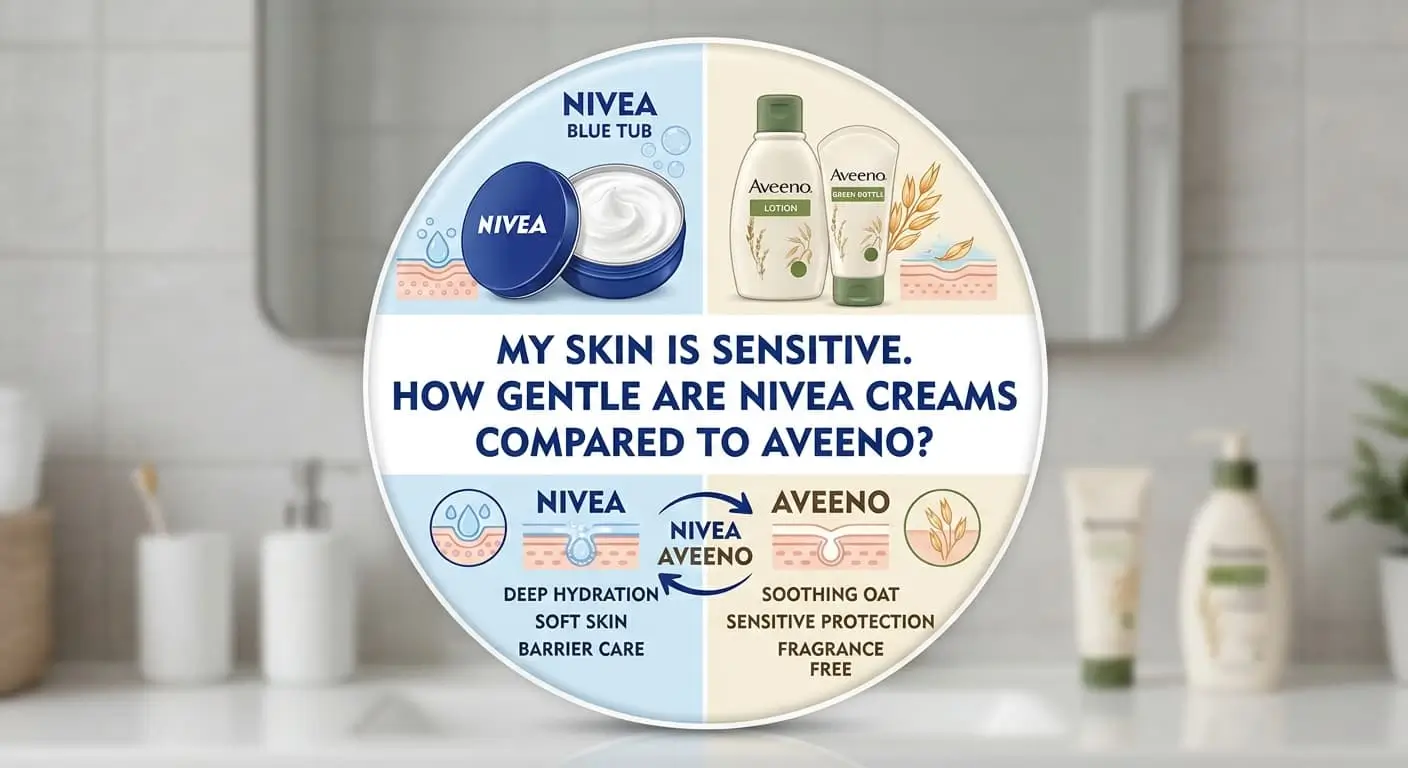
If your main question is, “i have sensitive skin. how gentle are nivea’s creams compared to aveeno?”, the answer depends on which products you are comparing. Aveeno has several fragrance-free formulas featuring oat ingredients, while NIVEA also makes dedicated sensitive-skin creams with ingredients such as glycerin, panthenol, and licorice root extract. However, classic NIVEA Creme has a different ingredient profile and contains fragrance components in the versions examined for this comparison.
Neither brand is automatically suitable for everyone. The most useful approach is to compare individual formulations, understand your skin’s triggers, and choose a moisturizer that supports hydration without introducing ingredients you know your skin dislikes.
Understanding What Makes a Moisturizer Gentle
Sensitive skin is not one specific skin type with a single cause. It describes skin that reacts easily to certain products, environmental conditions, or changes in routine. Some people experience occasional redness or stinging, while others regularly deal with dryness, itching, tightness, or uncomfortable reactions after applying skincare products.
One important factor is the skin barrier. The outermost layer of skin helps limit moisture loss and protects against irritants from the surrounding environment. When this protective layer is weakened, the skin may become dry, rough, and more reactive. Hot showers, harsh cleansers, excessive exfoliation, cold weather, and unsuitable skincare products can all contribute to discomfort.
A gentle moisturizer should help maintain hydration and reduce the feeling of dryness without unnecessarily irritating the skin. Ingredients such as glycerin attract water, while emollients soften the skin and help improve its texture. Occlusive ingredients, including petrolatum and mineral oil, form a protective layer that can reduce water loss.
These ingredient groups perform different jobs, and a useful cream may contain a combination of them. A product does not need to be complicated to be effective. In fact, people with reactive skin may prefer a straightforward formula that provides moisture without unnecessary fragrance or multiple botanical extracts.
It is also important to distinguish moisturizing from soothing. A moisturizer primarily helps improve hydration and reduce water loss. A soothing formula may additionally include ingredients intended to improve the feeling of discomfort associated with dryness or irritation. However, a product marketed for sensitive skin is not guaranteed to work for every person.
The term sensitive skin covers a range of experiences, so individual tolerance matters more than a brand’s general reputation.
NIVEA’s Approach to Sensitive-Skin Creams
NIVEA offers several products intended for people who experience dryness, tightness, redness, or irritation. These include dedicated sensitive-skin face creams and NIVEA MEN Sensitive moisturizers. Their formulations are not identical, so it is important to check the exact product rather than assuming every cream from the brand has the same ingredients.
One example is NIVEA Soothing Day Face Cream SPF 15, listed on the UK product website as a perfume-free formula for sensitive skin. Its published ingredients include glycerin, cetearyl alcohol, caprylic/capric triglyceride, panthenol, shea butter, and licorice root extract. Glycerin supports hydration, while panthenol and emollient ingredients contribute to the product’s moisturizing and conditioning properties. The formula also contains sun protection ingredients because it is designed as a daytime moisturizer with SPF 15.
NIVEA’s Soothing Night Face Cream is another dedicated sensitive-skin option. Its published ingredient list includes glycerin, shea butter, cetearyl alcohol, caprylic/capric triglyceride, licorice root extract, and panthenol. NIVEA describes this cream as perfume-free and developed for skin experiencing dryness, redness, and tightness.
These examples demonstrate that NIVEA does offer products that may suit people who prefer fragrance-free skincare. However, availability and formulations can differ between countries. A product sold in the United Kingdom may not have exactly the same ingredient list as a similarly named product available in Pakistan or another market.
What About Classic NIVEA Creme?
Classic NIVEA Creme deserves separate attention because it is not interchangeable with the brand’s dedicated sensitive-skin range. It is a rich, multipurpose moisturizer intended for use on the face, hands, and body. Its familiar formula contains moisturizing and protective ingredients such as glycerin, mineral oil, microcrystalline wax, paraffin, and lanolin alcohol.
These ingredients can make the cream useful for dry areas that need a richer protective layer. However, the published ingredient lists for classic NIVEA Creme in markets such as the UK and Australia include parfum and fragrance-related ingredients. Examples include limonene, linalool, citronellol, and other fragrance components, depending on the product version.
This distinction matters for someone who already knows that fragrance causes redness, itching, or stinging. A rich cream can be effective at reducing dryness while still being unsuitable for a person who reacts to one of its other ingredients.
NIVEA also describes classic Creme as dermatologically tested, but that does not mean every person with sensitive skin will tolerate it. Dermatological testing and individual compatibility are not the same thing.
Aveeno is particularly associated with oat-based skincare. Its products include moisturizers, cleansers, lotions, and specialized creams designed for different skin concerns. Several of its sensitive-skin products are fragrance-free and feature colloidal oatmeal or other oat-derived ingredients.
Colloidal oatmeal is finely milled oat material used in skincare formulations. It can help condition the skin, support moisture retention, and provide a protective effect. It is especially relevant in products intended for dry, itchy, and uncomfortable skin.
Aveeno’s traditional Moisturising Cream, available in some markets, combines colloidal oatmeal with ingredients such as glycerin, mineral oil, dimethicone, and emollients. Glycerin helps attract water, while mineral oil and dimethicone help reduce moisture loss. The oat ingredient is included as part of the formula’s skin-conditioning approach.
The brand also offers more specialized options. Its Eczema Therapy range includes fragrance-free products featuring colloidal oatmeal. Some versions combine oatmeal with ceramides, which are lipids that help support the skin barrier. These products are intended for dry, eczema-prone, and sensitive skin, although persistent or severe eczema should be assessed by a healthcare professional rather than managed through moisturizer selection alone.
Another example is the Calm + Restore range. Depending on the market and product, this collection includes lightweight gel moisturizers, richer creams, and other oat-focused skincare products. Certain formulas combine oat ingredients with glycerin, panthenol, aloe, or shea butter. The exact combination depends on the product.
It is worth understanding that not every Aveeno moisturizer contains the same type or amount of oatmeal. Some products use colloidal oatmeal, while others include oat extract, oat oil, oat kernel flour, or combinations of these ingredients. These terms refer to different ingredients and should not be treated as identical.
Why Colloidal Oatmeal Is Used
Colloidal oatmeal is valued because it can contribute to both skin conditioning and moisture protection. It is commonly included in formulations for dry and itchy skin, where maintaining hydration and reducing water loss are important.
However, natural ingredients are not automatically reaction-free. A person with an oat allergy or a history of reacting to particular botanical ingredients should review the product carefully and seek professional advice if uncertain.
Aveeno’s sensitive-skin collection includes different product types, while its Eczema Therapy range focuses on products for eczema-prone and sensitive skin. Checking the specific formula is more useful than relying on the brand name alone.
NIVEA vs Aveeno: A Direct Ingredient Comparison
The following comparison focuses on representative products and ingredient approaches rather than claiming that every product from either brand has the same formulation.
Comparison Factor
NIVEA
Aveeno
Sensitive-skin options
Dedicated sensitive face creams and selected NIVEA MEN products
Calm + Restore, Daily Moisturizing, and Eczema Therapy options
Fragrance-free choices
Available in selected sensitive-skin products
Available across several sensitive-skin ranges
Key moisturizing ingredients
Glycerin, panthenol, shea butter, mineral oil, and emollients, depending on product
Glycerin, dimethicone, shea butter, mineral oil, and oat ingredients, depending on product
Oat-based formulations
Not the defining feature of the examples discussed
A major feature of several ranges
Texture
Ranges from rich traditional cream to lighter face moisturizers
Ranges from lotions and gel creams to rich creams and balms
Dryness support
Rich formulas and selected sensitive creams provide moisturizing support
Oat-based creams and barrier-focused formulas target dry and sensitive skin
Irritation considerations
Fragrance in classic Creme may concern fragrance-sensitive users; dedicated options differ
Fragrance-free options are widely available, but oat and other ingredients may not suit everyone
Overall suitability
Depends on the individual formula and skin tolerance
Depends on the individual formula and skin tolerance
The main difference is not that one brand is gentle and the other is harsh. Rather, Aveeno places a stronger emphasis on oat-based products, while NIVEA offers a broader mix of traditional rich moisturizers and dedicated sensitive-skin formulations.
For someone who wants a fragrance-free cream with colloidal oatmeal, Aveeno may provide more directly relevant choices. Someone who prefers a simple moisturizing formula with glycerin and panthenol may also find a suitable option in NIVEA’s sensitive range.
The ingredient list remains the deciding factor.
Which Brand Is Better for Different Sensitive-Skin Concerns?
Very Dry and Sensitive Skin
Very dry skin often benefits from a richer moisturizer containing humectants, emollients, and occlusive ingredients. Aveeno’s richer creams may appeal to people looking for an oat-based formula, particularly when dryness is accompanied by itching or discomfort.
NIVEA’s traditional Creme also provides a rich protective layer. However, its fragrance components may make it less suitable for people who are sensitive to perfume. A dedicated perfume-free NIVEA cream may be a more appropriate option for those who want to stay with the brand.
For very dry skin, compare the complete formulas rather than choosing based on thickness alone.
Easily Irritated or Reactive Skin
If your skin reacts to many products, start with a relatively simple formula and avoid introducing several new ingredients at once. Aveeno’s fragrance-free sensitive-skin options may be worth considering, especially if you are interested in an oat-based moisturizer.
NIVEA’s dedicated Soothing Day and Night creams also provide perfume-free alternatives in markets where they are available. Their inclusion of glycerin and panthenol may appeal to people looking for everyday hydration.
Neither product line guarantees that reactions will not occur. A formula can be fragrance-free and still contain an ingredient that does not agree with your skin.
Fragrance-Sensitive Skin
For people who know that perfume triggers discomfort, fragrance-free products are generally a sensible starting point. Several Aveeno sensitive-skin products are fragrance-free, and NIVEA also offers perfume-free sensitive-skin creams.
Classic NIVEA Creme is a different consideration because the published ingredient lists in the markets examined include parfum and fragrance components. If fragrance is a known trigger, a dedicated perfume-free alternative from either brand is a more logical place to start.
Redness and Uncomfortable Skin
Redness can have several causes, including dryness, irritation, allergies, and underlying skin conditions. A moisturizer may improve discomfort caused by dryness, but it cannot identify or treat every possible cause of redness.
NIVEA’s dedicated sensitive-skin creams include ingredients such as panthenol and licorice root extract in the UK examples discussed. Aveeno offers oat-based products and specialized redness-focused options in certain markets.
If redness is persistent, painful, spreading, or accompanied by swelling, do not rely on changing moisturizers alone. A dermatologist can help identify the cause.
Normal-to-Dry Sensitive Skin
People with normal-to-dry sensitive skin may not need an especially thick cream. A lightweight moisturizer can provide enough hydration without leaving an uncomfortable layer.
NIVEA’s sensitive day cream and selected Aveeno Calm + Restore products may be worth comparing. Consider whether you want SPF in your daytime moisturizer, a fragrance-free formula, or an oat-focused product.
Sensitive Skin That Dislikes Heavy Creams
Some people find rich creams uncomfortable, particularly in warm or humid weather. A heavy formula may feel greasy, remain noticeable on the face, or interfere with other skincare products.
Aveeno’s lightweight gel moisturizers are one option to investigate. NIVEA also offers lighter sensitive-skin face products, including selected formulas designed to absorb without a heavy finish.
Texture is a personal preference, not a reliable measure of gentleness. A lightweight cream can still contain an irritating ingredient, just as a rich cream can be well tolerated by some sensitive skin types.
Does Fragrance Make a Difference?
Fragrance is an important consideration when selecting a moisturizer for sensitive skin. Some people tolerate fragranced skincare without difficulty, while others experience itching, redness, burning, or irritation after using products containing perfume.
The word parfum on an ingredient list generally indicates a fragrance mixture. Some fragrance components may also be listed individually. If you already know that fragrance causes a reaction, checking for these ingredients is a practical first step.
Fragrance-free and unscented are not necessarily interchangeable terms. A fragrance-free product is formulated without added fragrance, whereas an unscented product may use ingredients that mask the smell of the formula. Product labeling rules and terminology can vary, so the ingredient list remains important.
This is one reason classic NIVEA Creme deserves a separate assessment from the brand’s perfume-free sensitive-skin options. The classic formula examined here includes parfum, while the dedicated NIVEA Soothing Day and Night creams are listed as perfume-free.
Aveeno also offers multiple fragrance-free products, but not every item across every collection should be assumed to be fragrance-free. Always inspect the packaging of the exact product you intend to buy.
Are Rich Creams Better Than Lightweight Moisturizers?
A rich cream is not automatically better for sensitive skin. Its usefulness depends on how dry your skin is, which ingredients it contains, and whether you find the texture comfortable.
Thick creams usually contain a higher proportion of oils, waxes, or other emollient and occlusive ingredients. They can be useful for dry patches, rough areas, hands, and skin that loses moisture easily. A richer moisturizer may also feel more protective during colder weather.
Lotions are generally lighter and easier to spread over larger areas. They may be more comfortable in warm weather or for people who dislike a heavy finish. Gel creams can offer another lightweight option, particularly for facial skincare.
The climate matters too. Someone living in a hot, humid environment may prefer a lighter moisturizer during the day, while a richer product may feel more comfortable at night or on particularly dry areas.
When comparing NIVEA and Aveeno, do not assume that one brand always makes heavier or lighter products. Both offer different textures. Choose based on the specific formula and how it feels after application.
How to Choose Between NIVEA and Aveeno Without Wasting Money
Buying multiple creams to discover which one works can become expensive. A more careful selection process can reduce unnecessary purchases and help you understand what your skin actually tolerates.
Start by identifying your main concern. If fragrance is a known trigger, look for a clearly labeled fragrance-free or perfume-free formula. If your skin feels dry and itchy, an oat-based moisturizer may be worth considering. If you dislike heavy creams, compare lightweight lotions or gel moisturizers instead.
Next, check the ingredient list. Look for ingredients you have previously tolerated, and be cautious about known triggers. Do not assume that a product is suitable simply because it carries a sensitive-skin label or is recommended for a particular skin type.
Consider the purpose of the product as well. A daytime face cream with SPF is not necessarily interchangeable with a rich body cream. A product developed for eczema-prone skin may have a different formulation from a general daily moisturizer.
Finally, compare the size, availability, and cost of the products in your local market. Prices and product ranges vary between retailers and countries, so there is no reliable reason to declare one brand universally cheaper.
If you are uncertain, choose one product that matches your needs and test it before buying several items from the same range.
How to Introduce a New Cream Into a Sensitive-Skin Routine
Introducing a new moisturizer gradually is especially important if your skin reacts easily. Even a product marketed for sensitive skin can cause an unwanted reaction in an individual user.
Start by reviewing the ingredient list and checking for anything you already know you cannot tolerate. Then perform a small-area test according to the product’s instructions. Apply a little to a limited area of skin and observe it for signs of discomfort. A short test cannot guarantee that a product will never cause a reaction, but it can help identify some immediate problems before wider use.
If the initial test is comfortable, introduce the moisturizer gradually rather than changing your entire routine at the same time. Keep your cleanser and other familiar products consistent so that you can identify which product may be responsible if irritation develops.
Stop using the cream if you experience significant burning, itching, swelling, or worsening redness. Seek medical advice if the reaction is persistent, severe, or recurring. Facial swelling, breathing difficulty, or a rapidly worsening allergic reaction requires urgent medical attention.
People with eczema, rosacea, recurring rashes, or known contact allergies may benefit from professional guidance when choosing skincare. A dermatologist can help identify triggers and recommend an appropriate routine.
Common Moisturizer Mistakes People With Sensitive Skin Should Avoid
One common mistake is choosing a moisturizer based entirely on brand reputation. A familiar company may offer excellent products for some users, but that does not mean every formula will suit every skin type. Compare the ingredients of the exact cream rather than relying on the name on the packaging.
Another mistake is ignoring the ingredient list. Terms such as natural, soothing, dermatologist-tested, and sensitive-skin friendly can help describe a product, but they do not replace ingredient information. Someone who reacts to fragrance, certain preservatives, or particular botanical extracts should check for those potential triggers.
Using several new products together can also make it difficult to identify the cause of irritation. If you introduce a cleanser, serum, toner, and moisturizer at the same time, you may not know which one caused a reaction. Introduce new products one at a time.
Over-exfoliating is another problem. Frequent use of strong exfoliating acids, scrubs, or other active ingredients can leave skin feeling dry and uncomfortable. A moisturizer may help support hydration, but it cannot always compensate for an overly aggressive routine.
Finally, do not assume that natural ingredients cannot cause reactions. Oat, plant extracts, essential oils, and other botanical ingredients may be unsuitable for certain individuals. Sensitive skin benefits from careful product selection, not from automatically choosing products with the most natural-sounding ingredient descriptions.
Frequently Asked Questions
1. Are NIVEA creams suitable for sensitive skin?
Some NIVEA creams are specifically designed for sensitive skin. Examples include selected Soothing Day and Night face creams that are listed as perfume-free. However, classic NIVEA Creme has a different formulation and includes fragrance components in the versions examined here. Always check the exact product label before purchasing.
2. Is Aveeno gentler than NIVEA?
Aveeno may be a convenient starting point for people seeking oat-based, fragrance-free moisturizers because several of its sensitive-skin products are formulated around these features. However, NIVEA also offers dedicated perfume-free sensitive-skin creams. Neither brand is universally gentler; the best choice depends on individual ingredient tolerance.
3. Does classic NIVEA Creme contain fragrance?
Yes, the classic NIVEA Creme ingredient lists published for markets including the UK and Australia include parfum and fragrance-related ingredients. Formulations can vary, so check the packaging of the specific product available in your country. People who know they react to fragrance may prefer a perfume-free alternative.
4. Which NIVEA creams are designed for sensitive skin?
Examples include NIVEA Soothing Day Face Cream SPF 15 and NIVEA Soothing Night Face Cream in the UK range. NIVEA MEN also offers selected Sensitive moisturizers. Product names, availability, and ingredients differ between markets, so check whether the exact version is labeled for sensitive skin and whether it is fragrance-free.
5. Why is colloidal oatmeal used in Aveeno products?
Colloidal oatmeal is finely milled oat material used to condition the skin and support moisture retention. It is commonly included in products for dry, itchy, and sensitive skin. Its usefulness depends on the complete formula and individual tolerance; people with known oat allergies should seek appropriate advice before using oat-based skincare.
6. Is fragrance-free moisturizer better for sensitive skin?
A fragrance-free moisturizer can be a useful choice for people who experience reactions to perfume or fragrance ingredients. It does not guarantee that a product will suit everyone, because other ingredients may still cause irritation. The best option is one that avoids your known triggers and provides comfortable hydration.
7. Can Aveeno creams help with dry and irritated skin?
Certain Aveeno creams are designed for dry and sensitive skin, and some Eczema Therapy products contain colloidal oatmeal. These formulas can help moisturize and support the skin barrier. However, persistent irritation, severe itching, or suspected eczema should be discussed with a healthcare professional rather than treated through moisturizer changes alone.
8. Can someone with sensitive skin use NIVEA every day?
Some people with sensitive skin may comfortably use a suitable NIVEA moisturizer every day. The important point is choosing the right formulation. A perfume-free sensitive-skin cream may be more appropriate for someone who reacts to fragrance than classic NIVEA Creme. Introduce the product carefully and stop if irritation develops.
9. Should I choose a lightweight cream or a thick moisturizer?
Choose according to your skin’s dryness and your comfort preference. A richer cream may suit very dry areas that need more protective moisture, while a lightweight lotion or gel cream may feel more comfortable in warm weather or on skin that dislikes heavy textures. Neither texture is automatically gentler.
10. How can I test whether a new cream suits my skin?
Read the ingredient list, check for known triggers, and test a small amount on a limited area according to the product’s directions. Observe your skin for discomfort before applying the cream more widely. Introduce only one new product at a time, and stop using it if a significant reaction occurs.
Final Verdict: NIVEA or Aveeno for Sensitive Skin?
When comparing NIVEA vs Aveeno, the more useful question is not which brand is best overall, but which individual cream matches your skin’s needs and avoids your personal triggers.
Aveeno’s oat-focused sensitive-skin products may appeal to people looking for fragrance-free moisturizers with colloidal oatmeal or other oat-derived ingredients. Its range includes different textures and specialized products for dry, sensitive, and eczema-prone skin. Someone who wants an oat-based cream may therefore find Aveeno a natural place to begin comparing options.
NIVEA should not be dismissed, however. Its dedicated sensitive-skin products include perfume-free options with moisturizing ingredients such as glycerin, panthenol, and shea butter. These may suit people who want everyday hydration without added perfume, depending on the exact formulation and their individual tolerance.
Classic NIVEA Creme needs a separate assessment. Its rich texture may appeal to people with dry skin, but the versions discussed here contain parfum and other fragrance components. That makes it a less obvious starting point for someone who already knows that fragrance irritates their skin.
Ultimately, Aveeno may have an advantage for shoppers specifically seeking oat-based sensitive-skin formulas, while NIVEA offers worthwhile alternatives through its dedicated perfume-free range. Neither brand can promise a reaction-free experience for every person.
Check the ingredient list, consider your skin’s known sensitivities, and introduce any new moisturizer gradually. A suitable cream is not necessarily the most popular, expensive, or heavily marketed one. It is the product that keeps your skin comfortably moisturized without causing unwanted reactions.