Julerie: Exploring Vintage & Pre-Loved Fine Jewelry in Belgium
- November 24, 2026
- 0
Jewelry has always been more than decoration. A ring can mark an important occasion, a necklace can become a treasured family possession, and a pair of earrings can



Jewelry has always been more than decoration. A ring can mark an important occasion, a necklace can become a treasured family possession, and a pair of earrings can
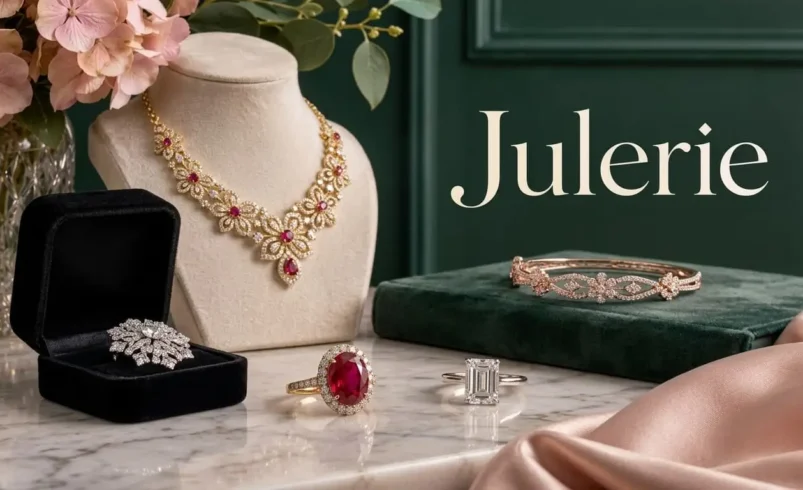
Jewelry has always been more than decoration. A ring can mark an important occasion, a necklace can become a treasured family possession, and a pair of earrings can carry memories long after the moment in which they were purchased. While many shoppers associate fine jewelry with newly manufactured designs and traditional luxury boutiques, the growing interest in vintage and pre-loved pieces has introduced another way to appreciate beautiful accessories.
Julerie is a name connected with this changing approach to jewelry shopping. Based in Ghent, Belgium, the business presents a selection of vintage, pre-loved, branded, and fine jewelry. Its identity is also connected to a family history in the jewelry trade, with roots that the company traces to a shop opened in Ghent in 1976.
The exact spelling is important. Julerie is not simply another version of the general English word “jewelry.” It is the name used by a particular Belgian jewelry business. Its website introduces customers to collections that include rings, necklaces, pendants, bracelets, watches, and selected pieces featuring precious metals and gemstones.
The interest in Julerie reflects a wider shift in how people think about personal accessories. Instead of considering only newly produced items, shoppers are increasingly exploring pre-owned pieces that offer distinctive designs, established craftsmanship, and the possibility of giving an existing object a new chapter.
This guide explores Julerie’s background, its vintage and pre-loved focus, the types of jewelry associated with its catalog, and the practical questions shoppers should consider before purchasing second-hand fine jewelry. It also looks at the wider market for pre-owned luxury accessories and explains why careful research remains essential when buying valuable items online.
Julerie is a jewelry retailer associated with Ghent, Belgium. Its official website describes the business as a destination for vintage, pre-loved, branded, and fine jewelry. Rather than presenting itself as a general fashion-accessory shop, its catalog focuses on jewelry and selected watches, with an emphasis on pieces that have distinctive materials, designs, or histories.
The retailer organizes its website into several shopping categories. These include vintage rings, pre-loved rings, pre-loved diamond rings, pendants, necklaces, watches, and bracelets. It also features a section called the Julerie Collection and a separate area for branded items.
This structure gives visitors more than one way to explore the catalog. Someone interested in an older gold ring can begin with the vintage category, while a shopper looking for a previously owned diamond piece can explore the pre-loved diamond selection. Customers interested in watches or recognizable jewelry labels can browse those areas separately.
The distinction between Julerie and jewelry is straightforward but useful.
Jewelry is the general term for decorative objects worn on the body. It includes rings, necklaces, bracelets, earrings, brooches, pendants, and other accessories. Julerie, by contrast, is a specific business name.
This difference matters because a search for Julerie may be intended to find information about the Belgian retailer rather than general advice about jewelry. The name is associated with the shop’s own history, catalog, and online shopping experience.
Julerie’s published description places particular attention on affordable pre-loved, vintage, and branded fine jewelry. The retailer’s homepage also promotes a selection of vintage and modern fine jewelry.
The combination is interesting because it brings together different types of products. Vintage jewelry may appeal to shoppers who appreciate older designs, while modern fine jewelry can attract people who prefer contemporary shapes and styling. Branded pieces add another dimension, particularly for customers interested in established luxury labels.
The exact selection can change as individual items sell. For that reason, a category on the website should be understood as an indication of the types of products the retailer offers, not a guarantee that a particular ring, watch, or necklace will always be available.
One of the most distinctive aspects of Julerie is the family story presented on its official history page.
The retailer introduces Julie as a third-generation jeweler who works alongside her brother Christophe. According to the published account, their family’s connection with jewelry began with their grandmother, Suzanne, who collected antique jewelry and colorful gemstones.
Suzanne eventually decided to open a jewelry shop with her daughter. The family history states that the shop was established in Ghent in 1976 and that Suzanne initially filled its displays with jewelry from her own collection.
Over time, the family opened additional jewelry shops in Flanders. This background connects the current business with a longer tradition of working with jewelry, customers, and carefully selected pieces.
The official history describes Julie and Christophe as the third generation of the family involved in the jewelry business.
Christophe is identified as the person running the shop in Ghent. Julie explains that her professional background initially included luxury hospitality and events before she began working alongside her brother.
This combination of experience gives the family story a connection between traditional retail knowledge and a more contemporary approach to presenting a jewelry business. The website describes their shared interest in jewelry and beautiful objects as a central reason for creating Julerie.
However, it is important to distinguish the company’s published family account from independently verified corporate information. The official history identifies the family members and describes their roles, but it does not provide a complete legal ownership breakdown.
The year 1976 is an important part of Julerie’s background because it marks the beginning of the family jewelry story described by the retailer.
It should not automatically be presented as the founding year of the current Julerie brand. The company’s history uses 1976 to describe the opening of the earlier family shop in Ghent. It then explains how the present Julerie identity developed from that family connection.
This distinction helps readers understand the heritage without confusing the history of a family business with the formal establishment date of a particular company or brand.
For a jewelry retailer, family experience can be an important part of its identity. Nevertheless, shoppers should evaluate the actual item they are considering rather than assuming that a long family history automatically establishes the condition, value, or authenticity of every product.
Vintage and pre-loved jewelry are central to Julerie’s public identity. These categories appeal to shoppers who want something different from a newly manufactured accessory and who appreciate the character of an existing piece.
Although the terms are sometimes used together, they do not mean exactly the same thing.
Vintage jewelry generally refers to jewelry from an earlier period. The exact age required for an item to qualify as vintage can vary depending on the seller, collector, or market.
A vintage ring might feature a setting style, gemstone arrangement, or decorative detail associated with a particular design period. Older pieces can also reflect manufacturing techniques and proportions that differ from many contemporary designs.
For example, a shopper might be drawn to an older gold ring because of its detailed setting or unusual gemstone combination. Another person might prefer a vintage pendant because it has a design that is less common in modern mass-produced collections.
The word vintage describes a relationship with age and design history. It does not automatically mean that an item is rare, valuable, or in excellent condition. Those qualities must be evaluated separately.
Pre-loved jewelry is jewelry that has previously belonged to another owner. It may be relatively modern, recently purchased, or considerably older.
A pre-loved item does not necessarily show obvious signs of use. Some pieces may have been worn frequently, while others may have spent much of their time stored safely.
The term is often used because it presents second-hand shopping in a more personal way. Rather than treating an item as unwanted or outdated, the description emphasizes that it can continue to be appreciated by another owner.
In Julerie’s catalog, pre-loved jewelry is presented alongside vintage and branded pieces. This gives shoppers access to different styles and product histories within the same general shopping environment.
A vintage piece is not necessarily pre-loved in the way a customer might expect, and a pre-loved piece is not necessarily vintage.
A recently purchased designer bracelet that has had one previous owner may be pre-loved but not vintage. An older necklace may be vintage even if its ownership history is not fully documented.
Buyers should therefore look beyond the category heading. The product description should explain the materials, approximate age where known, condition, and any relevant history.
Julerie’s online categories provide an overview of the products associated with the retailer. The exact inventory changes, but several types of jewelry and accessories appear in its published catalog.
Rings are an important part of the store’s vintage and pre-loved offering. Older rings can feature distinctive settings, decorative bands, unusual proportions, and gemstone combinations.
A vintage gold ring may appeal to someone who enjoys traditional craftsmanship, while a gemstone ring can provide a more colorful alternative to a conventional diamond design.
Before purchasing a vintage ring, shoppers should examine its size, setting, metal details, and overall condition. A ring that looks attractive in a photograph may require professional attention if the band has become thin or the gemstone setting has loosened.
Pre-loved rings offer another route into fine jewelry shopping. Julerie lists a separate category for pre-loved diamond rings, making it easier for visitors to browse pieces in this area.
Diamond jewelry can vary considerably in appearance and value. Factors such as cut, color, clarity, carat weight, setting design, and overall condition can influence how a particular ring is evaluated.
A product title alone is not enough to assess a diamond. Buyers should look for clear specifications and ask questions when important details are missing.
Necklaces and pendants provide options for different styles and occasions. A simple chain may work well with everyday clothing, while a gemstone pendant can become the main feature of an outfit.
Julerie’s catalog includes necklace and pendant categories, with examples on the website featuring pearls, gemstones, and decorative designs.
When evaluating a necklace, shoppers should consider its length, fastening, chain condition, and the security of any attached pendant. For a pre-owned item, small details such as worn links or a loose clasp can affect everyday usability.
Bracelets can range from simple gold designs to more decorative pieces featuring gemstones or distinctive shapes.
The fit is particularly important. A bracelet that is too tight may feel uncomfortable, while one that is too loose may move excessively or catch on clothing.
Buyers should check the stated length and ask whether the measurement includes the clasp. They should also inspect the fastening mechanism, links, hinges, and any areas where repeated movement may have caused wear.
Watches are included in Julerie’s broader product categories. Pre-owned watches require some additional checks because their condition involves more than appearance.
A buyer may need to understand the watch’s reference, movement type, service history, case condition, bracelet condition, and whether its functions have been tested.
For a branded watch, model identification and supporting documentation are particularly relevant. A box or warranty card can be useful, but neither should be treated as conclusive proof of authenticity without considering the complete item and its supporting evidence.
Julerie’s website also includes a branded category and examples of products identified with established luxury names.
A branded item may attract shoppers because of its design, recognition, or connection with a particular fashion house. However, the presence of a brand name in a listing does not by itself establish that the retailer is an authorized dealer for that brand.
Buyers should examine the exact product description and ask what documentation accompanies the item. They should also understand whether the seller is making a statement about the item’s brand attribution, condition, original packaging, or service history.
The interest in vintage jewelry is connected to several changes in fashion and shopping habits. Modern consumers have access to a wider range of styles than ever before, but many are also looking for products that feel individual rather than interchangeable.
Vintage jewelry can offer that sense of individuality.
Older jewelry often reflects the design preferences of its period. Decorative details, gemstone arrangements, metalwork, and proportions may look different from contemporary collections.
This gives shoppers an opportunity to find pieces that are not easily duplicated by current mass-market designs.
A vintage ring with a detailed setting, for example, may create a different impression from a simple modern band. Neither is automatically better. The appeal depends on personal taste and how the piece fits into someone’s wardrobe.
An older piece of jewelry has existed before its current owner. Although the full ownership story may not be known, the item can still feel meaningful because it has survived beyond its original purchase.
Some shoppers enjoy imagining how a vintage accessory may have been worn in another period. Others simply appreciate the fact that the design has lasted long enough to remain attractive.
This emotional connection can make vintage shopping more engaging than choosing a newly manufactured accessory from a large display.
Fashion trends can change quickly, but jewelry often remains part of a person’s style for many years.
Vintage and pre-loved pieces can help shoppers develop a more individual look. A distinctive pendant, an older gold ring, or a colorful gemstone bracelet can become a recognizable part of someone’s personal style.
The key is choosing something that feels comfortable and appropriate rather than purchasing an item only because it is described as rare or fashionable.
Second-hand luxury jewelry can introduce shoppers to established design houses and fine materials through previously owned items.
However, second-hand does not automatically mean inexpensive. A sought-after brand, precious gemstone, rare design, or excellent condition can still command a substantial price.
The advantage is not necessarily a lower price in every case. It is the opportunity to consider a wider range of products, including designs that may no longer be available through the original retail collection.
The appearance of a piece is only one part of its quality. Fine jewelry should also be assessed through its materials, construction, setting, and condition.
This is especially important when buying vintage or pre-loved pieces because the item may have experienced years of wear.
Gold is commonly used in fine jewelry, but not every gold-colored item is made from solid gold.
Buyers should understand the difference between solid gold, gold-filled materials, and gold-plated jewelry.
Gold purity is commonly described using karats. For example, 18-karat gold contains a higher proportion of gold than 14-karat gold, although the exact alloy composition and other metals used can vary.
Hallmarks and metal stamps can help identify a piece, but they should be interpreted carefully. A stamp is useful evidence, not a complete substitute for professional examination when a purchase is expensive.
Gemstones contribute to a piece’s appearance and can influence its market value.
Diamonds are often assessed through the familiar four Cs: cut, color, clarity, and carat weight. These characteristics help describe the stone, but they do not independently establish the full value of a ring or necklace.
Colored gemstones require different considerations. Emeralds, rubies, sapphires, topaz, aquamarine, citrine, and tourmaline can vary in quality, treatment, origin, and appearance.
A product description should identify the gemstone as accurately as possible. Buyers should also ask whether a stone has received treatments that affect its appearance or durability.
Craftsmanship is visible in the way a piece is assembled and finished.
A well-made ring should have a setting that holds its stone securely. A necklace should have sound links and a dependable clasp. A bracelet should have a fastening mechanism that works properly.
Older jewelry can show signs of repair or alteration. This is not necessarily a problem, but the buyer should understand what work has been carried out and whether further maintenance may be required.
Condition is one of the most important factors when evaluating second-hand jewelry.
Common signs of wear may include:
Some wear is normal for a pre-owned item. The important question is whether the condition has been clearly described and whether any damage affects the item’s safety, appearance, or everyday use.
Authenticity is a major consideration in the second-hand luxury market. A product may be described as vintage, branded, or made from precious materials, but shoppers should understand what evidence supports those descriptions.
This is especially important when a piece carries a recognizable luxury name or contains valuable gemstones.
Documentation may include an original invoice, brand paperwork, gemstone report, appraisal, service record, or seller-issued certificate.
Each document has a different purpose. A gemstone report may describe the characteristics of a stone, while a service record may show that a watch or piece of jewelry received maintenance.
A seller-issued certificate may provide useful information, but buyers should ask who prepared it and what it actually verifies.
For example, a certificate might confirm that a piece has been examined by the seller without independently establishing the origin of every component. Clear explanations are more useful than a general statement that a product is certified.
Hallmarks can help identify metal purity or the authority responsible for marking an item, depending on the country and applicable system.
For branded jewelry, relevant details may include model references, engraving, construction, logos, and documentation.
However, counterfeit products can imitate visible features. A familiar logo or attractive presentation should not be treated as sufficient proof.
For higher-value purchases, an independent assessment by a qualified professional may provide additional reassurance.
Julerie’s official website presents the business as a specialist in pre-loved, vintage, and branded fine jewelry. Its homepage also displays customer testimonials, including one customer who mentions receiving a certificate with an order.
These are useful details about how the retailer presents its service, but testimonials are not independent verification of every product or a guarantee that every item has identical documentation.
A careful buyer should check the documentation available for the exact item being considered. It is reasonable to ask what has been examined, who performed the assessment, and whether the certificate relates to the metal, gemstones, brand attribution, or the complete piece.
Online jewelry shopping gives customers the opportunity to browse products without visiting a physical store. It can also make it easier to compare different styles and examine product information at a convenient time.
For pre-owned jewelry, however, the quality of the online listing is particularly important.
Jewelry is a small product with details that can be difficult to assess in a photograph.
A useful listing should include clear images from multiple angles. Close-up photographs can help show gemstone settings, clasps, hallmarks, surface marks, and decorative details.
For rings, photographs of the inside of the band and the setting can be helpful. For necklaces and bracelets, buyers may want to see the clasp and chain structure.
Lighting can influence how gold and gemstones appear. A product photograph should therefore be considered alongside the written specifications rather than treated as a perfect representation of the item.
A detailed description should ideally include:
The more complete the listing, the easier it becomes for customers to make an informed decision.
Julerie’s website organizes its selection into recognizable product sections, including vintage rings, pre-loved rings, diamond rings, pendants, necklaces, watches, bracelets, branded products, and the Julerie Collection.
The homepage also highlights selected products and new arrivals. This creates a straightforward browsing structure for customers who already know what kind of accessory they want.
Because pre-owned products may be individual pieces, availability can change. A shopper should always check the current product page rather than relying on an older search result or saved screenshot.
If a listing does not answer an important question, contacting the retailer before purchase is sensible.
Useful questions may include:
These questions are not signs of distrust. They are part of making a careful decision when purchasing an item that may have considerable financial or personal value.
Julerie’s focus on vintage and pre-loved fine jewelry fits into a wider market in which second-hand luxury products have become more visible.
Fashion shoppers are increasingly familiar with resale platforms, vintage boutiques, consignment stores, and specialist retailers. This has expanded the ways people can buy and sell accessories beyond traditional new-product retail.
The pre-owned luxury market includes products such as watches, handbags, clothing, and jewelry. Buyers may be interested in discontinued designs, older collections, or products that are no longer easy to find through conventional retailers.
Jewelry has particular qualities that make it suitable for long-term ownership. Precious metals can remain useful over many years, and some gemstones can continue to be enjoyed across generations when properly cared for.
However, the value of an item depends on more than its age or material. Condition, brand demand, design, rarity, documentation, and market preferences can all influence what a buyer is willing to pay.
Buying pre-loved jewelry can support the reuse of existing products. Instead of purchasing a newly manufactured accessory, a customer chooses an item that is already in circulation.
This can extend the useful life of a piece and reduce the need to replace it simply because its first owner no longer wants it.
Nevertheless, sustainability claims should be made carefully. The environmental impact of a product involves its original materials, mining, manufacturing, transport, repairs, packaging, and future ownership.
Second-hand shopping can be one part of a more considered approach to consumption, but it does not automatically make every purchase environmentally harmless.
A strong resale market also depends on the ability to maintain and repair jewelry.
A ring may need a setting inspection, a chain may require repair, and a watch may need servicing. These tasks can help an item remain useful, but they may add costs that should be considered before buying.
For vintage jewelry, professional maintenance can be particularly important because older components may have experienced years of use.
Julerie’s family background provides a different dimension to its position in the market. The business connects its current identity with a family history of jewelry retail in Ghent.
That story gives the retailer a personal narrative, while its online catalog allows customers to explore products beyond a traditional shop visit.
The combination of family heritage, pre-owned products, and digital retail reflects how specialist jewelry businesses can present traditional categories to modern shoppers.
Anyone considering a purchase from Julerie or another pre-owned jewelry retailer should take time to assess the exact item.
A product may look attractive in photographs, but its suitability depends on practical details as well as appearance.
Confirm whether the piece is made from solid gold, another precious metal, or a plated material. If a listing uses a term such as 18-karat gold, check that the description clearly identifies which parts of the item have that composition.
Do not assume that every decorative component or chain element is made from the same material.
If the jewelry contains diamonds or colored gemstones, look for specific information about them.
Ask whether the stones are natural or laboratory-created, whether treatments are known, and whether a grading report or other documentation is available.
The word diamond alone does not provide enough information to compare two pieces accurately.
Read the condition description carefully and review all available photographs.
If the listing does not mention scratches, repairs, missing stones, or other visible issues, ask for clarification rather than assuming the item is in perfect condition.
Ring sizing is especially important because resizing is not possible or suitable for every design.
Check the stated size and ask whether resizing is available. For bracelets and necklaces, confirm the actual length and how the item is measured.
A good fit can make the difference between a piece that becomes part of everyday wear and one that remains unused.
For branded jewelry or valuable gemstones, understand what documentation accompanies the product.
Ask whether a certificate is seller-issued or independently prepared. If the item has original brand documents, confirm which documents are included and whether their details correspond with the product.
The price of a pre-owned piece should be considered in relation to its materials, condition, design, documentation, and current market demand.
A high price does not automatically establish quality, and a lower price does not necessarily mean a bargain.
For a valuable purchase, comparing similar products and obtaining an independent professional opinion may be worthwhile.
Before paying, review the retailer’s current terms for delivery, returns, refunds, and any applicable costs.
This is particularly important for online purchases because the customer cannot physically examine the item before receiving it.
If the product is a one-of-a-kind vintage piece, confirm what happens if it arrives with a condition issue or does not match the description.
Consider how often the piece is likely to be worn and whether it suits the intended purpose.
A delicate vintage ring may be attractive but less suitable for frequent activities. A decorative necklace may work better for occasional events than everyday use.
Choosing jewelry that fits real preferences and practical needs is usually more satisfying than buying something simply because it is described as exclusive.
Pre-loved jewelry offers several advantages, but it also requires careful evaluation.
Distinctive designs: Older and previously owned pieces can offer styles that are less common in current collections.
A wider selection: Buyers can explore products from different periods, designers, and brands.
Continued use: Purchasing an existing item gives it an opportunity to be enjoyed by another owner.
Potential value differences: Some pre-owned items may be priced differently from comparable new products, although savings are never guaranteed.
Personal meaning: A piece with an established design history can feel more individual than a newly manufactured accessory.
Variable condition: Two pieces of the same type may have very different levels of wear.
Documentation differences: Some products may have detailed paperwork, while others may have limited ownership or gemstone records.
Maintenance costs: Repairs, cleaning, resizing, and servicing can add to the total cost.
Changing availability: Individual pre-owned items may sell quickly and may not be restocked.
Resale uncertainty: Jewelry should not be purchased on the assumption that it will increase in value. Future resale prices depend on market demand and the condition of the item.
The best approach is to treat pre-loved jewelry as something to be selected for its design, quality, and suitability rather than as a guaranteed financial investment.
Julerie is a jewelry business based in Ghent, Belgium. Its website focuses on vintage, pre-loved, branded, and fine jewelry, with product categories that include rings, necklaces, pendants, bracelets, and watches.
No. Jewelry is the general word for decorative accessories such as rings, necklaces, and bracelets. Julerie is a specific business name associated with a Belgian jewelry retailer.
Julerie is associated with Ghent, Belgium. Its official website presents the business through its family history and online jewelry catalog.
According to the company’s official history, its family jewelry story began with Suzanne, an antique jewelry and gemstone enthusiast who opened a shop with her daughter in Ghent in 1976. The history identifies Julie and her brother Christophe as the third generation of the family involved in the jewelry business.
Yes. Vintage jewelry is one of the main categories featured on its website. The catalog includes vintage rings and other fine jewelry selections, although individual product availability can change.
Pre-loved jewelry is jewelry that has previously belonged to another owner. It may be relatively modern or much older. The term describes previous ownership rather than a specific age or design period.
The website lists vintage rings, pre-loved rings, pre-loved diamond rings, pendants, necklaces, watches, bracelets, branded items, and a Julerie Collection section. The exact products available may change over time.
No. Age alone does not determine value. Materials, craftsmanship, condition, rarity, brand, design, and market demand all influence how a piece is evaluated.
Buyers should review the metal composition, gemstone details, condition, size, documentation, price, delivery arrangements, and return terms. For high-value products, an independent professional assessment may provide additional reassurance.
It can support reuse by extending the life of an existing product. However, the environmental impact of jewelry also depends on its original production, materials, transport, maintenance, and future use. Second-hand shopping can contribute to more considered consumption, but it is not automatically impact-free.
Its website includes a branded jewelry section and has displayed selected products identified with established luxury labels. Buyers should check the details and documentation of each specific item rather than assuming that every listing has the same supporting paperwork.
People may prefer vintage jewelry because of its distinctive designs, historical character, craftsmanship, or personal appeal. It can also provide access to styles that are no longer commonly produced.
Julerie is a distinct name in Belgium’s jewelry retail landscape, with a public identity built around vintage, pre-loved, branded, and fine jewelry. Its connection to Ghent and the family history described on its official website give the business a personal background that reaches back to a jewelry shop opened in 1976.
The retailer’s catalog brings together several types of products, including rings, diamond jewelry, pendants, necklaces, bracelets, watches, and selected branded pieces. This range reflects the appeal of pre-owned jewelry to shoppers who want to explore designs beyond newly manufactured collections.
The wider popularity of vintage and pre-loved jewelry also shows how fashion shopping is changing. Buyers are increasingly interested in individuality, reuse, craftsmanship, and products with a sense of history. At the same time, purchasing second-hand fine jewelry requires attention to condition, materials, sizing, authenticity documentation, and price.
For anyone exploring Julerie jewelry, the most useful approach is to look carefully at the individual product rather than relying only on the brand story or category label. A well-chosen piece should have clear specifications, suitable condition, understandable documentation, and a design that genuinely matches the buyer’s preferences.
Ultimately, the appeal of vintage and pre-loved jewelry lies in its ability to connect the past with personal style today. Julerie’s family background and curated product categories make it an interesting example of how traditional jewelry retail can find a place in the modern second-hand luxury market.
For More Visits: Worldmagazine