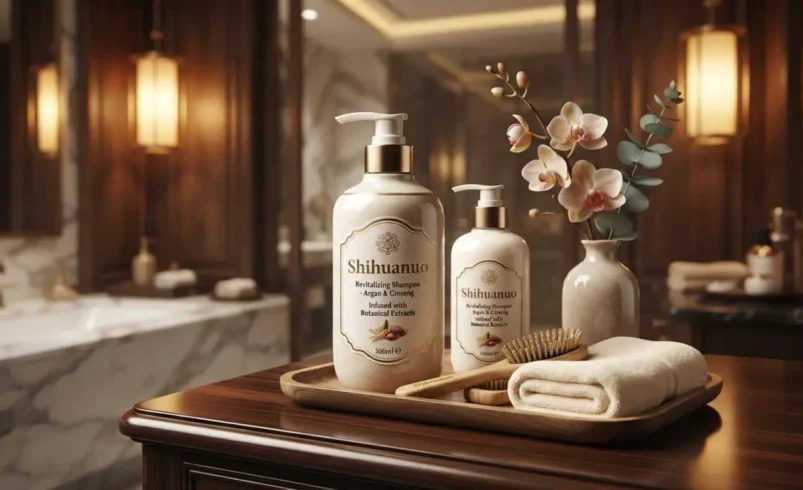
Shihuanuo: Exploring the Hair-Colour Brand and Its Place in Modern Hair Care
November 23, 2026
0
Modern hair-care consumers increasingly look for products that make everyday routines simpler. Shampoo, conditioner, hair treatments, and colouring products have traditionally been purchased and used separately. However, multifunctional
Modern hair-care consumers increasingly look for products that make everyday routines simpler. Shampoo, conditioner, hair treatments, and colouring products have traditionally been purchased and used separately. However, multifunctional beauty products are changing those expectations. Hair-colour shampoos, in particular, have attracted attention because they combine the familiar experience of washing hair with the possibility of refreshing its colour.
Shihuanuo is associated with this growing product category. Its business identity is connected with hair-colour shampoos, hair-colouring products, and a wider selection of personal-care items. The company also presents itself as a supplier offering manufacturing and customization services for businesses interested in developing their own beauty-product ranges.
Understanding Shihuanuo requires more than looking at its product descriptions. Consumers need to distinguish between a manufacturer’s claims, the general science behind shampoo-based colouring, and the actual characteristics of an individual formula. Questions about ingredients, grey-hair coverage, manufacturing transparency, and product safety are especially important. A closer examination helps explain what Shihuanuo represents and what shoppers should consider before choosing products associated with the name.
Quick Brand Profile: Shihuanuo
Fact
Details
Brand Name
Shihuanuo
Brand Category
Hair Care and Personal Care
Industry
Beauty and Cosmetics
Associated Products
Hair-colour shampoos, hair-colour creams, shampoo, conditioner, hair masks, hair oils, and related products
Main Product Category
Hair-colour shampoo
Company Name
Shihuanuo (Guangdong) Biotechnology Co., Ltd., as presented in its business identity
Founder
Not independently confirmed
Established
A founding year has not been independently confirmed
Headquarters
Guangdong, China, according to the company’s business information
Manufacturing Background
The company presents itself as a hair-colour and hair-care product supplier
Product Range
Hair-colour shampoos, colouring creams, hair-care products, masks, oils, and related personal-care categories
Manufacturing Services
OEM, ODM, and OBM services are advertised
Official Website
shihuanuohairbeauty.com
Market Presence
Appears in online product and supplier listings; exact market share is not established
Brand Positioning
Hair-colour and personal-care products, with an emphasis on shampoo-based colouring and manufacturing services
Shihuanuo and Its Position in the Hair-Care Market
Shihuanuo occupies an interesting position within the beauty industry because its business presentation connects consumer hair-care products with manufacturing services.
Its online identity is associated with hair-colour shampoos and related products, while its broader catalogue includes other items used in everyday hair maintenance. This combination places the business within a market where product development, private-label manufacturing, and consumer retail increasingly overlap.
Understanding that position requires distinguishing between a product brand and a manufacturing supplier.
A conventional retail brand communicates mainly with shoppers. It focuses on packaging, product benefits, colour options, customer experience, and availability. A manufacturing business may work behind the scenes, producing products for retailers, distributors, or other brands.
Shihuanuo presents elements of both business models. Its product categories appeal to consumers interested in hair colouring, while its manufacturing services are directed toward businesses seeking customized beauty products.
Understanding Its Business Identity
The business name associated with Shihuanuo is Shihuanuo (Guangdong) Biotechnology Co., Ltd. Its business presentation identifies Guangdong, China, as its operating location.
However, consumers should distinguish between a company’s stated business identity and independently confirmed corporate information. Details such as its original founding date, founder, ownership structure, factory capacity, and complete manufacturing history should not be assumed unless clearly documented.
This is particularly important in the cosmetics industry, where product brands, distributors, factories, and private-label suppliers can operate under different names.
A product carrying the Shihuanuo name should therefore be evaluated through its own packaging and manufacturer information rather than through assumptions about every business or seller using a similar name.
Why Manufacturing Services Matter
The beauty industry includes many businesses that do not manufacture every product themselves.
A retailer may develop a brand concept but rely on an external supplier for formulation and production. A distributor may purchase finished products and sell them in a particular market. A manufacturer may also provide customized products for several different customers.
Shihuanuo advertises OEM, ODM, and OBM services, indicating an interest in this wider manufacturing market.
For consumers, this business model matters because it highlights the importance of identifying the actual manufacturer and responsible seller. The name on the front of a bottle does not always tell the complete story of how the product was developed or produced.
Why Shampoo-Based Hair Colour Has Become Popular
Hair colouring has traditionally involved a separate process from ordinary shampooing. Conventional products may require mixing, careful application, a specific processing period, and thorough rinsing.
Shampoo-based hair colouring offers a different experience. It combines a cleansing-style application with colour deposition, making it attractive to consumers who prefer a simpler routine.
This format is especially interesting to people who want to refresh their appearance, maintain an existing shade, or manage visible grey strands.
However, convenience is only one part of the decision. A colour shampoo does not necessarily produce the same results as a conventional permanent dye.
The Appeal of Multifunctional Beauty Products
Multifunctional products are designed to combine several purposes in one formula.
In hair care, consumers may encounter products described as cleansing and conditioning shampoos, colour-depositing conditioners, and treatments intended to improve the feel of hair while maintaining colour.
The appeal is easy to understand. A product that performs more than one function may reduce the number of separate steps in a routine.
But combining functions creates formulation challenges. A cleanser must remove unwanted material from the hair, a conditioner should improve manageability, and a colouring ingredient must produce the intended visual effect.
These purposes do not automatically work together perfectly. The final experience depends on the formula, its ingredients, and the way it is used.
The Interest in Convenient Grey-Hair Management
Grey hair is a normal part of human hair development. Some people prefer to leave it natural, while others enjoy experimenting with different shades or maintaining a consistent colour.
For consumers interested in colouring, convenience can be an important consideration.
A shampoo-based product may seem appealing because its application resembles an ordinary hair-washing routine. Nevertheless, the actual coverage depends on the product’s colouring system and the condition of the hair.
A formula that deposits colour effectively on a small number of grey strands may not provide the same appearance on hair with a much higher proportion of grey.
Consumers should therefore look for realistic product information rather than assuming that every hair-colour shampoo provides complete coverage.
Understanding the 3-in-1 Hair Dye Shampoo Concept
The term 3-in-1 generally describes a product designed to combine cleansing, conditioning, and colouring functions.
This concept helps explain the appeal of Shihuanuo-associated hair-colour shampoo products. It also highlights the importance of examining what each function actually means.
A product description may present all three benefits together, but the effectiveness of each function depends on the formulation.
Cleansing: The Shampoo Function
Conventional shampoo is designed to clean hair and the scalp.
It generally contains surfactants, which help loosen oil, dirt, and styling residue so they can be rinsed away with water.
The cleansing system is an important part of any shampoo-based colour product because the formula must provide a suitable washing experience while also allowing the colouring components to perform their intended function.
A formula that cleanses too aggressively may not suit every hair type, particularly hair that is already dry or chemically treated.
Conditioning: Improving Hair Manageability
Conditioning ingredients are commonly used to reduce friction between strands and improve the way hair feels.
Depending on the formulation, they may help make hair easier to comb, reduce roughness, and improve softness.
Some hair-colour products include oils, conditioning agents, or botanical extracts as part of their product positioning.
However, the presence of a conditioning ingredient does not automatically mean that the product repairs every type of hair damage. Consumers should understand conditioning as a cosmetic benefit rather than assume that a shampoo can reverse all structural damage.
Colouring: The Main Distinguishing Feature
Colour deposition separates a hair-colour shampoo from an ordinary cleansing shampoo.
Depending on the formula, colour ingredients may attach to the outside of the hair shaft or work through a more involved colouring process.
Some products produce temporary visual changes, while others are designed to last through several washes.
The term hair-colour shampoo does not describe one universal chemical technology. Consumers should check the product’s own description to understand whether it is temporary, semi-permanent, demi-permanent, or permanent.
Does 3-in-1 Mean It Replaces Every Hair Product?
Not necessarily.
A multifunctional product may reduce the need for separate applications, but it does not automatically replace every shampoo, conditioner, mask, or treatment.
Someone with dry or damaged hair may still prefer a separate conditioner. A person with an oily scalp may have different cleansing requirements from someone with a dry scalp.
The best approach is to assess the product according to its intended use and actual performance rather than relying on the number of functions printed on its packaging.
How Shampoo-Based Hair Colouring Works
Understanding the general principles of hair colouring helps consumers develop realistic expectations.
Hair is made primarily of keratin, a structural protein. Its outer layer, known as the cuticle, consists of overlapping cells that help protect the inner structure.
Natural hair colour is influenced by melanin pigments. Cosmetic hair-colouring products change the visible shade through different processes, depending on their formulation.
Not every colouring product works in the same way.
Colour Deposition on Hair
Some colour-depositing products place coloured material on or near the outside of the hair shaft.
This can refresh an existing shade or create a temporary change in appearance. As the hair is washed, the deposited colour may gradually become less noticeable.
Other products use more complex colouring systems to achieve longer-lasting results.
The exact process depends on the ingredients and formulation. It would be inaccurate to assume that every Shihuanuo product uses an identical colouring technology.
Temporary Colouring
Temporary hair colour is generally designed to produce a shorter-lasting result.
It may be useful for people who want to experiment with a different appearance without making a longer-term commitment.
The colour usually becomes less noticeable through washing and normal hair maintenance.
The exact duration varies according to the product, starting shade, hair condition, and washing habits.
Semi-Permanent Colouring
Semi-permanent products are designed to last longer than simple temporary colour products.
They can be used to refresh a shade or introduce a visible colour change without necessarily following the same process as permanent dye.
However, the term is sometimes used loosely in product descriptions. Consumers should check the manufacturer’s instructions rather than assume that every shampoo described as semi-permanent has the same performance.
Permanent Hair Colouring
Permanent hair-colouring systems use a different approach.
Many conventional permanent dyes involve a chemical process that allows colour to develop within the hair shaft. Such systems can produce a more durable change than products that simply deposit colour on the surface.
A shampoo-based product should not automatically be classified as permanent merely because its advertising describes long-lasting results.
The broader range includes several categories associated with hair maintenance and cosmetic colouring. Product availability and specifications can vary, so individual listings and packaging should always be checked.
Hair-Colour Shampoo
Hair-colour shampoo is the product category most closely associated with the name Shihuanuo.
Some product descriptions emphasize herbal hair dye shampoo and multifunctional colouring. Dark and brown shades are among the colour options associated with online listings.
Descriptions may highlight convenient application and grey-hair coverage.
However, consumers should check the exact product’s instructions, shade selection, ingredient list, and colouring claims. A description for one item should not automatically be applied to every product in the catalogue.
Hair-Colour Cream
Hair-colour creams are another category associated with the company’s product range.
This is a broad product category that can include different colouring technologies and application methods.
Some creams require preparation or mixing, while others may have different application instructions.
The important point is that a hair-colour cream and a colour shampoo should not be assumed to share the same ingredients, processing time, or expected durability.
Shampoo and Conditioner
The broader catalogue also includes shampoo and conditioner products.
These products may be designed for ordinary hair cleansing and conditioning rather than colour deposition.
A conventional shampoo removes unwanted material from hair, while a conditioner is generally used to improve manageability and softness.
Consumers should distinguish these products from colour-depositing formulas, even when the packaging or marketing language appears similar.
Hair Masks and Oils
Hair masks and oils are commonly used in hair-care routines for conditioning and cosmetic maintenance.
A hair mask may provide a more intensive conditioning experience than an ordinary rinse-out conditioner. Hair oils may be used to improve the feel and appearance of strands, depending on their formulation.
Their presence in a product catalogue indicates a wider personal-care offering, but it does not mean that every product is suitable for every hair type.
Other Hair-Care Products
The company’s broader product presentation also refers to additional hair-care and styling-related categories.
These may appeal to businesses looking to source several related products from one supplier.
However, an online catalogue does not guarantee that every listed item is available in every country or retail channel. Consumers should confirm availability and product details with the seller.
Ingredients and Formulation: What Should Consumers Check?
Ingredient transparency is one of the most important considerations when purchasing a hair-colour product.
A product may be described as herbal, natural, gentle, nourishing, or ammonia-free. Such terms can communicate a marketing position, but they do not reveal the complete formulation.
The full ingredient declaration provides more useful information.
Cleansing Ingredients
Shampoo products generally contain cleansing agents known as surfactants.
These ingredients help remove oil and residue from hair and scalp.
Different surfactants can provide different cleansing experiences. Some formulas are designed for stronger cleansing, while others may aim for a milder feel.
The suitability of a shampoo depends on the user’s hair condition, scalp preferences, and the rest of the formulation.
Conditioning Ingredients
Conditioning agents may help improve softness, reduce friction, and make hair easier to manage.
Some products also contain oils or other ingredients intended to support the cosmetic appearance of the hair.
The benefits depend on the formula and how it is used.
A product containing a conditioning ingredient should not automatically be described as a treatment that repairs every form of hair damage.
Colouring Ingredients
The colouring components are particularly important in hair-dye shampoos.
Different formulas use different colour technologies, and the ingredients can influence how colour develops, how long it remains visible, and how it behaves on different hair types.
Consumers should look for clear ingredient information and avoid assuming that every product described as herbal uses the same colouring system.
Botanical Ingredients and Herbal Claims
Some product descriptions associated with Shihuanuo mention botanical materials and plant-based ingredients.
Such ingredients may be included for different formulation purposes, including conditioning or product positioning.
However, a botanical ingredient does not automatically make a complete formula safer or more suitable for everyone.
Plant-derived ingredients can also cause sensitivity in some individuals. The word herbal should therefore never be treated as a guarantee of an allergy-free product.
Why Complete Labelling Matters
A responsible cosmetic product should provide clear information about its ingredients, directions, warnings, shade, manufacturer, and responsible seller.
Consumers should be cautious when a listing emphasizes several benefits but provides very little information about the formula.
Ingredient transparency is especially important for colouring products because they may involve substances that behave differently from ordinary shampoo ingredients.
Manufacturing and Private-Label Beauty Products
Shihuanuo’s advertised manufacturing services are an important part of its business identity.
OEM, ODM, and OBM are common terms in the cosmetics manufacturing sector. They describe different arrangements through which manufacturers and businesses cooperate to develop or supply products.
What Is OEM Manufacturing?
OEM stands for Original Equipment Manufacturer.
In a typical OEM arrangement, a manufacturer produces a product according to specifications agreed with a customer.
For example, a retailer may want to sell a hair-colour shampoo under its own brand name. The manufacturer may be responsible for producing the formula and finished goods according to the agreed requirements.
The exact responsibilities depend on the commercial agreement.
What Is ODM Manufacturing?
ODM stands for Original Design Manufacturer.
In this arrangement, a manufacturer may provide more of the product development work.
It may offer existing formulas, product concepts, packaging options, or customization services.
A business entering the cosmetics market may use an ODM arrangement when it does not have its own formulation or production facilities.
The customer can then work with the manufacturer to develop a product that fits its intended market.
What Is OBM?
OBM stands for Original Brand Manufacturer.
This model involves a manufacturer producing and marketing products under its own brand.
A business using this model takes a more direct role in presenting its own products to customers.
The three arrangements can overlap in some business models, but they represent different approaches to product development and commercial responsibility.
Why Private-Label Manufacturing Matters
Private-label manufacturing allows businesses to enter a market without building their own factory.
It can also help retailers develop product ranges that fit their preferred packaging, positioning, and customer base.
However, the involvement of a manufacturer does not remove the need for quality control.
Businesses still need to consider formula documentation, ingredient compliance, packaging accuracy, stability, product testing, and applicable cosmetic regulations.
Consumers benefit when the final product provides clear information about the responsible manufacturer and seller.
Consumer Safety: Important Considerations Before Using Hair Dye Shampoo
Hair-colour products deserve more careful consideration than ordinary shampoo because colouring ingredients may cause unwanted reactions in some individuals.
The fact that a product is marketed as convenient, natural, herbal, or ammonia-free does not guarantee that everyone can use it without problems.
Read the Product Instructions
Consumers should read the instructions supplied with the exact product before using it.
Different formulas may have different application requirements, processing periods, and warnings.
Instructions from one hair-colour shampoo should not be assumed to apply to another product, even if both have similar packaging or descriptions.
Understand Allergy Precautions
Some hair-colouring ingredients can cause allergic reactions in susceptible individuals.
Consumers should follow the manufacturer’s allergy-alert and patch-test instructions. A patch test should be carried out according to the product directions, including the recommended timing before full application.
A previous uneventful use does not guarantee that a person will never develop sensitivity.
Anyone with a history of reactions to hair-colouring products should seek appropriate professional advice before trying another formula.
Avoid Contact With Eyes and Irritated Skin
Hair-colour products should be used according to their labelled precautions.
Consumers should avoid eye contact and should not apply products to skin conditions or areas where the instructions advise against use.
If a product causes an unexpected reaction, use should be stopped and appropriate guidance sought.
Check the Product’s Responsible Seller
The seller and manufacturer details are important when purchasing cosmetics online.
A reliable listing should provide enough information for the buyer to identify the product, understand its intended use, and contact the responsible business.
Unclear packaging, missing ingredient information, and unsupported safety promises are reasons to be cautious.
Do Not Assume Herbal Means Completely Safe
Natural and plant-based ingredients can still cause sensitivity.
Likewise, an ammonia-free description does not mean that a formula contains no other colouring substances that may cause reactions.
Consumers should judge a product by its complete ingredient information and safety directions rather than relying on one reassuring marketing term.
Grey-Hair Coverage: What Can Consumers Realistically Expect?
Grey-hair coverage is an important consideration for people exploring hair-colour shampoos.
However, the phrase coverage can mean different things.
Some products may blend grey strands with the surrounding colour, while others may produce a more noticeable result. A formula may also work differently depending on the starting hair shade and the proportion of grey hair.
Why Coverage Varies
Several factors influence the result:
Percentage of grey hair: A small number of grey strands may be easier to blend visually than a head of hair with a high proportion of grey.
Starting colour: A dark product may appear different on naturally light hair compared with darker hair.
Hair condition: Previously coloured, bleached, or damaged hair may respond differently.
Hair texture: Individual hair characteristics can influence how a formula performs.
Application: Following the product instructions is important for achieving the intended result.
A product’s claim of grey coverage should therefore be understood as something to evaluate against the user’s actual hair condition.
Choosing a Suitable Shade
Colour selection is another important factor.
A shade that looks suitable on product packaging may appear different when used on individual hair.
Consumers should pay attention to the product’s shade description and any guidance about suitable starting colours.
If the product does not provide clear shade information, it may be difficult to predict the final appearance.
Maintaining Colour
Colour maintenance depends on the type of formula.
Some colour-depositing products gradually fade through washing. Others may provide a longer-lasting result.
Washing frequency, hair condition, exposure to environmental factors, and the colouring system can all influence how long the shade remains noticeable.
Consumers should follow the product’s instructions rather than assume that repeated use is always necessary or appropriate.
Marketing Claims Versus Actual Product Performance
Beauty products are often presented using attractive language.
Terms such as instant colour, natural nourishment, professional results, complete coverage, and long-lasting shine can make a product sound appealing.
However, marketing language should not replace practical product information.
The Meaning of Instant Results
A product may advertise quick application or rapid colour development.
That does not necessarily mean it provides a complete, permanent colour transformation in a short period.
Consumers should check the actual instructions and understand the difference between application time and the time required for a colouring result to become visible.
The Meaning of Natural
The word natural is often used in beauty marketing to suggest a connection with botanical ingredients.
But it does not identify the full composition of a formula.
A product can contain plant extracts alongside synthetic cosmetic ingredients. That combination is not automatically a problem, but the full ingredient list remains important.
The Meaning of Professional Quality
A professional-quality claim should be evaluated through more than packaging language.
Useful information includes the formula, shade range, application directions, quality controls, and evidence of suitability for the intended market.
Consumers should be careful with descriptions that promise salon-like results without explaining the product’s limitations.
The Importance of Clear Product Information
A strong product listing should answer basic questions:
What type of colouring system does the product use?
Which shades are available?
What hair colours are suitable starting points?
How should the product be applied?
What ingredients does it contain?
What warnings and precautions apply?
Who manufactures and distributes it?
The more clearly these questions are answered, the easier it becomes for consumers to make an informed decision.
How Shihuanuo Products May Fit Into Everyday Hair Care
Hair-colour products are only one part of a broader routine.
Consumers may combine colouring products with cleansing, conditioning, and styling products, but the routine should reflect individual hair needs.
For People Interested in Convenient Colouring
A shampoo-based colour product may appeal to someone who prefers a familiar application format.
However, the person should first understand whether the formula is intended to deposit temporary colour, provide semi-permanent results, or work through another colouring system.
The expected result should match the product’s actual purpose.
For People With Dry or Chemically Treated Hair
Hair that has been bleached, coloured, or chemically treated may require additional attention to conditioning and manageability.
A multifunctional colour shampoo may not provide all the conditioning support such hair needs.
A separate conditioner or suitable treatment may still be useful, depending on the product and individual preferences.
For People Maintaining an Existing Shade
Some consumers use colour-depositing products to refresh an existing colour between more substantial colouring sessions.
The suitability of this approach depends on the formula and the desired shade.
A product designed to deposit colour should not automatically be treated as a replacement for every professional colouring service.
For Consumers Trying a New Product
Trying a new hair-colour product requires realistic expectations.
Consumers should check the instructions, ingredients, shade, and precautions before use.
They should also consider whether the product is appropriate for their current hair condition and whether its advertised results match what they actually want.
Evaluating a Hair-Colour Product Before Purchasing
The name Shihuanuo may attract consumers looking for hair dye shampoo, but the product itself deserves the closest attention.
A careful purchasing decision involves checking several practical details.
Examine the Full Product Label
The packaging should identify the product and explain its intended use.
Consumers should look for the ingredient declaration, directions, warnings, shade information, and responsible business details.
Check Whether the Product Is Suitable for the Starting Hair Colour
A colour product may be designed for particular starting shades.
The expected result can vary if the user’s hair is much lighter, darker, or more heavily grey than the product’s intended starting point.
Compare the Formula With the Product Description
The ingredient list should be consistent with the product’s stated function.
If the listing promises multiple benefits but provides very little information about the formula, consumers should be cautious.
Consider Packaging and Seller Information
Online marketplaces can contain products from different suppliers and distributors.
The packaging should be clear and intact, and the seller should provide appropriate product information.
A familiar brand name alone is not enough to establish the authenticity or suitability of an individual listing.
Avoid Unrealistic Promises
Claims that a product works identically for everyone, covers every grey strand, or guarantees a particular result should be treated cautiously.
Hair characteristics differ, and cosmetic formulas have limitations.
The Future of Multifunctional Hair Care
The beauty industry continues to develop products that combine convenience with more specialized functions.
Hair-colour shampoos are part of this wider movement, reflecting consumer interest in products that fit easily into existing routines.
Shihuanuo’s association with hair-colour products and manufacturing services places it within this changing market.
More Attention to Ingredient Transparency
Consumers increasingly want to understand what they are applying to their hair and scalp.
Clear ingredient information, accurate product descriptions, and accessible safety instructions can help build confidence.
Manufacturers and retailers that communicate these details clearly make it easier for shoppers to compare products.
Greater Interest in Customized Products
Private-label manufacturing allows businesses to develop products for different markets and customer preferences.
Hair-colour products may be customized through shade selection, packaging, fragrance, and other product features, depending on the manufacturer’s capabilities and applicable regulations.
However, customization should not come at the expense of consistent quality control or accurate labelling.
Convenience With Realistic Expectations
Multifunctional products will likely remain attractive to consumers who prefer simpler routines.
But convenience does not remove the need to understand a product’s purpose.
A shampoo that deposits colour is still a specialized cosmetic product. It should be evaluated according to its ingredients, colouring technology, directions, and expected performance.
Frequently Asked Questions About Shihuanuo
1. What is Shihuanuo?
Shihuanuo is a name associated with hair-care and personal-care products, particularly hair-colour shampoos and related colouring products. Its business identity also includes advertised manufacturing and customization services for beauty products.
2. Which products are associated with Shihuanuo?
Its online product presentation includes hair-colour shampoos, hair-colour creams, conventional shampoo and conditioner products, hair masks, hair oils, and other hair-care categories. Availability and exact specifications should be confirmed for each individual product.
3. What is Shihuanuo hair dye shampoo?
Shihuanuo hair dye shampoo refers to hair-colour shampoo products associated with the brand. These products are presented as combining shampoo-style application with a colouring function. Their exact colouring technology, ingredients, shade options, and expected results depend on the individual formula.
4. How is hair-colour shampoo different from traditional hair dye?
Hair-colour shampoo generally uses a shampoo-style application and may deposit colour onto or near the outside of the hair shaft. Traditional permanent hair dye usually involves a different chemical process designed to produce a more durable colour change. The two formats should not be assumed to provide identical results.
5. Is Shihuanuo a hair-care manufacturer?
Shihuanuo presents itself as a hair-colour and hair-care product supplier and advertises manufacturing-related services, including OEM and ODM arrangements. Specific manufacturing capabilities and factory details should be confirmed directly rather than assumed from general business descriptions.
6. Can Shihuanuo hair dye shampoo cover grey hair?
Some associated product descriptions advertise grey-hair coverage. Actual results depend on the formula, starting hair colour, percentage of grey hair, hair condition, and application. Consumers should not assume complete coverage without checking the individual product’s instructions and suitability information.
7. Does herbal hair dye shampoo mean it is allergy-free?
No. Herbal or plant-based ingredients can still cause sensitivity in some individuals. Natural origin does not guarantee that a product is suitable for everyone. Consumers should follow the manufacturer’s allergy precautions and patch-test instructions.
8. What should consumers check before purchasing Shihuanuo products?
Consumers should check the full ingredient list, shade information, application instructions, warnings, manufacturer details, seller information, and product authenticity. They should also consider whether the formula is suitable for their hair type and starting colour.
9. Is ammonia-free hair dye automatically safer?
Not necessarily. Ammonia-free describes the absence of a particular ingredient, not the complete safety profile of a formula. Other ingredients may still cause sensitivity. Consumers should assess the complete formulation and follow all product precautions.
10. How long does hair-colour shampoo last?
There is no single duration that applies to every hair-colour shampoo. Longevity depends on the colouring system, hair condition, washing frequency, starting colour, and other factors. The manufacturer’s product information provides the most relevant guidance for an individual formula.
Conclusion: Convenience Should Never Replace Informed Hair Care
Shihuanuo represents an interesting part of the modern hair-care market, where shampoo-based colouring, multifunctional personal-care products, and private-label manufacturing increasingly overlap.
Its online business identity connects the name with hair-colour shampoos, colouring creams, and a broader selection of hair-care products. The company also advertises manufacturing services, placing it within a beauty industry that depends on relationships between suppliers, brands, retailers, and consumers.
For shoppers, however, the most important question is not simply what a product promises. It is how the formula works, which ingredients it contains, whether its colouring system matches the desired result, and whether the product provides clear safety and application information.
Hair-colour shampoos can offer a convenient alternative for certain routines, but they should not automatically be treated as replacements for every conventional dye or conditioning treatment. Results vary, and product descriptions cannot guarantee identical outcomes across different hair types.
The wider lesson is that modern hair care is becoming more convenient, but informed decisions remain essential. Shihuanuo is best understood through its associated product categories and manufacturing presentation, while individual products should be judged on their own formulation, transparency, and suitability. In a crowded beauty market, clear information is ultimately more valuable than an impressive promise.