


What Is Zuyomernon System Known For? Explained
- November 8, 2026
- 0
The phrase “what is Zuyomernon system known for” has attracted attention from people trying to understand an unfamiliar system, its purpose, and the ideas associated with it. Unlike
The phrase “what is Zuyomernon system known for” has attracted attention from people trying to understand an unfamiliar system, its purpose, and the ideas associated with it. Unlike
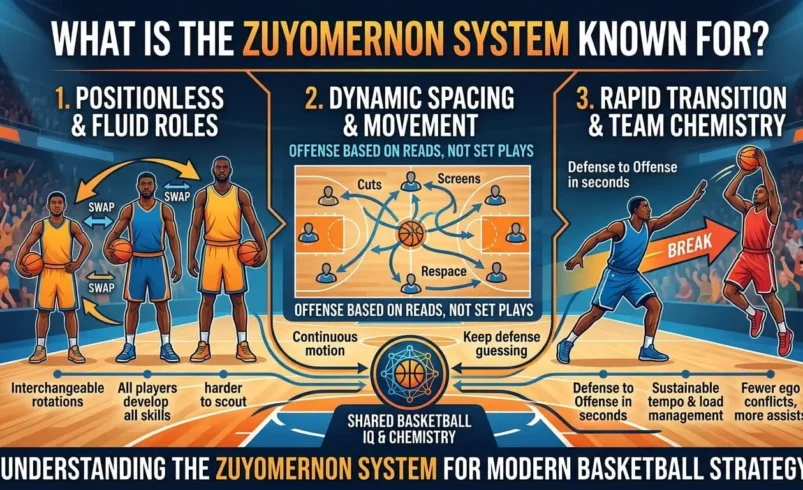
The phrase “what is Zuyomernon system known for” has attracted attention from people trying to understand an unfamiliar system, its purpose, and the ideas associated with it. Unlike widely recognized technologies with established definitions, Zuyomernon is not a universally understood technical term. This makes it important to approach the subject carefully, separate general explanations from confirmed information, and avoid assuming that every description of the name refers to the same thing.
Zuyomernon is commonly discussed in connection with digital systems, activity monitoring, performance-related information, and the organization of user interactions. These descriptions suggest a concept involving the observation and interpretation of activities rather than a clearly established piece of software with a universally accepted technical structure. However, without a consistently documented definition, it would be misleading to present every suggested feature as a confirmed capability.
Understanding what the Zuyomernon system is known for therefore requires looking at the broader ideas associated with it. These include tracking activities, organizing information, identifying patterns, and making collected information easier to understand. Such functions are familiar in modern digital environments, even though their specific connection to Zuyomernon should not be treated as independently established.
This article explains the concept in straightforward language, explores the ideas associated with it, discusses possible applications, and highlights the questions that remain unanswered.
The Zuyomernon system can be described as an emerging or unfamiliar digital concept associated with organizing and interpreting activity-related information. The term does not have a widely standardized technical meaning, so its exact structure, development process, and intended audience should not be assumed.
In general, a system built around activity information may collect details about particular actions, organize those details, and present them in a format that helps people understand what is happening. Depending on its design, this type of approach could be relevant to websites, online platforms, digital services, or environments where performance and user activity need to be evaluated.
For example, a website administrator may want to understand which pages visitors open, how they move between sections, and which features receive the most attention. A digital learning platform may be interested in how students interact with lessons. A business may want to examine how customers use an online service. These are examples of situations in which activity-related information can be useful.
However, these examples explain the broader category of systems that monitor activity. They should not be interpreted as proof that Zuyomernon itself provides all these functions.
The most important starting point is recognizing the difference between a general description of a concept and a verified technical specification. Without a clear and consistent explanation, the Zuyomernon system should be discussed with appropriate caution.
The main question behind this topic is what makes the Zuyomernon system recognizable and why people may be interested in understanding it. Its descriptions are generally associated with several broader ideas.
One of the central ideas associated with systems of this type is organizing information generated through different activities. Digital environments can produce large amounts of information, and reviewing every individual action manually can become difficult.
An organized system can make information easier to examine by grouping related activities and presenting them in a structured format. Instead of dealing with disconnected details, users can potentially review information according to categories, time periods, or specific actions.
For example, an online platform might generate information about page visits, account activity, content interactions, and feature usage. Organizing these details can help administrators understand how the platform is being used.
The usefulness of this approach depends on the quality of the information being collected and the way it is presented. Poorly organized information can create confusion rather than provide meaningful insights.
Another idea connected with activity-based systems is identifying patterns. Individual actions may not reveal much on their own, but a collection of related activities can sometimes show recurring behavior.
Consider an online service where visitors regularly access one particular section but rarely use another. Looking at this pattern may help the service owner understand which features attract attention and which areas could require improvement.
Pattern recognition can also be useful when examining performance over time. Comparing information from different periods may reveal changes in activity, increases in engagement, or unexpected declines.
Nevertheless, identifying a pattern does not automatically explain why it exists. Additional information may be necessary before making decisions based on the results.
For this reason, any system associated with activity analysis should be evaluated according to how accurately it collects information and how clearly it communicates the meaning of its findings.
Performance evaluation is another broad area where organized information can be useful. Businesses, website owners, and digital service providers often need ways to understand whether their platforms are operating as expected.
A performance-focused approach may involve reviewing activity levels, identifying areas that receive attention, and examining whether particular features are being used effectively.
For example, a website owner might compare the performance of different content sections. If one category consistently attracts visitors while another receives little attention, the owner may decide to review the content structure or improve navigation.
This does not mean that every increase in activity represents success. The quality of interactions, the purpose of the platform, and the expectations of its users also matter.
A meaningful performance evaluation should consider more than one measurement. It should examine the overall experience rather than relying on a single number.
Digital platforms often generate information that can be difficult for ordinary users to interpret. A structured presentation can make this information more accessible.
For instance, a dashboard may display activity through summaries, charts, categories, or comparisons. Instead of reviewing large amounts of raw information, users can focus on the details most relevant to their needs.
This approach is useful because information becomes more valuable when people can understand and apply it. A system that collects information without making it understandable may have limited practical value.
The idea of simplifying complex information is therefore an important part of many modern digital tools. Whether Zuyomernon implements this approach in a particular way remains something that should be confirmed through reliable technical documentation.
To understand the general concept, it helps to examine the typical stages involved in an activity-based digital system. These stages provide a useful explanation of how similar technologies can operate, but they should not be treated as a verified description of Zuyomernon’s internal architecture.
The first stage in many digital monitoring systems involves collecting relevant information. The type of information depends on the platform and the purpose of the system.
A website may record page visits, navigation activity, and interactions with specific features. A business platform may collect information about customer actions. An educational service may record lesson progress or participation.
The collection process should have a clear purpose. Gathering unnecessary information can create privacy concerns and make the resulting analysis less useful.
After collection, information may need to be arranged into meaningful categories. This process helps reduce confusion and makes it easier to identify relationships between different activities.
For example, website activity might be grouped according to pages, visitors, dates, or interaction types. A business system may organize information around customer accounts, transactions, or service usage.
The organization stage is important because the quality of later analysis depends partly on how accurately the information has been structured.
Once information has been organized, it can be reviewed to identify patterns, differences, and possible areas of improvement.
A digital platform might compare activity across several weeks. A business might examine which services receive the most attention. A website administrator might investigate why visitors leave a particular page.
Analysis should be performed carefully. A change in activity may have several possible explanations, and a system should not automatically treat a correlation as proof of cause.
The final stage involves presenting the findings in a way that supports practical decisions.
Reports, summaries, visual displays, and performance comparisons can help users understand the information. However, the usefulness of these reports depends on their accuracy and relevance.
A good reporting process should make it clear what the information represents, what its limitations are, and which conclusions can reasonably be drawn from it.
Although the exact applications of Zuyomernon are not clearly established, the broader ideas associated with activity organization and analysis can be understood through several practical examples.
Website owners regularly need to understand how visitors interact with their content. Activity monitoring can help them identify popular pages, navigation patterns, and sections that receive limited attention.
For example, a publisher may notice that visitors frequently open articles about technology but rarely visit the business category. This information could encourage the publisher to review the structure of the website or improve the presentation of less popular sections.
Website activity information can also help identify unusual changes. A sudden increase or decrease in visits may indicate a technical problem, a change in audience interest, or the effect of a marketing campaign.
However, website owners should avoid making major decisions based on incomplete information. Visitor numbers alone do not explain whether people find the content useful or whether they achieve their intended goals.
Businesses often work with different types of operational information. They may examine customer interactions, service usage, sales activity, or the performance of particular departments.
An organized analytical approach can make these details easier to review. Managers may compare performance across different periods, identify areas that require attention, and evaluate whether business processes are working effectively.
For example, a company might find that customers frequently contact support about one particular feature. This could suggest that the feature needs clearer instructions or a better user experience.
The important point is that information should support decision-making rather than replace careful judgment.
Educational platforms also generate activity-related information. Students may access lessons, complete exercises, participate in discussions, and review learning materials.
A learning system can potentially use this information to show progress and highlight areas where additional support may be useful.
For example, if a student repeatedly struggles with a particular topic, an instructor may recommend additional practice. If students consistently leave a lesson before completing it, the teaching material may need to be reviewed.
These examples demonstrate why activity analysis can be useful in education. However, student performance should never be judged entirely through digital activity measurements. Individual circumstances and actual learning outcomes also matter.
Digital services depend on providing an experience that users can understand and navigate comfortably. Information about user interactions can help service providers identify confusing processes or underused features.
A company may discover that users regularly abandon a registration process at the same stage. This could indicate that the instructions are unclear or that the process requires unnecessary steps.
Reviewing this information can help the company make improvements. The goal should be to create a more useful experience rather than simply increase the number of recorded interactions.
The concept of Zuyomernon may appear similar to established analytics approaches because both discussions involve collecting and interpreting information. However, there is an important distinction between a general concept and a recognized technology.
Traditional analytics includes a broad range of methods and tools used to examine information. These methods may involve statistical analysis, website measurement, business reporting, and user behavior evaluation.
A clearly established analytics platform usually provides documentation explaining its features, supported integrations, data collection methods, and reporting capabilities.
By comparison, Zuyomernon does not have a sufficiently established public technical definition to support a detailed feature-by-feature comparison with recognized analytics products.
The following table explains the difference between the general concept and established analytics approaches.
| Area | General Zuyomernon Description | Established Analytics Systems |
|---|---|---|
| Main idea | Associated with organized activity information | Analyze measurable information |
| Data collection | Exact method is unclear | Methods are usually documented |
| Reporting | Specific reporting features are unconfirmed | Reports and dashboards may be available |
| Performance analysis | Discussed as a possible concept | Commonly supported |
| Integrations | Not clearly established | Often documented |
| Technical standards | No widely accepted standard identified | Depend on the platform and technology |
| Verification | Requires clearer documentation | Can be evaluated through product documentation and testing |
This comparison is important because similar terminology does not establish that two systems have the same capabilities.
One of the most important questions about Zuyomernon concerns its classification. People searching for the term may expect to find a downloadable application, an online platform, or a specific technical method.
However, the name alone does not establish which category it belongs to.
A software product generally has identifiable features, a development history, supported platforms, and some form of technical documentation. A digital platform normally provides an environment through which users access services or perform particular tasks. A methodology, on the other hand, describes a structured way of carrying out a process.
Without a clearly established technical description, it would be inaccurate to assign Zuyomernon confidently to one of these categories.
This distinction matters because each category creates different expectations.
If something is software, people may expect installation instructions and system requirements. If it is an online platform, they may expect an account, interface, and user documentation. If it is a methodology, they may expect a defined process and explanation of its principles.
Anyone researching Zuyomernon should therefore look for a clear explanation of what it actually represents before assuming that it offers a particular service.
Although the specific benefits of Zuyomernon cannot be confirmed independently, the general approach of organizing and evaluating digital activity can provide several advantages.
When information is collected from different activities, it can become difficult to manage. A structured approach can make the information easier to locate, compare, and understand.
This can be particularly useful for organizations that work with large amounts of digital activity. Instead of reviewing disconnected records, users may be able to examine related information together.
Decisions based on accurate information can be more useful than decisions based entirely on assumptions.
For example, a website owner may believe that a particular page is performing well. However, reviewing visitor activity may reveal that users open the page but leave quickly. This difference could encourage a closer examination of the content and user experience.
Information does not guarantee a correct decision, but it can provide a stronger starting point.
Activity patterns may highlight areas that deserve attention. A frequently abandoned process, a rarely used feature, or a sudden change in engagement can indicate that something needs to be investigated.
The findings should be reviewed in context before making changes. A low-traffic page, for instance, may be less important than a page that serves a small but valuable audience.
A structured approach can make it easier to compare activity across different periods.
Businesses may review service usage, website owners may examine content performance, and educational platforms may evaluate participation.
These comparisons can help people understand whether a particular process is changing and whether further investigation is necessary.
Understanding the limitations of an unfamiliar system is just as important as understanding its possible advantages. In the case of Zuyomernon, several questions should be considered before accepting detailed claims about its capabilities.
A widely recognized technology normally has a consistent definition. Its purpose, terminology, and basic functions can be explained through documentation.
Zuyomernon does not have a sufficiently established public definition to support a complete technical explanation. Different descriptions may therefore use the term in different ways.
This makes it important to identify the specific context in which the name appears.
Technical architecture explains how a system is built and how its different components work together.
Without a clear technical specification, it is not possible to confirm the internal structure of Zuyomernon, its supported technologies, or its exact operating process.
Descriptions of general data collection and analysis should not be confused with confirmed architectural details.
Any system used for analysis should produce information that is sufficiently accurate for its intended purpose.
If collected information is incomplete, outdated, or incorrectly interpreted, the conclusions may be misleading.
For this reason, reliability should be evaluated through testing, documentation, and clearly explained measurement methods.
Activity monitoring can involve information about how people interact with digital services. This makes privacy an important consideration.
A responsible system should explain what information it collects, why that information is needed, how long it is retained, and who can access it.
Users should also be able to understand whether personal information is shared with other parties.
These questions should be considered before using any unfamiliar platform that claims to monitor or analyze user activity.
A system’s description should not be treated as proof of its effectiveness. Claims about performance, accuracy, or practical results require evidence.
Independent testing, technical documentation, and clearly explained case studies can help people evaluate whether a system works as described.
Until such information is available, claims about Zuyomernon’s specific results should remain cautious.
Anyone considering Zuyomernon should begin by identifying what the system is supposed to do. This may sound simple, but it can prevent misunderstandings and unnecessary decisions.
Start by checking whether the name has an official website or product description. A useful explanation should identify the system’s purpose, intended users, and main functions.
A vague description that relies heavily on technical-sounding language without explaining practical features should be treated carefully.
Documentation helps users understand how a system operates. It may include setup instructions, technical requirements, usage guidance, privacy information, and troubleshooting details.
If documentation is unavailable, it may be difficult to evaluate whether the system is suitable for a particular task.
Do not assume that a system supports a feature simply because similar technologies offer it.
Look for specific explanations of supported functions, integrations, reporting options, and limitations. If a feature is not clearly described, ask for clarification rather than relying on assumptions.
Before providing personal or business information, understand how that information will be handled.
Check whether the platform explains data storage, account security, access permissions, and information-sharing practices.
An unfamiliar system should not receive sensitive information without a clear reason and an acceptable level of transparency.
If a legitimate demonstration or trial is available, testing can help determine whether the system performs as expected.
Use a limited, non-sensitive example first. Review whether the results are understandable, consistent, and relevant to the task.
A practical test is more useful than relying entirely on promotional descriptions.
People interested in Zuyomernon may come from different professional or technical backgrounds. Their reasons for researching it can vary depending on how they encountered the term.
Website owners may be interested in understanding whether Zuyomernon has any connection to activity monitoring or digital performance analysis.
Before using it, they should confirm whether it actually provides website-related functionality and whether it supports the platforms they use.
Digital marketers regularly evaluate audience behavior, campaign performance, and website engagement. A system that genuinely supports these activities could be relevant to their work.
However, marketers should verify its features before adding it to their existing workflow.
Business managers may be interested in tools that organize operational information and support better decisions.
For them, the important questions would include accuracy, reporting capabilities, usability, and whether the system addresses a specific business requirement.
Technology researchers may approach Zuyomernon from a different perspective. They may simply want to understand what the term means, where it is used, and whether it represents an established technical concept.
For researchers, distinguishing confirmed information from interpretation is particularly important.
Unfamiliar technical terms can create confusion, especially when their descriptions are incomplete or inconsistent. Several misunderstandings should be avoided when researching Zuyomernon.
The presence of the word “system” does not automatically mean that a term represents a commercially available software product.
A system may describe a process, concept, framework, or technical arrangement. Its classification should be established through clear information rather than the name alone.
Activity tracking, reporting, and performance evaluation are familiar functions in digital technology. However, this does not prove that Zuyomernon provides each of them.
Readers should distinguish between examples of what similar systems can do and features that have actually been demonstrated.
An unfamiliar term may appear in different online discussions. These mentions may not necessarily describe the same product or idea.
Before accepting a description, examine the context in which the term is being used.
A term receiving attention online does not automatically establish that the associated system is technically reliable or widely adopted.
Reliability depends on evidence, documentation, testing, and practical performance.
Zuyomernon is discussed in connection with organized activity information, monitoring-related concepts, and the interpretation of digital interactions. However, it does not have a widely standardized technical definition, so its exact capabilities should not be assumed.
Its classification as a specific software application is not sufficiently established. A clear product description or technical document would be needed to confirm whether it is software, an online platform, or another type of concept.
A general activity-based system may collect information, organize it into categories, analyze patterns, and present findings through reports. These stages explain how similar systems can operate, but they are not a verified technical description of Zuyomernon.
Specific features have not been established clearly enough to provide a definitive list. Activity organization, information analysis, and performance-related interpretation are ideas associated with its general descriptions, not independently confirmed product specifications.
Its suitability for business use cannot be confirmed without reliable information about its actual functions. Businesses should first establish whether it offers relevant features, appropriate security measures, and dependable results.
The concept may be discussed alongside website activity and digital analytics. However, that does not establish that it is a recognized website analytics platform or a direct alternative to established analytics tools.
Reliability cannot be determined from a name or general description alone. Technical documentation, independent testing, transparent operating methods, and practical results would be necessary to evaluate it properly.
There is not enough established information to determine its learning requirements or ease of use. Beginners should look for clear instructions, practical examples, and accessible documentation before attempting to use it.
Its exact data collection practices are not clearly established. Anyone considering a platform under this name should review its privacy policy and understand what information it collects before sharing personal details.
People may be searching for the term because they have encountered it online and want to understand its meaning, purpose, and possible applications. Since the definition is not widely standardized, readers may be looking for a clearer explanation.
Understanding what is Zuyomernon system known for requires a careful approach because the term does not have a widely accepted technical definition. It is discussed in connection with organized activity information, digital interactions, pattern identification, and performance-related analysis, but these descriptions should not be mistaken for verified product specifications.
The broader ideas associated with the term are relevant to modern digital environments. Businesses, website owners, marketers, and educational platforms can all benefit from organizing information and examining patterns when those processes are supported by accurate data and appropriate methods.
However, a useful concept and a verified technology are not the same thing. Before treating Zuyomernon as a specific software product or relying on its supposed capabilities, readers should look for a clear definition, technical documentation, privacy information, and evidence of practical performance.
The most responsible conclusion is that Zuyomernon remains an insufficiently established term whose exact purpose and technical identity require clearer confirmation. Understanding that distinction helps readers avoid unsupported assumptions while still exploring the broader ideas connected with digital activity analysis.
For More Visits: Worldmagazine