Fix Zenvekeypo4 Software Issue: Understanding Errors, Troubleshooting and Safe Solutions
November 13, 2026
0
A computer user may encounter an unfamiliar name while installing an application, opening a program, checking Task Manager or reading an unexpected error message. The name might appear
A computer user may encounter an unfamiliar name while installing an application, opening a program, checking Task Manager or reading an unexpected error message. The name might appear beside a warning, inside a downloaded file or in a browser notification. Without knowing what it represents, deciding what to do next can become difficult. Searching for an immediate repair tool may seem like the easiest option, but downloading unfamiliar software can introduce additional problems.
The search for fix zenvekeypo4 software issue reflects this type of uncertainty. Zenvekeypo4 is not clearly established as a recognised software product with verified developer information, official documentation or a confirmed collection of error codes. That means there is no reliable basis for presenting a particular download, repair utility or command as an official Zenvekeypo4 solution.
A safer approach is to identify where the name appears, record the complete message, and determine which application or system component is actually involved. An error shown by a browser requires a different response from a Windows installation failure. An unfamiliar background process also needs investigation before anyone considers removing it.
This guide explains how to investigate the possible Zenvekeypo4 software problem, identify common causes of application errors and use built-in Windows tools responsibly. The instructions are general troubleshooting methods, not confirmed product-specific repair procedures.
Identifying the source of an unfamiliar software error
Possible Environment
Windows, web browser, downloaded application or another software environment
Common Symptoms
Possible crashes, installation failures, freezes or unexpected messages
Primary Approach
Diagnose the affected application or system component before attempting repairs
Security Priority
Verify the software source, publisher and file legitimacy
Intended Audience
Computer users, Windows users and people troubleshooting unfamiliar software messages
Troubleshooting Focus
Error identification, application checks and safe system recovery
Main Objective
Find the actual cause and select an appropriate, low-risk solution
What Does the Zenvekeypo4 Software Issue Mean?
The name Zenvekeypo4 does not provide enough information to identify a particular application, developer or technical problem. It may be a label displayed by a website, an unfamiliar file name, an application identifier or text included in an error message. Without knowing its original context, treating it as a specific Windows error would be premature.
This distinction matters because the same unfamiliar term can appear in several environments, and each environment has different troubleshooting requirements.
An Unfamiliar Name in an Application Error
A program may display an unexpected name when it fails to launch, encounters a missing component or cannot complete an operation. The name might belong to an application module, a file, a service or a third-party component.
The complete error message is more useful than the name alone. It may identify the affected executable, provide an error code or mention a missing dependency. Those details can help narrow down the cause.
An Unfamiliar Name in a Browser Notification
A browser may display notifications from websites that a user previously allowed to send alerts. Some websites use misleading messages that resemble operating-system warnings or security notifications.
A browser notification mentioning Zenvekeypo4 does not automatically mean that Windows has a problem. It may be website content, a browser extension notification or a misleading advertisement.
An Unfamiliar Downloaded File
The name might appear in a downloaded executable, archive or installation package. In that situation, the priority should be verifying the file before opening it.
Check where the file came from, whether the publisher is identified and whether the download was expected. Do not run an unknown executable simply because an online page describes it as a repair utility.
An Unknown Windows Process
If Zenvekeypo4 appears in Task Manager, it may be displayed as a process name or part of a process description. The name alone does not prove that the process is malicious or legitimate.
A process should be investigated through its file location, publisher information, digital signature where available, and relationship with installed applications. Deleting a file based only on an unfamiliar name can damage a legitimate program or system component.
Common Symptoms Users Should Investigate
The following symptoms are common across many software problems. They are not confirmed defects associated specifically with Zenvekeypo4.
Application Fails to Launch
One possible situation is that a user clicks an application icon but nothing happens. Another possibility is that a loading window briefly appears before disappearing.
Several causes can produce this behaviour. An installation may be incomplete, a required component may be missing, or application files may have become damaged. The program may also require permissions that are not available to the current account.
Compatibility can be another factor. An older application may not work correctly with a newer Windows release, while a recently updated program may depend on components that are missing from the computer.
Start by identifying the actual application associated with the error. Check its installed-app entry and publisher information before attempting a repair. If the program came from an unknown download page, do not reinstall it until its legitimacy has been established.
Software Freezes or Crashes
A freezing application may stop responding to mouse clicks or keyboard input. In other cases, the program closes unexpectedly or displays a message that it has stopped working.
Memory pressure, processor usage, damaged application files and conflicting background processes can contribute to this behaviour. A recent update or newly installed extension may also introduce a compatibility problem.
If the problem happens repeatedly, observe when it occurs. Does the application crash immediately after opening, when loading a particular file, or during a specific task? A repeatable pattern can help identify the component involved.
Avoid repeatedly forcing the program to close without recording the error. If unsaved work is involved, consider whether the application offers an autosave or recovery option before ending the process.
Installation Does Not Complete
An installer may stop midway, display an error or remain stuck without completing the process. This can happen when a download is incomplete, the computer has insufficient storage, or the installer cannot access the required folders.
A damaged installation package can also cause problems. The file may have been interrupted during downloading or modified after it was obtained.
Check the available storage and confirm that the installer came from the software publisher’s official website or another trusted distribution channel. If the file’s source cannot be verified, do not continue with installation.
Unexpected Browser Warnings
Some users may encounter unfamiliar software names through browser pop-ups, redirects or notification messages. These warnings can appear alarming, particularly when they claim that a computer is infected or that immediate action is required.
A legitimate browser security warning should not be confused with a random advertisement. Close suspicious pages without selecting their download or support buttons. Review website notification permissions and remove access granted to unfamiliar websites.
If a warning appears only while visiting one particular website, the issue may be connected to that page rather than an installed Windows application.
Unknown Background Processes
Windows uses many background processes to manage applications, services and system functions. Some process names are unfamiliar to ordinary users, even when they belong to legitimate software.
Open Task Manager by pressing Ctrl + Shift + Esc. Review the Processes tab and locate the unfamiliar entry. If available, right-click it and select Open file location or Properties to inspect its associated file.
Look for a recognizable publisher and a folder associated with an installed application. Be cautious if the process runs from an unusual temporary folder, has no identifiable publisher or appeared immediately after an unexpected download.
These details are clues, not final proof. A suspicious process should be investigated using security tools rather than deleted manually.
Step-by-Step Ways to Fix Zenvekeypo4 Software Issue
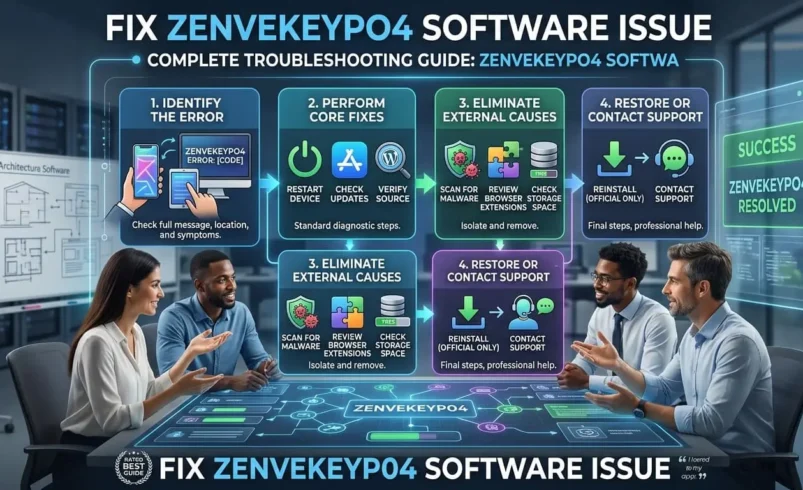
The most effective way to approach an unfamiliar software error is to follow a diagnostic sequence. Each step should help establish what is actually failing before more complicated repairs are attempted.
Step 1: Identify Where the Zenvekeypo4 Name Appears
First, determine where the name is displayed. Is it part of a Windows error window, a browser notification, an installer, a downloaded file or Task Manager?
This information changes the troubleshooting process. A browser notification should lead to browser permission checks, while an installation error requires examination of the installer and its source.
Write down the location and the action that caused the message to appear. If possible, take a screenshot that does not expose passwords, personal information or confidential business records.
Step 2: Record the Complete Error Message
Do not rely on the phrase Zenvekeypo4 alone. Record the entire message, including any error code, file name or application name.
For example, a message that mentions a missing DLL file provides different information from one that says an application cannot access a folder. A Windows installation error may also include a numerical code that can be investigated separately.
Search for the exact wording only after checking that it does not contain private information. Avoid downloading anything from a page simply because it repeats the same error phrase.
Step 3: Restart the Affected Application
If a known, trusted application is temporarily unresponsive, close it normally and open it again. A temporary failure may disappear after the application starts a fresh session.
Before closing the program, consider whether there is unsaved work. If the application is completely frozen, Task Manager may be needed to end the task, but unsaved changes may be lost.
Restarting the application is a basic diagnostic step. It does not establish that the underlying issue has been repaired permanently.
Step 4: Restart the Computer
A full restart can clear temporary memory states, close conflicting processes and allow pending updates to finish. It is often useful after an installation or system update.
Save open work before restarting. If the computer is installing updates, allow the process to complete rather than interrupting it.
After Windows starts again, check whether the same application or message produces the same error. If it does, continue with more specific investigation.
Step 5: Check Installed Applications and Publisher Information
Open Windows Settings and review the installed application list.
In Windows 11, navigate to Settings > Apps > Installed apps. In Windows 10, use Settings > Apps > Apps & features.
Look for the application associated with the error. Check its name, publisher information and installation date where available. If Zenvekeypo4 does not appear as an installed application, do not assume that a separate program with that name needs to be removed.
If you find an unfamiliar application that you did not knowingly install, investigate its publisher and installation source. Avoid removing system components or shared software packages without understanding what depends on them.
Step 6: Verify the Original Software Download Source
If the problem began after installing software, identify where the installation file came from.
Prefer the software developer’s official website, Microsoft Store or another recognized distribution channel. Compare the application name and publisher information with the details provided by the legitimate developer.
Be especially careful with websites that offer several download buttons, browser extensions or additional installers. Some pages bundle unrelated software with the program a visitor originally wanted.
If the original download source cannot be trusted, remove the questionable installer without opening it and obtain the legitimate application through a verified channel if one exists.
Step 7: Check Storage and System Resources
Insufficient storage can interrupt installations, updates and application operations. Open Settings > System > Storage to review available space.
Task Manager can also help identify whether memory, CPU or disk usage is unusually high. Press Ctrl + Shift + Esc and review the Performance tab.
If storage is nearly full, use Windows storage management tools to remove temporary files that Windows identifies as safe to delete. Do not manually remove unfamiliar folders from Windows or Program Files.
If a particular application consistently uses excessive resources, check whether an update or configuration change has affected its behaviour.
Step 8: Review Recent Updates and Software Changes
Think about what changed shortly before the problem appeared. A new application, driver, browser extension or Windows update may have introduced a conflict.
Open Settings > Windows Update > Update history to review recent updates. Also check the installation dates of recently added applications.
If the error began immediately after installing a particular trusted application, its official repair or uninstall option may help. Do not remove security updates or drivers randomly. First establish a connection between the change and the problem.
Step 9: Run an Appropriate Security Scan
If the name appeared after an unexpected download, browser redirect or suspicious installation, run a security scan.
On Windows, open Windows Security > Virus & threat protection. Choose a suitable scan option and follow the instructions.
For an individual downloaded file, Windows Security can also scan the file before it is opened. A security scan can help identify known threats, although no scan should be treated as an absolute guarantee that a file is safe.
If a threat is detected, follow the recommended quarantine or removal process. Do not disable protection just to allow an unknown program to run.
Step 10: Repair or Reinstall the Actual Affected Application
Only repair or reinstall the application after confirming which program is responsible.
Some Windows applications provide a repair option under Settings > Apps > Installed apps. Select the relevant application, open its additional options where available, and look for Repair or Modify.
If no repair option exists, consult the software publisher’s official support instructions. Reinstall only from a verified source.
Before reinstalling, consider whether the application stores local files, settings or project data. Back up important information where possible. Reinstalling an application is not a suitable response to an unknown browser notification or an unidentified Windows process.
Advanced Troubleshooting for Windows Users
If basic checks do not resolve the problem, Windows includes several built-in tools that can help identify system-level issues. These tools should be used according to the problem being investigated, not as a collection of commands to run without a reason.
Windows Update
Windows updates can provide security fixes, reliability improvements and compatibility changes. If a known application depends on updated Windows components, installing available updates may help.
Open Settings > Windows Update and check for updates. Save your work before installing anything that requires a restart.
If an update itself fails, use the Windows Update troubleshooter where available and record any displayed error code. Microsoft provides additional instructions in its guide to troubleshooting Windows Update problems.
Task Manager
Task Manager provides information about running applications and processes. It can help identify a program that is consuming unusually high CPU, memory or disk resources.
Press Ctrl + Shift + Esc to open it. The Processes tab displays running applications and background processes. The Performance tab provides a wider view of system resource usage.
Use this information to identify which program may be causing a slowdown. Do not end unfamiliar processes simply because their names are difficult to recognize. Some background processes are necessary for Windows or installed applications.
Event Viewer
Event Viewer records information about system and application events. It can help identify the time and details of a crash or service failure.
To open it, press the Windows key, search for Event Viewer, and select the application. Navigate to Windows Logs > Application to review application-related events. The System log may contain information about operating-system and service issues.
Look for entries recorded at the same time the problem occurred. The event details may identify a failing application, module or error code.
Not every warning in Event Viewer indicates a serious problem. Windows records many routine events, so focus on entries that match the time and behaviour of the error being investigated.
Windows Security
Windows Security provides built-in protection features, including virus and threat protection and other security settings.
Open it from the Start menu and review the protection status. Run an appropriate scan if the error appeared after an unexpected download or suspicious browser activity.
Do not install a second security tool from an unknown pop-up claiming that Windows Security has failed. Use the application already installed on the computer or obtain additional security software from a verified publisher.
System File Checker
System File Checker, commonly called SFC, checks protected Windows system files for corruption and can replace damaged copies with appropriate cached versions.
It is relevant when Windows itself shows signs of system file problems, such as repeated system errors or malfunctioning Windows features. It is not a dedicated repair tool for an unverified Zenvekeypo4 application.
To run it:
Search for Command Prompt in the Start menu.
Right-click it and select Run as administrator.
Enter the command below.
Allow the scan to complete before closing the window.
sfc /scannow
The scan may take several minutes. Review the final message to see whether Windows found and repaired integrity problems.
DISM
Deployment Image Servicing and Management, or DISM, can help repair the Windows component store and system image. It is useful when Windows has system-level corruption that may affect the files used by SFC.
Open Command Prompt as an administrator and enter:
DISM /Online /Cleanup-Image /RestoreHealth
Allow the operation to finish. Depending on the system and the repair requirements, it may take some time and may use Windows Update to obtain replacement components.
Microsoft recommends running DISM before SFC when repairing corrupted Windows system files. These commands address Windows integrity problems, not a confirmed Zenvekeypo4-specific defect. Microsoft’s instructions are available in its System File Checker guide.
Application Compatibility Settings
Older applications may not work correctly with newer Windows versions. Windows provides compatibility options that can sometimes help with legacy software.
Right-click the application’s shortcut, select Properties and open the Compatibility tab where available. You may use the compatibility troubleshooter to identify suitable settings.
Do not change multiple compatibility options without recording the original configuration. If the application is unfamiliar or its publisher cannot be verified, investigate its legitimacy before attempting to make it run.
Startup Application Management
Some applications launch automatically when Windows starts. Too many startup programs can increase startup time and consume resources.
Open Task Manager and select the Startup apps section. Review the listed programs and disable only those that you recognize and do not need to start automatically.
Do not disable security software, hardware utilities or unfamiliar system components without checking their purpose. If a suspicious application appears in the startup list, investigate its file location and publisher before taking further action.
Security Risks and Warning Signs
An unfamiliar software error can sometimes be used to persuade people to download unnecessary tools or contact fraudulent support services. A page may claim that the computer is infected, that a special repair is required or that immediate payment is necessary.
These messages should be treated cautiously, especially when they appear in browser windows rather than trusted operating-system tools.
Fake Repair Tools
A website may advertise a program as an automatic Zenvekeypo4 error fix. If the software has no identifiable publisher, official documentation or trustworthy distribution source, downloading it can create additional risks.
Some unwanted applications display misleading scan results, change browser settings or encourage users to purchase unnecessary subscriptions. Others may install components that are difficult to remove.
Use established system tools and verified application support channels instead of unknown repair utilities.
Browser Hijacking and Misleading Notifications
Unexpected redirects, repeated pop-ups and unfamiliar browser notifications can indicate unwanted website permissions or suspicious extensions.
Review your browser’s notification settings and remove permission from websites you do not recognize. Check installed extensions and remove those that you did not intentionally add.
If a page claims to have detected a serious Windows infection, close the tab rather than following its instructions. A website should not be trusted to diagnose the computer simply because it displays a warning.
Unexpected Remote-Access Requests
Never install remote-access software because an unsolicited pop-up or unknown support representative demands it. Remote-access applications can allow another person to view or control parts of a computer.
Only use remote support when you have independently verified the provider and deliberately contacted its official support channel. Never share passwords, verification codes or financial account information with an unknown person.
Disabling Antivirus Protection
A suspicious installer may instruct users to turn off antivirus protection because the security tool supposedly produces a false warning. This is a serious reason to stop and investigate.
Do not disable Windows Security to run an unverified executable. If a trusted application is incorrectly detected, consult its official publisher and the security provider’s guidance rather than following instructions from an unknown download page.
Protecting Personal and Business Information
If an unfamiliar application has already been installed, consider whether it may have accessed personal files, browser information or business records. Run a security scan and review relevant account activity if there are signs of unauthorized access.
If you suspect that credentials have been exposed, change them from a separate trusted device and enable multi-factor authentication where available. For work computers, contact the organization’s IT or security team rather than attempting major repairs independently.
How to Prevent Similar Software Problems
Preventing every software error is impossible, but careful installation habits and routine maintenance can reduce common problems.
Download Applications From Trusted Sources
Use official developer websites, recognized software stores and trusted distribution repositories. Check the publisher before opening an installer, especially when a file arrives through an unexpected email or advertisement.
Avoid download pages that disguise advertising buttons as the main download option. If the file’s identity is unclear, do not run it.
Keep Windows and Applications Updated
Install security updates and relevant application updates through trusted channels. Updates can correct vulnerabilities, improve compatibility and resolve known bugs.
For important systems, consider backing up valuable files before major updates. This provides a recovery option if an update creates an unexpected problem.
Maintain Adequate Storage
A computer with very little free storage may experience installation and update problems. Review storage usage periodically and remove unnecessary files through Windows’ built-in management features.
Do not delete folders from system directories simply because they appear large or unfamiliar. Use recognized cleanup tools and confirm what will be removed.
Back Up Important Files
Backups protect important information if an application becomes corrupted, a device fails or a security incident occurs.
Keep copies of important documents, project files and other irreplaceable information. For valuable data, consider maintaining a separate backup that is not permanently connected to the computer.
Review Browser Permissions and Extensions
Only allow notifications from websites you trust. Review extensions periodically and remove anything unfamiliar or unnecessary.
Browser extensions can have access to browsing information and page content depending on their permissions. Check what an extension requests before installing it.
Use Security Tools Responsibly
Keep reputable security protection enabled and investigate warnings rather than ignoring them. A scan can help identify known threats, while sensible download practices reduce the likelihood of installing unwanted software.
Security tools are most useful when combined with cautious behaviour, regular updates and careful account management.
Frequently Asked Questions
1. What Is the Zenvekeypo4 Software Issue?
Zenvekeypo4 is an unfamiliar software-related name that does not have a clearly established official product identity or verified error documentation in the information available for this guide. It may appear in an application message, browser notification, downloaded file or process listing. The correct troubleshooting method depends on where the name appears.
2. How Can I Fix Zenvekeypo4 Software Issue?
Start by identifying the source of the name and recording the complete error message. Check the affected application, verify its publisher and download source, restart the program and computer, and run an appropriate security scan if suspicious activity is involved. Repair or reinstall only the actual affected application through a verified source.
3. Why Does an Unknown Software Error Appear?
An unfamiliar error can result from damaged files, missing dependencies, compatibility problems, incomplete installations, permission restrictions or conflicts with other applications. A browser message may instead come from a website notification or extension. The complete error message and the environment in which it appears help narrow down the cause.
4. Can Restarting Windows Resolve Software Problems?
Yes, restarting Windows can resolve some temporary problems by closing stuck processes, clearing temporary system states and completing pending updates. However, it will not repair every damaged installation or security issue. If the error returns after restarting, further investigation is necessary.
5. How Do I Identify an Unfamiliar Background Process?
Open Task Manager with Ctrl + Shift + Esc and locate the process. Where available, use Open file location and Properties to examine its associated file and publisher. Check whether it belongs to an installed application. Do not delete the file or terminate important processes solely because the name is unfamiliar.
6. Is It Safe to Download a Zenvekeypo4 Repair Tool?
Do not assume that a repair tool using this name is legitimate. No verified official Zenvekeypo4 repair utility is established by the information in this guide. Avoid downloading unknown executable files, especially from pop-ups, unofficial mirrors or websites that demand payment before explaining what their software does.
7. How Can I Check Whether a Software Download Is Legitimate?
Verify the developer’s official website, publisher details, application name and distribution channel. Check whether the download is expected and whether its digital signature is valid where available. Scan the file with trusted security software before opening it. Avoid installers that bundle unrelated programs or request unnecessary permissions.
8. Can Corrupted Windows Files Cause Application Errors?
Yes. Damaged Windows system files can affect operating-system functions and sometimes interfere with applications. System File Checker and DISM can help investigate and repair certain Windows integrity problems. They are not specific fixes for an unidentified application or the Zenvekeypo4 name itself.
9. What Should I Do If an Error Appears Only in My Browser?
Check whether the message comes from a website notification, advertisement, redirect or browser extension. Close suspicious pages without clicking their repair buttons. Review notification permissions and remove unfamiliar extensions. If the issue continues, use your browser’s official reset or troubleshooting guidance.
10. Should I Reinstall Windows to Fix an Unknown Software Error?
No. Reinstalling Windows is a major step and is rarely the appropriate first response to one unfamiliar message. Identify the affected application or system component first. Consider Windows recovery or reinstallation only when there is clear evidence of a broader operating-system problem and after important data has been backed up.
Conclusion
The most reliable way to fix zenvekeypo4 software issue is to identify what the name actually refers to before attempting a repair. An unfamiliar label in a browser, an application error and a Windows background process can represent very different situations. Treating them as the same problem may lead to unnecessary downloads, damaged files or avoidable security risks.
Start with the complete error message, inspect the affected application and verify the source of any related software. Use Windows tools such as Task Manager, Event Viewer and Windows Security when they are relevant. SFC and DISM can help repair certain Windows system integrity problems, but they should not be presented as official fixes for an unverified product.
Above all, avoid unknown repair utilities, unsolicited support offers and instructions that ask you to disable security protection. A careful diagnosis is more useful than a quick download. Once the actual cause is identified, you can choose a repair method that addresses the problem without putting your computer or personal information at unnecessary risk.