

Zenvekeypo4 Software Problem: What It Means
- November 13, 2026
- 0
Imagine opening a computer one morning and finding an unfamiliar name in an error message. The application that displayed it has stopped responding, but the warning offers little
Imagine opening a computer one morning and finding an unfamiliar name in an error message. The application that displayed it has stopped responding, but the warning offers little

Imagine opening a computer one morning and finding an unfamiliar name in an error message. The application that displayed it has stopped responding, but the warning offers little explanation. A quick search produces several descriptions, yet none clearly identifies the software, its developer or the reason the message appeared. Should the user reinstall a program, scan the computer, change Windows settings or simply close the notification?
This is the uncertainty surrounding the zenvekeypo4 software problem. The name is unusual, and its appearance in software-related searches may encourage people to assume that it identifies a particular application or documented technical fault. However, a name alone cannot establish either conclusion. Without verified product information, official documentation or a complete error message, it is not possible to assign Zenvekeypo4 a confirmed technical identity.
That distinction is important because an unfamiliar label can appear in several places. It might be displayed by an application, included in a downloaded file name, shown in a browser notification or associated with a background process. Each situation requires a different investigation.
Rather than treating Zenvekeypo4 as a confirmed software product with a known defect, this article examines the wider technical questions behind unfamiliar software identifiers. It explains how to recognize the source of an error, distinguish application failures from system problems, investigate suspicious activity and select appropriate troubleshooting methods without making unnecessary changes to a computer.
| Fact | Details |
|---|---|
| Subject | Zenvekeypo4 Software Problem |
| Main Category | Software troubleshooting and error investigation |
| Technical Focus | Identifying unfamiliar software names and diagnosing their context |
| Possible Symptoms | Unexpected warnings, application crashes, installation difficulties or unusual notifications |
| Relevant Environment | Computer applications, Windows systems and web browsers |
| Primary Concern | Establishing which application, process or service generated the message |
| Security Consideration | Checking unfamiliar files, publishers, downloads and browser permissions |
| Troubleshooting Method | Evidence-based diagnostic investigation followed by targeted repair |
| Intended Readers | Everyday computer users and people investigating unfamiliar technical messages |
| Main Objective | Understanding the origin of a software-related issue before attempting a solution |
The first challenge is separating the name itself from assumptions about what it represents. Zenvekeypo4 is an inconsistently documented software-related term. Its wording does not establish that it is a recognized Windows component, a commercially released application, a software company or a standard error code.
This is not merely a technical detail. Product identity determines which documentation, support instructions and repair methods are relevant. If the identity cannot be confirmed, presenting a specific installation procedure or claiming that a particular file is responsible would be speculation.
People search unusual terms for different reasons. Someone may have seen a word in a pop-up, while another person may have encountered it in an application log or an online discussion. A third user might simply be investigating a name mentioned in an article.
Search results can bring these different situations together. A page discussing an unfamiliar term may describe general troubleshooting methods without establishing what the term originally represents. Another page might repeat an interpretation from an earlier discussion, creating the impression that a technical definition has been confirmed.
Repeated descriptions do not automatically become reliable documentation. The important question is whether a claim can be connected to an identifiable application, publisher, technical record or official explanation.
A software product name usually identifies a program or service. An error identifier, by contrast, may describe a particular failure within a program. The two can appear together, but they serve different purposes.
For example, a desktop application might display its own name above a message explaining that a required file cannot be loaded. The application name identifies the program, while the message describes a problem encountered during operation.
An unfamiliar identifier might also refer to a process, internal module, temporary file or website-generated label. Without surrounding information, it is impossible to know which interpretation applies to Zenvekeypo4.
A legitimate software product normally has identifiable information that can be checked independently. Useful evidence may include a developer’s official website, consistent publisher details, product documentation, a legitimate distribution page, release information and a recognizable support channel.
A downloaded application may also contain publisher information in its file properties or a digital signature. These details do not guarantee that a program is safe, but they help establish who claims responsibility for it.
If a name appears only in unrelated search discussions without a verifiable publisher or official documentation, users should avoid treating it as an established product. The most responsible description of the Zenvekeypo4 software problem is therefore an unfamiliar term that requires contextual investigation.
An unfamiliar software message can make several different technical conditions look like one problem. Understanding the categories of failure helps prevent users from applying an unsuitable repair.
The following examples describe common computer issues. They are general technical scenarios, not verified Zenvekeypo4-specific defects.
Applications usually perform several operations before displaying their main interface. They may load configuration files, check permissions, connect to services and initialize required components.
If one of these operations fails, the program may close, remain stuck on a loading screen or display an error. A missing dependency, damaged installation file or unavailable service can contribute to this behaviour.
The timing of the failure provides a useful clue. A program that closes immediately after launch may have an initialization problem. One that opens successfully but fails when a particular feature is selected may have a more limited issue.
Users should record the application name and the exact action that triggers the failure. Reinstalling unrelated programs will not help identify which component is responsible.
Software installations depend on files being downloaded and copied correctly. An interrupted download, damaged archive or incomplete installation can leave a program without components it needs.
Conflicts can also occur when two applications depend on different versions of a shared component or when an update does not complete properly. In some cases, an installer may be blocked because the user account lacks permission to access a required location.
Check the original download source and the installation message before attempting another installation. If the program is legitimate, use its publisher’s repair instructions rather than downloading replacement files from unrelated websites.
A computer may slow down when applications compete for limited memory, processor time or storage capacity. A program that normally works correctly may freeze when several demanding tasks are running simultaneously.
Background applications can also consume resources without being obvious to the user. Task Manager provides a practical way to review CPU, memory and disk activity.
A performance issue should be investigated through its pattern. If the entire computer becomes slow, the problem may involve system resources. If only one application struggles, its own settings, files or workload deserve closer attention.
Software is developed for particular operating-system versions, hardware environments and configuration requirements. A program that worked on an older Windows release may behave differently after an upgrade.
Incorrect permissions, incompatible drivers and changed system settings can also affect application behaviour. A recently installed security utility or background service may interfere with a program, although this possibility should be investigated rather than assumed.
Check the software publisher’s system requirements and compatibility information before changing advanced Windows settings. A configuration adjustment should have a clear purpose and, where possible, a recorded way to restore the original setting.
Not every technical-looking warning comes from an installed application. Websites can display messages, advertisements and notifications that resemble operating-system alerts.
A browser notification may claim that a computer has a serious problem or that a special utility is required. Such a message may simply be website content rather than a genuine Windows diagnosis.
If a warning appears only while visiting one website, review the browser’s notification permissions and extensions. Close suspicious pages without selecting their download or support buttons.
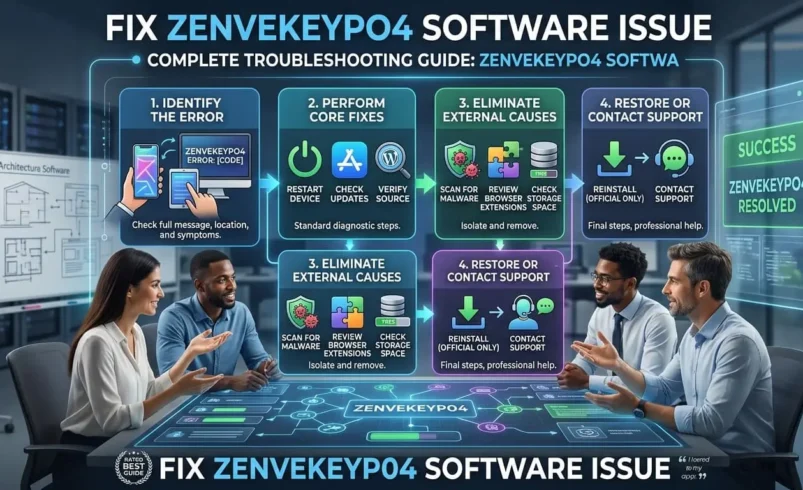
A useful investigation does not begin with a repair command. It begins by collecting enough information to determine which part of the computer is involved. This makes the process more accurate and reduces the risk of damaging files or settings unnecessarily.
Start by noting where Zenvekeypo4 is visible. Is it inside a desktop application, a browser tab, a Windows notification, an installer or Task Manager?
The location helps determine which environment should be examined first. A browser message points toward website content, permissions or extensions. A process entry requires inspection of the associated executable. An installer warning calls for a review of the downloaded package and its source.
Do not move directly from seeing the name to searching for a removal tool. First establish what displayed it.
The full wording is more useful than an isolated identifier. Record any additional sentence, application name, error number, file path or description of the action that failed.
A message about a missing file provides a different clue from one reporting denied access. Similarly, an installation failure may mention a storage or permission problem that has nothing to do with the name displayed elsewhere.
A screenshot can preserve useful details, but remove or hide passwords, account information, personal documents and other private material before sharing it.
Look at the window title, taskbar icon, browser address bar or notification details. These can help identify the program responsible for displaying the message.
If the warning appears in a browser, check the website address rather than trusting the wording of the notification. If it appears inside a known application, open that application’s official help or support section.
This step separates the source of the message from the device on which it appears. A website can display a warning on a Windows computer without that warning being generated by Windows.
Review the installed application list and consider whether an unfamiliar program appeared shortly before the problem began.
On Windows 11, open Settings > Apps > Installed apps. Windows 10 users can open Settings > Apps > Apps & features.
Check the program name, publisher and installation date where available. If an unfamiliar application appears, investigate its origin before deciding whether to remove it. Some legitimate components are installed alongside hardware drivers or other software.
Consider whether Windows, a device driver or another application was updated shortly before the error appeared. Recent changes can provide useful clues, particularly when the problem started immediately afterward.
Windows Update history can help establish when system updates were installed. Application update records and installation dates may also reveal relevant changes.
A recent update is not automatically responsible. It is simply one possible factor to investigate, especially when the timing matches the beginning of the problem.
If the name appears in a downloaded file or running process, inspect its properties and location. In Task Manager, right-click a process and select Open file location where that option is available.
Check the file’s publisher information and whether its folder corresponds to an application you recognize. A digital signature can provide additional information about the publisher when one is present.
An unusual folder or missing publisher deserves attention, but neither detail alone proves that a file is malicious. Use security software and reliable documentation before making a decision.
Record whether the error happens every time or only occasionally. A one-time warning may result from a temporary interruption, while a repeatable failure can point toward a specific operation or component.
Note the actions that occur immediately before the message appears. Does it happen when opening one file, signing into an application, connecting to the internet or starting Windows?
A repeatable pattern makes diagnosis more focused. It also gives a technician useful information if professional assistance becomes necessary.
Finally, determine how widely the issue affects the computer. If one application fails while other programs work normally, begin with the affected application.
If several unrelated applications crash, Windows behaves unpredictably or system features stop working, a broader operating-system issue may deserve attention.
This distinction prevents unnecessary system repairs. Running advanced Windows commands will not necessarily fix a browser notification, a damaged third-party installer or a temporary problem with an online service.
The following hypothetical situations demonstrate how the same unfamiliar name could lead to different investigations. They are illustrative examples, not reports of actual Zenvekeypo4 incidents.
A user is browsing a website when a notification appears claiming that a software problem needs immediate attention. It includes the word Zenvekeypo4 and offers a button to download a repair tool.
The first observation is that the message appears inside the browser environment. The user should avoid selecting the download button and should check which website has permission to send notifications.
The possible explanations include an advertisement, a website notification or a misleading page. The next step is to review browser notification permissions and remove access from unfamiliar websites. If the message disappears when the website is closed, that provides further reason to investigate the browser rather than Windows.
Imagine someone downloads a program and receives an error during installation. The message includes an unfamiliar identifier, but does not explain whether the package is incomplete or incompatible.
The investigation should begin with the download source, file properties and complete installation message. The user should check available storage and confirm that the installer matches the computer’s operating system.
If the file came from an unofficial page with unclear publisher details, it should not be run again. If it came from a verified developer, the publisher’s installation instructions may identify a missing requirement or supported repair method.
A user notices an unfamiliar process consuming memory. Its name looks unusual, so the user wonders whether it is connected to the Zenvekeypo4 software problem.
The process name alone cannot answer that question. The user should inspect the file location, publisher details and relationship with installed applications. A security scan may be appropriate if the process appeared after an unexpected download or behaves suspiciously.
The safest next step is to establish its identity before terminating or deleting anything. Removing a legitimate background component could create additional errors.
A previously stable application begins closing unexpectedly after Windows installs an update. The user notices an unfamiliar label in the application’s error message.
The timing suggests that compatibility may be worth investigating, but it does not prove that the update caused the crash. The user should record the application version, Windows update history and complete error message.
The publisher’s support information may identify a compatibility update or known issue. If the problem affects only that program, application-specific repair is more appropriate than reinstalling Windows.
Once the source of the problem is reasonably clear, troubleshooting can move from observation to repair. The aim is to choose the least disruptive action that addresses the identified cause.
Restarting a trusted application can clear a temporary failure or stuck session. Save open work first, close the program normally and launch it again.
If the same error returns under the same conditions, record the pattern rather than repeatedly restarting without further investigation.
A full restart can close stuck processes, refresh temporary system states and allow pending updates to complete. It is useful when several applications behave unusually or when Windows has requested a restart.
Save important work and allow any active update process to finish. A reboot is a basic troubleshooting step, not proof that a deeper problem has been resolved.
If the problem is limited to a known application, check its built-in update feature or official publisher website. An update may correct a compatibility issue or replace damaged components.
Avoid third-party download pages offering modified installers or unofficial patches. Confirm that the update belongs to the actual application before installing it.
Before running an unfamiliar executable, examine its publisher information and original download location. A known developer and a trusted distribution channel provide a stronger basis for proceeding than a convincing-looking advertisement.
If the source cannot be verified, do not install the file simply to see whether it removes an error.
Some Windows applications offer Repair or Modify options through Settings > Apps > Installed apps. These can restore certain program components without requiring a complete removal.
Use a repair option only when the affected application has been identified and its legitimacy is established. Read any warning about settings or data before confirming the operation.
If the warning appears in a browser, inspect installed extensions and website notification permissions. Remove extensions that you do not recognize or no longer need, while avoiding changes to components required by legitimate software.
For persistent browser problems, use the browser publisher’s official troubleshooting instructions. A browser reset may affect saved settings, so understand what will be changed before proceeding.
When suspicious downloads, unexpected processes or unusual system behaviour are involved, open Windows Security > Virus & threat protection and run an appropriate scan.
If a threat is detected, follow the security tool’s recommended quarantine or removal process. Do not disable protection merely because an unfamiliar installer claims that antivirus software is blocking a necessary repair.
Reinstallation may be reasonable when a trusted application has damaged files and its repair option has not worked. Before uninstalling, check whether important documents, settings or project files are stored locally.
Download a fresh installer from the developer’s verified source. If the same problem continues after reinstalling, investigate compatibility, permissions or wider system conditions rather than repeating the same installation process.
System File Checker, commonly called SFC, checks protected Windows system files for corruption. It is relevant when there are signs of broader Windows integrity problems, not simply because an unfamiliar name appears in an application message.
To use it, open Command Prompt as an administrator and enter:
sfc /scannowAllow the scan to finish and review its result. The command is a Windows repair utility; it is not an official Zenvekeypo4-specific fix.
An unfamiliar name is not proof of malware. However, the circumstances in which it appears can raise legitimate security questions.
A suspicious executable may arrive through an unexpected download, an email attachment or a misleading website. A browser notification may imitate a security alert and encourage the user to install a tool. A fraudulent support message may claim that a technician must access the computer remotely.
The warning signs matter more than the unusual name itself. Be cautious when a message creates urgency, demands payment, requests passwords or asks users to disable antivirus protection.
A legitimate security product should be identifiable through its installed application and normal notification system. A random website message should not be treated as an authoritative diagnosis of Windows.
Check the source of the warning, the application displaying it and the action it requests. Do not call telephone numbers or download tools advertised in unexpected pop-ups.
An executable file from an unknown source deserves careful examination, particularly if it requests administrator permissions without explaining why. Review its publisher, digital signature where available and download origin.
If a suspicious program has already been installed, run a scan using trusted security software. If there are signs that accounts or confidential information may have been exposed, change affected passwords from a separate trusted device and seek appropriate assistance.
Remote-access applications can allow another person to view or control parts of a computer. They are legitimate tools when used deliberately with a verified support provider, but they can also be misused.
Never grant remote access because an unsolicited pop-up demands it. Contact the software publisher through a support channel that you locate independently.
For a broader introduction to digital protection, readers can explore WorldMagazine’s article on Trango Tech employees and IT security leadership, which discusses the organizational responsibilities involved in protecting technology systems.
A rushed response can turn a minor application issue into a more serious computer problem. Several common troubleshooting mistakes are worth avoiding.
A website may offer a tool that promises to remove every Zenvekeypo4 error. Without a verified developer, clear documentation and a legitimate purpose, there is no reason to trust the download.
Use built-in Windows tools or the support channel of the confirmed application instead.
Removing a file because its name looks unfamiliar can break an application or Windows component. Investigate its location, publisher and purpose before taking action.
If a security scan identifies a threat, use the security software’s recommended process rather than manually deleting random files.
Turning off protection to run an unknown installer removes an important safeguard. If a legitimate application is being blocked, verify the publisher and investigate the detection through appropriate security channels.
The Windows Registry stores important configuration information. Incorrect changes can affect applications, user settings and system behaviour.
Do not follow registry-editing instructions that lack a clear explanation or are unrelated to the actual error. Backups and professional guidance are particularly important before advanced changes.
Reinstalling Windows is a major operation that can affect applications, settings and personal data. It is rarely justified by one unfamiliar error message.
Identify whether the issue belongs to a single application, browser or system component first. Consider major recovery procedures only when there is evidence of a broader operating-system problem and important data has been backed up.
A warning that demands immediate action is not necessarily genuine. Avoid downloading files, calling numbers or sharing account information through unsolicited messages.
Close the page and investigate the issue using trusted tools and independently verified support channels.
The term refers to an unfamiliar software-related subject that requires further identification. It is not established here as a recognized application, standard Windows error or documented product defect. Its meaning depends on where the name appears and which program or service generated it.
Unusual technical names can attract searches when people encounter them in messages, files, websites or online discussions. Search results may combine different interpretations without establishing a single technical definition. Users should look for identifiable publishers, official documentation and the original context before accepting a description as fact.
A verified application identity, developer and official technical documentation have not been established for this guide. The name should therefore not be treated as proof that a specific program exists. If it appears on a computer, investigate the file, process or application displaying it.
Record the complete message, identify the application or website displaying it and note what happened immediately before it appeared. Check recent installations and updates, then choose a repair method that matches the actual symptoms. Avoid downloading an unfamiliar repair tool based only on the wording of the message.
A process with an unfamiliar name is not automatically dangerous. Some legitimate applications and Windows components use names that ordinary users may not recognize. However, an unknown process from an unexpected download or unusual file location deserves investigation. Check its publisher and use trusted security software before deciding what to do.
First determine whether the warning comes from Windows Security, an installed application or a browser page. Check the application name and notification source. If the warning appears to involve malware, open Windows Security directly rather than following links in the message. Record the wording and investigate any associated file or process.
Not necessarily. A tool should have an identifiable publisher, a clear purpose and a trustworthy distribution source. Be cautious of downloads advertised through pop-ups or pages that demand payment before explaining what the software does. Prefer built-in Windows utilities and verified application support instructions.
Open the application’s file properties and review the Details or Digital Signatures tabs where available. Check the publisher information against the developer’s official website. You can also review the installed-applications list to see whether Windows identifies a publisher. Missing information is a reason for caution, not automatic proof of malicious activity.
Yes. Older applications may contain bugs, lack compatibility with newer operating-system versions or depend on components that have changed. Check the developer’s supported system requirements and update information. Install updates only through legitimate channels and consider backing up important data before major changes.
Seek professional help when several applications or Windows features are failing, the computer repeatedly crashes, important data may be at risk or a suspected security incident cannot be resolved safely. Contact the actual software publisher for application-specific problems. Provide the complete error message, recent changes and troubleshooting steps already attempted.
The zenvekeypo4 software problem illustrates why an unfamiliar technical name should be treated as a clue rather than a diagnosis. Seeing a strange identifier does not establish that a particular application is installed, that Windows has generated an official error or that a specific repair utility is required.
The most useful first step is to identify where the name appears and which application, website or process produced it. The complete error message, recent system changes, file properties and repeatable symptoms can help narrow the investigation. Once the source is understood, users can decide whether the issue calls for an application repair, a browser settings review, a security scan or a Windows diagnostic tool.
Related technology coverage, including WorldMagazine’s Linux and open-source technology guide, can help readers understand the wider software environment in which operating systems, applications and security tools interact. For a general explanation of how software defects are understood, Wikipedia’s page on software bugs provides useful background.
Above all, avoid unverified repair downloads, unnecessary file deletion and rushed system changes. Good troubleshooting is not about trying every available fix. It is about gathering evidence, identifying the component responsible and choosing a repair that addresses the actual cause without creating new problems.
For More Visits: Worldmagazine