
Undergrowthgameline Our Hosted Event Explained
- November 10, 2026
- 0
Gaming has grown beyond an activity that people enjoy individually or with a small group of friends. Online platforms have made it possible for players with different interests,
Gaming has grown beyond an activity that people enjoy individually or with a small group of friends. Online platforms have made it possible for players with different interests,
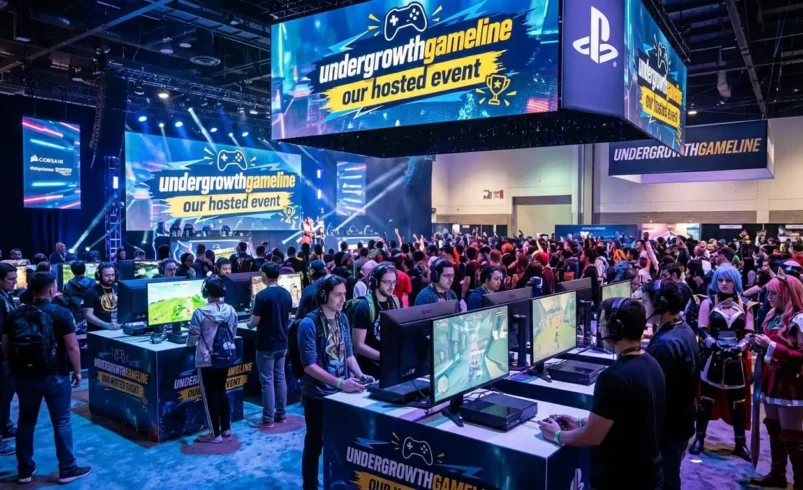
Gaming has grown beyond an activity that people enjoy individually or with a small group of friends. Online platforms have made it possible for players with different interests, skills, and backgrounds to connect through shared digital experiences. From casual multiplayer sessions to organized competitions, gaming communities increasingly value opportunities to participate in something together. These gatherings give players a reason to communicate, cooperate, test their abilities, and build connections that can continue beyond a single match.
Within this wider culture of shared entertainment, the phrase undergrowthgameline our hosted event raises an interesting subject: the idea of a gaming event organized around community participation. Although specific information about its organizer, schedule, platform, and activities requires independent verification, the topic provides an opportunity to explore what hosted gaming events represent and why they can attract attention. Understanding the concept also helps readers distinguish between confirmed event information and the general possibilities associated with organized online gaming.
A hosted gaming event is not simply a collection of players entering the same game at the same time. It involves some level of preparation, communication, coordination, and shared purpose. The host may establish an activity, explain participation expectations, organize sessions, or create opportunities for players to interact. When these elements work together, a gaming gathering can become a more memorable experience than an ordinary online session.
| Fact | Details |
|---|---|
| Event Name | Undergrowthgameline Our Hosted Event |
| Event Category | Gaming / Digital Entertainment |
| Main Topic | Hosted gaming event |
| Event Format | Requires verification |
| Organizer | Requires verification |
| Target Audience | Gaming enthusiasts |
| Event Date | Requires verification |
| Participation Details | Requires verification |
The phrase undergrowthgameline our hosted event can be understood as a reference to an organized gaming gathering connected with a particular gaming identity or community. The wording suggests an event-centered experience rather than a general discussion about video games. However, the phrase alone does not establish whether the gathering is a live online session, a tournament, a community challenge, or another form of digital entertainment.
This distinction matters because gaming events can take many forms. Some are organized around competitive matches, while others focus on relaxed multiplayer activities, social interaction, or cooperative objectives. A community might arrange a short gathering for familiar members, whereas a larger event could involve several sessions and participants who have never played together before. The format determines how people join, what they do, and how the experience is managed.
For readers exploring the undergrowthgameline event, the most useful starting point is to consider the difference between an event’s name and its verified details. A title can introduce a topic, but it cannot confirm a date, organizer, game selection, registration process, or prize structure. Those details should come from an official announcement or another reliable source connected with the event.
Event names often become the first point of contact between organizers and potential participants. A memorable title can help people recognize a gathering, discuss it with friends, and search for further information. Yet a name does not explain the complete experience. Readers still need to understand what the event involves and whether it is suitable for their interests.
For example, someone searching for a hosted gaming event may be looking for a competitive experience, while another person may simply want to meet other players. These expectations are quite different. A tournament usually requires defined rules, match arrangements, and a method of determining results. A social gathering may place greater emphasis on conversation, shared play, and informal participation.
That is why the meaning of undergrowthgameline our hosted event should be approached carefully. General information about gaming gatherings can help explain the concept, but it should not be mistaken for confirmation of specific event features.
Online gaming communities are built around more than access to a particular game. Players often return to the same communities because they enjoy the people, conversations, shared interests, and opportunities to participate. Organized events give these relationships a practical focus. Instead of waiting for someone to suggest a match, members have a reason to come together at a planned time.
One important attraction is the sense of shared involvement. A regular gaming session may be enjoyable, but an organized gathering can introduce a common objective. Participants might work toward completing a challenge, compete against one another, or cooperate to achieve a difficult in-game task. The shared purpose gives the session direction and can make participation more meaningful.
Hosted events can also help newer members become part of an online gaming community. Joining an established group can sometimes feel uncomfortable, especially when existing members already know one another. A clearly explained event creates a natural opportunity for newcomers to introduce themselves, ask questions, and take part in an activity without needing to understand every existing community relationship.
Gaming is frequently discussed in terms of graphics, mechanics, competition, and technology. Those elements are important, but social interaction is another major part of the experience. Voice conversations, team coordination, friendly rivalries, and shared achievements can make an ordinary session more engaging.
A hosted gathering can create space for these interactions to happen naturally. Players may begin by discussing the activity, then continue talking about their preferred games, strategies, or previous experiences. Even when participants do not know each other beforehand, a shared activity can provide an easy starting point for conversation.
The broader subject of gaming culture also includes communities, online relationships, fan participation, and the ways players make entertainment a social experience. Readers interested in this wider background can explore video game culture, which provides a general introduction to the cultural role of video games.
Community engagement depends partly on whether members have reasons to remain active. A group that only shares occasional announcements may struggle to maintain regular interaction. Hosted gaming activities can offer a more practical reason for members to return because they provide something to anticipate.
This does not mean every community needs frequent events. A smaller number of well-organized gatherings may be more effective than a constant stream of poorly planned activities. The value comes from creating experiences that participants understand, enjoy, and can realistically attend.
For an event associated with the undergrowthgameline hosted event phrase, this general principle is useful when evaluating its potential appeal. The important question is not simply whether an event exists, but whether its format gives participants a clear reason to become involved.
An enjoyable gaming event requires more than enthusiasm. Even a small gathering benefits from basic organization because participants need to understand when to arrive, where to communicate, what activity is planned, and how the session will operate. Without these details, people may join at different times, misunderstand instructions, or become uncertain about what they are expected to do.
Event organization provides structure without necessarily making the experience formal. A casual gathering can still have a start time, a selected activity, and a host who welcomes participants. Similarly, a competitive event may require a more detailed arrangement involving match rules, team assignments, scoring, and dispute handling.
The best level of organization depends on the event’s purpose. A relaxed social session should not become unnecessarily complicated, while a tournament needs enough structure to ensure that participants are treated consistently. Good planning creates clarity and allows players to focus on the activity rather than solving avoidable organizational problems.
Communication is one of the most important responsibilities in gaming event organization. Participants need accurate information before the gathering begins. This may include the event’s purpose, expected start time, game requirements, participation rules, and any technical preparation needed.
Clear announcements also reduce repeated questions. If participants know where updates will appear, they can check the same communication channel instead of relying on scattered messages. When a schedule changes, a central announcement helps ensure that everyone receives the updated information.
The communication style should match the audience. A community gathering aimed at casual players may benefit from straightforward, welcoming instructions. A competitive event may require more precise language because even small misunderstandings can affect the fairness of a match.
The host provides direction and helps maintain the flow of an event. Depending on the format, this responsibility might include welcoming participants, explaining the activity, answering questions, coordinating teams, and responding when unexpected problems arise.
A host does not necessarily need to control every aspect of the gathering. In fact, excessive intervention can make a relaxed event feel restrictive. The goal is to provide enough guidance for participants to understand the experience while allowing them to enjoy the activity naturally.
Good hosts also pay attention to the atmosphere. If a participant is confused, they can clarify the instructions. If a disagreement develops, they can remind everyone of the agreed rules. If technical problems interrupt the session, they can communicate what happens next. These small actions can make a significant difference to the overall experience.
A gaming event becomes attractive when it offers a clear reason to participate. That reason may be competition, cooperation, entertainment, social interaction, or the opportunity to try something unfamiliar. Different players value different experiences, so a successful gathering should have a purpose that is easy to understand.
For competitive players, the appeal may come from testing their abilities against others. They may enjoy measuring their performance, learning new strategies, and experiencing the pressure of a structured match. For casual players, the attraction may be much simpler: spending time with other people who enjoy the same games.
A well-designed event can also introduce variety. Players who usually follow the same routine may appreciate an activity that changes the normal pattern of play. A themed challenge, cooperative objective, or mixed-team session can encourage participants to approach familiar games differently.
Competitions are a familiar format within gaming communities because they provide a clear objective. Players understand that they are attempting to complete a task, win a match, or achieve a particular result. This structure can make the experience exciting, particularly when participants have similar skill levels.
However, competition should be designed with the audience in mind. A gathering intended for a broad community may become less welcoming if it focuses entirely on highly experienced players. Clear rules, suitable match formats, and respectful conduct can help create an environment where different ability levels feel comfortable participating.
Not every event needs prizes or formal rankings to be interesting. Friendly competition can be enjoyable because the activity itself provides a challenge. The experience may be more valuable when players can learn from one another and enjoy the process instead of focusing exclusively on winning.
Cooperative gaming offers another way to create engagement. Instead of competing against each other, participants work toward a shared objective. They may need to communicate, divide responsibilities, coordinate movement, or develop a strategy together.
This format can be particularly useful for communities that want to encourage interaction between members. A player who is less interested in competition may still enjoy contributing to a team effort. Cooperative activities can also help participants become familiar with one another because success often depends on communication.
The central idea is that a gaming gathering should offer an experience that makes sense for its audience. Whether the activity is competitive or collaborative, participants are more likely to enjoy it when the purpose is clear and the expectations are reasonable.
Community interaction is one of the defining elements of many hosted gaming experiences. Players may arrive because they enjoy a particular game, but the relationships formed through shared activities can become equally important. A gathering creates opportunities for people to communicate, exchange ideas, and develop familiarity with other members.
The activities themselves can encourage different forms of interaction. Multiplayer sessions may require teams to coordinate their actions. Community challenges can give members a common target. Informal gatherings may provide room for discussion and friendly matches without the pressure of a formal competition.
These examples describe possible approaches to hosted gaming activities; they should not be treated as confirmed features of Undergrowthgameline Our Hosted Event. The actual activities, if any, would need to be established through verified event information.
Multiplayer sessions allow several participants to share the same gaming environment. Depending on the game, players may compete individually, form teams, or cooperate against in-game challenges. The format can be relatively simple, which makes it suitable for communities with different levels of experience.
Organizers should consider how participants will be grouped and whether the game supports the expected number of players. If the activity requires teams, the host may need to explain how teams are formed and how participants should communicate during play. These details help prevent confusion once the session begins.
A community challenge gives participants a shared objective. It might involve completing a task, reaching a milestone, solving a problem, or achieving a result within a particular period. The exact design depends on the game and the audience.
Challenges can be useful because they create a common topic for discussion. Participants can share strategies, compare progress, and encourage one another. They may also provide opportunities for people with different skill levels to contribute in different ways.
Not every part of a gaming event needs to involve active gameplay. Some virtual gatherings include informal discussion, introductions, community announcements, or conversations about upcoming games. These activities can help people connect even when they are not participating in the same match.
For some communities, these social elements are just as important as the games themselves. They create a more welcoming atmosphere and give members an opportunity to become familiar with the group. A successful virtual gathering often balances the main activity with enough time for natural interaction.
Digital events remove some of the geographical limitations associated with traditional gatherings. People who live in different cities or countries may be able to participate in the same online activity, provided they have compatible technology and a suitable internet connection. This can make gaming communities more diverse and create opportunities for people who would otherwise have little chance to meet.
The flexibility of online participation is another advantage. Players may be able to join from home without arranging transportation or travelling to a physical venue. For students, working adults, and people with busy schedules, this convenience can make certain types of gaming events easier to attend.
However, digital access does not automatically guarantee equal participation. Internet quality, device performance, platform compatibility, and time-zone differences can affect the experience. An event may be technically available to a wide audience while remaining difficult for some people to join.
Online communities can connect people who share an interest but have very different daily routines. A player in one country might join a session with someone thousands of miles away. Their common interest provides a starting point for interaction despite differences in location or background.
Organized events can make these connections more practical by giving participants a shared time and activity. Instead of relying on spontaneous invitations, members can plan around a known gathering. This is especially useful when a community includes people who do not regularly play at the same time.
A digital community can appear difficult to enter when its existing members already know one another. New participants may hesitate to speak because they do not understand the group’s habits or communication style.
Hosts can reduce this barrier by providing simple introductions and explaining how the activity works. Participants should know whether they can ask questions, join an ongoing session, or observe before taking part. A welcoming environment does not require complicated procedures; it requires clear communication and respectful treatment.
Planning begins with a simple question: what should participants experience? An organizer who understands the purpose of the gathering can make better decisions about its format, schedule, communication, and technical requirements.
A casual social event may need only a clear announcement and a suitable multiplayer activity. A larger competition may require a registration process, participant limits, match arrangements, a schedule, and written rules. The scale of the event should determine the amount of preparation rather than the other way around.
The event format should reflect the interests and abilities of the intended audience. If the goal is to encourage relaxed interaction, a cooperative session or casual multiplayer gathering may be appropriate. If participants are interested in testing their skills, a structured competition could be more suitable.
Organizers should also consider the length of the activity. A session that continues for several hours may be difficult for people with limited availability. Shorter activities can make participation easier, while a longer event may need breaks and a clearly communicated schedule.
A useful plan should explain what participants will be doing without overwhelming them with unnecessary detail. People should be able to understand the basic experience before deciding whether to join.
Rules help participants understand how an event will operate. They can cover appropriate conduct, communication, team arrangements, match procedures, and the handling of disagreements. For competitive activities, rules may also explain how results are determined and what happens if a participant disconnects.
Rules should be communicated before the event begins. Introducing important requirements after participants have joined can create frustration, especially if people have prepared for a different format. Clear expectations make the experience more predictable and help hosts respond consistently when problems occur.
Scheduling is particularly important for online gatherings that may include people from different regions. A start time that is convenient for one group may be unsuitable for another. Organizers should identify the primary audience and communicate the time zone clearly.
It can also help to announce the expected duration. Someone may be able to attend a one-hour session but not a gathering that continues throughout the evening. Providing realistic timing allows participants to plan without guessing how long the activity will take.
An organized gaming experience depends on several connected elements. A strong concept may attract attention, but the event still needs clear communication, suitable technology, a practical schedule, and responsible management. If one of these areas is overlooked, the experience can become confusing even when the main activity is enjoyable.
Technical preparation involves checking whether the selected game, platform, and communication tools are suitable for the intended activity. Participants may need compatible devices, updated software, stable internet access, or particular account settings.
Hosts should communicate these requirements before the gathering. They should also consider what happens if someone experiences a connection problem. A simple backup arrangement or clear instruction about rejoining can reduce disruption.
No online event can guarantee that technical problems will never occur. The goal is to prepare for common issues and communicate calmly when something unexpected happens.
Accessibility means considering whether people can realistically take part. This includes device requirements, connection quality, language, experience level, and the amount of time needed. An event that assumes every participant has the same equipment or technical knowledge may unintentionally exclude some members.
Organizers can make participation easier by providing instructions in straightforward language and avoiding unnecessary technical barriers. Where possible, they can explain whether beginners are welcome and whether participants need prior experience.
A clear participation process also helps. People should know how to express interest, where to find updates, and whether spaces are limited. These details are especially important when an event involves several teams or scheduled sessions.
Community management helps maintain a respectful environment. Online gatherings can bring together people with different personalities and expectations, so hosts need a reasonable approach to disagreements and inappropriate behaviour.
Moderation does not have to dominate the event. It should provide a clear standard for respectful communication and a fair way to address problems. Participants are more likely to enjoy an event when they feel that their concerns will be taken seriously.
Even well-planned gaming events can encounter difficulties. Online environments depend on technology, participant availability, and communication systems that may not always work as expected. Recognizing these challenges helps organizers make practical decisions instead of assuming that every gathering will run perfectly.
Connection failures, server issues, software updates, and device limitations can interrupt an event. A participant may lose access during a match, or several players may experience delays at the same time. These problems can be frustrating, particularly during competitive activities.
Hosts should explain how interruptions will be handled. Depending on the format, the event may pause, restart an activity, or continue without the affected participant. The appropriate response should be consistent with the rules communicated before the gathering.
Participants may have different work, education, family, and personal commitments. Even when an event is announced in advance, some people may be unable to attend at the scheduled time.
This is one reason organizers should avoid assuming that every community member will participate. A realistic attendance expectation is more useful than an unsupported promise of large participation. Where appropriate, repeating an activity at another time may make it easier for more people to become involved.
Competitive gaming can create strong reactions, particularly when players disagree about a result or believe that rules have been applied unfairly. Communication problems can make these situations worse because participants may misunderstand one another.
Hosts should establish a simple process for handling disputes. Rules should be applied consistently, and personal disagreements should not be allowed to dominate the gathering. Respectful moderation protects the atmosphere without preventing players from expressing reasonable concerns.
A community may include beginners, experienced players, and people who have only recently started playing. If an activity is designed exclusively around one skill level, others may feel excluded.
Organizers can address this by choosing suitable activities, creating balanced teams, or explaining the expected level of experience in advance. The aim is not to remove every competitive difference but to make sure participants understand what kind of challenge they are joining.
Anyone researching undergrowthgameline our hosted event should begin by looking for reliable information about the actual gathering. A title or short description may introduce the subject, but participants need more practical details before making plans.
The first consideration is verification. Readers should look for an announcement from an official event channel or a clearly identified organizer. The information should explain the event’s date, time, format, platform, and participation process where those details are available. If these details are missing, it is better to wait for clarification than to rely on assumptions.
Participants should also understand the technical requirements. A game may require a particular device, software version, account, or connection quality. Checking these requirements early can prevent last-minute problems.
Before joining any hosted gaming activity, participants should read the available instructions. They should understand whether registration is required, whether spaces are limited, and whether they need to join a particular communication channel. If the activity is competitive, they should pay attention to match rules and conduct expectations.
It is also sensible to check whether participation is free or involves any payment. Never assume that a gaming event is free, offers prizes, or provides special access unless the organizer clearly confirms those details. Any request for personal or payment information should be evaluated carefully.
Participants can improve their experience by testing their equipment and connection before the event. They should install necessary updates in advance and make sure they understand how to access the activity. If voice communication is required, checking the microphone and audio settings can save time.
Expectations matter as well. Not every gathering will have a large audience, professional production, or competitive structure. Some events may be small community sessions. Approaching a gathering with a realistic understanding of its purpose makes it easier to appreciate what it offers.
Community-driven gaming events are part of a wider shift in digital entertainment. Players increasingly have opportunities to connect through online spaces, share experiences, and organize activities around common interests. As games and communication platforms continue to develop, communities may find new ways to bring members together.
The future of hosted gaming gatherings will not depend on technology alone. Better streaming tools, improved multiplayer systems, and easier communication can support event organization, but the quality of the experience still depends on people. Organizers need to understand their audiences, communicate clearly, and create activities that participants genuinely want to join.
Gaming communities do not all have the same needs. Some may prefer short sessions that fit into busy schedules, while others may enjoy longer gatherings built around several activities. Flexible formats can help organizers serve different interests without forcing every participant into the same experience.
A community could, for example, arrange separate casual and competitive sessions. Another might focus on cooperative challenges or themed gatherings. These are general possibilities rather than confirmed plans for Undergrowthgameline Our Hosted Event. Their usefulness depends on the interests of the people involved.
The long-term value of an event often comes from what happens after it ends. Participants may continue discussing the activity, sharing feedback, or suggesting ideas for future gatherings. This interaction can help a community understand what members enjoy and what needs improvement.
Organizers who listen to participants can make future events more relevant. Feedback may reveal that a schedule is inconvenient, instructions are unclear, or a particular activity is more popular than expected. Responding to these observations can improve the experience without requiring a larger budget or more complicated technology.
A large attendance figure does not automatically mean that a gaming event is successful. A smaller gathering can provide meaningful interaction when participants understand the activity and enjoy the environment. Conversely, a large event may feel disorganized if communication and management are weak.
For this reason, community-driven events should be judged by the quality of participation as well as their reach. Clear organization, fair treatment, and enjoyable activities are more useful measures than unsupported claims about popularity.
Undergrowthgameline our hosted event is the keyword used to explore a gaming event or gathering associated with the Undergrowthgameline name. Specific details such as its organizer, date, platform, and activities require verification. The phrase alone does not confirm the event’s format or participation arrangements.
A hosted gaming event brings players together around an organized activity. Its purpose may be entertainment, competition, cooperation, or community interaction. The host provides direction and communicates the arrangements so participants can understand what to expect.
Online gaming events give people a shared activity and a planned opportunity to interact. Participants may cooperate, compete, exchange strategies, or simply enjoy playing together. These experiences can help members become familiar with one another and strengthen community relationships.
Possible activities include multiplayer sessions, friendly competitions, community challenges, cooperative missions, and virtual social gatherings. The actual activities depend on the organizer and event format. These examples should not be treated as confirmed features of the Undergrowthgameline event.
Organization helps participants understand the schedule, rules, technical requirements, and communication process. It reduces confusion and gives the gathering a clear structure. Good organization also helps hosts manage unexpected problems and maintain a respectful environment.
Participants should verify the event information, review the rules, check the required game or platform, and test their equipment. They should also confirm the time zone and understand whether registration or advance preparation is necessary.
Common challenges include internet interruptions, server problems, scheduling conflicts, unclear instructions, and disagreements between participants. Differences in skill levels and device access can also affect the experience. Preparation and clear communication can reduce many of these difficulties.
An enjoyable event usually has a clear purpose, suitable activities, reliable communication, and a welcoming atmosphere. Participants should understand what they are joining and feel comfortable taking part. The quality of interaction often matters as much as the game itself.
Readers should look for information from an official event announcement or a clearly identified organizer. They should verify the date, format, platform, rules, and participation instructions before making plans. If important details are unavailable, they should avoid relying on unconfirmed descriptions.
Gaming communities are shaped by the experiences people share, not only by the games they play. Organized gatherings give those communities a reason to interact, cooperate, compete, and welcome new participants. When a host provides clear communication and a suitable structure, even a simple multiplayer session can become a more engaging digital experience.
The discussion around undergrowthgameline our hosted event highlights the importance of understanding both the appeal and the practical requirements of hosted gaming activities. At the same time, responsible reporting means recognizing what remains unverified. An event’s name should not be used as evidence of a confirmed schedule, organizer, platform, or list of activities.
Ultimately, the value of a gaming gathering comes from the experience it creates for its participants. Technology makes online interaction possible, but thoughtful organization and community participation give that interaction purpose. Whether a gathering is casual, competitive, or collaborative, its lasting impression depends on how well people are brought together and how welcome they feel once they arrive.
For More Visits: Worldmagazine