TGAgeeks Gaming News from TheGameArchives: Understanding Gaming Updates, Industry Trends and Digital Game History
November 13, 2026
0
Gaming enthusiasts have more information available to them than ever before, but finding useful information among countless announcements, reviews, discussions, and updates can be surprisingly difficult. A major
Gaming enthusiasts have more information available to them than ever before, but finding useful information among countless announcements, reviews, discussions, and updates can be surprisingly difficult. A major studio might reveal an upcoming release while an independent developer quietly introduces an interesting gameplay concept. At the same time, an established multiplayer title could receive a balance adjustment that changes how thousands of players approach their favourite game. Each development contributes something different to the wider gaming conversation.
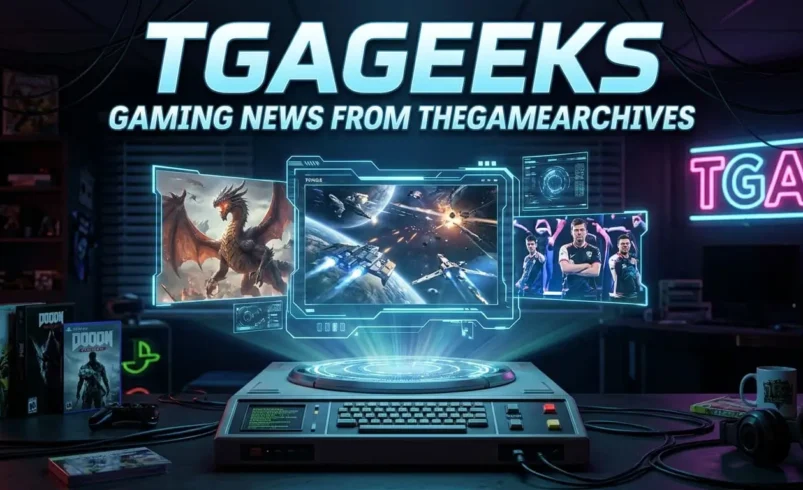
This changing information landscape helps explain interest in tgageeks gaming news from thegamearchives. The phrase connects gaming coverage with the broader idea of preserving and understanding information about video games. Readers searching for it may want to discover gaming announcements, explore industry developments, understand updates, or learn why historical gaming information remains valuable. However, understanding the subject requires looking beyond a collection of headlines and considering how gaming journalism, digital publishing, and game preservation contribute to the modern entertainment industry.
TGAgeeks and TheGameArchives are names that appear in connection with gaming-related online content. TGA Geeks has a public website presenting gaming news, reviews, strategy guides, esports coverage, and related material. TheGameArchives also publishes gaming-related content, including articles using the TGAgeeks gaming news phrase. Their names and overlapping subject matter do not, by themselves, establish common ownership or an official organizational partnership. Understanding this distinction helps readers approach the topic with realistic expectations.
Quick Information Table
Information
Details
Topic Name
TGAgeeks Gaming News from TheGameArchives
Main Subject
Gaming news and information
Content Category
Gaming and digital entertainment
Main Focus
Gaming updates and industry developments
Related Platform
TGAgeeks
Associated Name
TheGameArchives
Content Interests
Game releases, updates, gaming trends
Target Audience
Casual and dedicated gamers
Gaming Coverage
Industry, technology, community and releases
Main Reader Benefit
Understanding gaming developments
Understanding the Interest Behind TGAgeeks Gaming News
Gaming information has developed into a broad form of digital journalism. Years ago, players often depended on gaming magazines, printed guides, television programmes, and specialist publications to learn about new titles. Today, information travels through websites, video platforms, developer announcements, community forums, livestreams, and social networks.
This change has created an audience with different information needs. Some people want immediate announcements about upcoming releases, while others prefer detailed explanations of gameplay systems, technical improvements, or industry decisions. Collectors may be interested in older titles that are no longer widely available, whereas competitive players might pay closer attention to balance changes and tournament developments.
The TGAgeeks gaming news topic sits within this wider environment of gaming information. It represents an interest in discovering gaming-related content and understanding the developments that influence players, developers, and publishers.
The value of a gaming information resource depends on more than how frequently it publishes. Readers benefit when an article explains the background of a development, identifies its possible effects, and distinguishes confirmed information from speculation. A headline may attract attention, but useful reporting gives people a reason to continue reading.
What TGAgeeks Represents in Gaming Media
The public-facing TGA Geeks website presents itself as a gaming-focused information destination. Its visible content areas include gaming news and trends, reviews and analysis, player strategy guides, upcoming game releases, esports coverage, and expert insights.
These subject areas cover several important parts of the gaming experience. News helps readers follow developments, reviews provide evaluations of individual games, and strategy guides offer practical assistance. Esports coverage introduces competitive gaming, while industry analysis helps audiences understand broader changes.
A reader interested in a particular game might approach these categories differently. Someone considering a purchase could begin with a review, while an experienced player might prefer a strategy guide. A person following the business side of gaming may be more interested in studio announcements and industry trends.
The usefulness of this structure comes from recognizing that gaming audiences are not identical. A resource becomes more valuable when it addresses different interests without treating every player as someone looking for the same information.
Understanding TheGameArchives Separately
TheGameArchives is another name associated with online gaming publications and gaming information. Its website contains articles discussing gaming subjects, releases, technology, and archival themes.
The word archives naturally suggests the preservation and organization of historical information. In gaming, that idea can involve much more than maintaining a list of older titles. Development records, original release information, manuals, screenshots, interviews, game builds, and historical commentary can all contribute to a better understanding of the medium.
However, the presence of archival language does not automatically establish that a website operates a comprehensive preservation collection or provides access to playable historical games. Readers should examine the actual services and content available rather than assuming that the name describes every feature.
The distinction is important when interpreting the keyword tgageeks gaming news from thegamearchives. It is useful to explore the two names and their gaming-related content without presenting an unverified business relationship as fact.
How Gaming News Has Changed Over the Years
The history of gaming journalism reflects the development of the video game industry itself. Early gaming audiences often discovered new products through advertisements, magazines, arcade communities, and specialist publications. Printed reviews and walkthroughs were particularly valuable because players had fewer immediate ways to exchange information.
As home consoles and personal computers became more widespread, gaming publications expanded their coverage. Readers could find discussions about hardware, software, game design, industry competition, and emerging genres. Magazines also helped establish a shared culture in which players could discuss titles released across different platforms.
The internet changed this relationship considerably. Websites made it possible to publish information without waiting for a print production cycle. Players could discuss games in forums, watch demonstrations, read developer announcements, and share their experiences across international communities.
Social media and livestreaming introduced another major development. A gaming announcement can now attract attention through a short video, a developer presentation, or a community discussion before a traditional article is published.
This speed offers convenience, but it also creates challenges. Information can spread before its accuracy has been established. An early rumour may be repeated across several websites until readers mistakenly interpret repetition as confirmation.
For this reason, modern gaming journalism needs more than speed. Clear attribution, reliable context, accurate descriptions, and thoughtful analysis are increasingly important.
Breaking Headlines Versus Meaningful Gaming Analysis
Not all gaming information serves the same purpose. Breaking news explains that something has happened, while analysis explores its significance.
Consider a developer announcing a major update for a multiplayer game. A short news report might identify the release, summarize the changes, and mention the platforms involved. That information is useful, particularly for players who want to know whether they need to download an update.
An analytical article can go further. It may explain how the changes affect character abilities, competitive balance, matchmaking, or the experience of new players. It can also compare the update with previous development decisions and discuss what the changes suggest about the game’s future direction.
Both formats have value, but they answer different questions.
A strong gaming news resource should help readers distinguish between an announcement and an interpretation. If an article discusses a confirmed developer statement, it should identify that statement accurately. If it offers an opinion about the likely consequences, it should make clear that the conclusion is analysis rather than established fact.
This distinction is particularly relevant to TGAgeeks gaming news because readers searching for gaming information may encounter several types of content under similar phrases. Understanding whether an article is reporting, reviewing, explaining, or speculating helps people decide how much confidence to place in its claims.
Major Gaming Developments Worth Following
The gaming industry includes several connected areas that influence the experiences available to players. New releases are only one part of the picture. Technology, development decisions, competitive communities, business arrangements, and changes in distribution all shape the direction of gaming.
Game Development and Creative Decisions
Developing a video game involves a combination of creative planning and technical work. Studios begin with concepts that may develop into prototypes, design documents, gameplay systems, and production plans. Teams then work on visual assets, programming, sound, level design, performance, and testing.
The process can be particularly demanding for large projects. A game may require different teams to coordinate character animation, artificial intelligence, online infrastructure, user interfaces, and narrative content.
Development announcements help players understand how a project is progressing. A gameplay demonstration may reveal the direction of a combat system, while an interview could explain why a studio has chosen a particular design approach.
However, early demonstrations should not always be treated as final representations of a finished product. Features can change during development, and production schedules may be adjusted when technical or creative problems arise.
New Releases and Gaming Announcements
New releases attract considerable attention because they introduce experiences that players have not previously explored. Announcements may include original intellectual properties, sequels, remakes, remasters, expansions, and independent projects.
A release announcement becomes more useful when it explains the type of game, intended platforms, gameplay concept, and development information that has actually been confirmed.
Players should also understand the difference between a release window and a confirmed launch date. A developer might announce that a title is planned for a particular period without establishing an exact day.
For readers following gaming releases and announcements, this distinction helps avoid confusion when early expectations change.
Patches, Balance Changes and Downloadable Content
Games do not necessarily remain unchanged after launch. Developers frequently improve performance, correct technical problems, adjust gameplay systems, and introduce additional content.
A patch may fix an issue that prevents players from progressing through a mission. Another update might improve loading performance or adjust the behaviour of a particular character.
Balance changes are especially important in competitive games. A small adjustment to damage, movement speed, cooldown periods, or available equipment can influence established strategies.
Downloadable content introduces another layer of development. Expansions may add story chapters, locations, characters, missions, or gameplay systems.
Players benefit from coverage that explains not only what has changed but also why the change matters. A useful update summary should make it easier to understand the practical consequences without exaggerating the importance of every minor adjustment.
Gaming Platforms and the Changing Player Experience
Gaming takes place across several hardware environments, each with different strengths and limitations. PC gaming, home consoles, handheld systems, and mobile devices provide different ways to access interactive entertainment.
PC Gaming
PC gaming offers flexibility in hardware selection, performance settings, controls, and software customization. Players can choose systems based on their budgets and preferred gaming experiences.
Hardware upgrades can improve visual quality, frame rates, loading performance, and the ability to run demanding games. However, compatibility remains an important consideration because games may have different system requirements.
Gaming coverage that discusses PC developments should explain how hardware and software changes affect real-world performance rather than focusing only on impressive technical specifications.
PlayStation and Xbox
Console platforms provide dedicated gaming environments with established hardware ecosystems and digital storefronts. Their audiences often follow exclusive releases, subscription services, hardware developments, and online features.
Platform announcements can influence purchasing decisions, particularly when a title is available on some systems but not others.
Cross-platform play is another important development. When supported, it allows people using different gaming systems to participate in the same multiplayer environment.
Nintendo and Handheld Gaming
Handheld gaming has an important place in the industry because it allows players to enjoy games in different settings. Portable systems also encourage developers to consider shorter sessions, flexible controls, and hardware-specific design choices.
Nintendo’s gaming history demonstrates how portable and home-console experiences can overlap. The wider handheld market also includes PC-based portable devices and mobile gaming hardware.
Mobile Gaming
Mobile gaming has introduced interactive entertainment to audiences who may not own a dedicated gaming console or computer. Smartphones support puzzle games, strategy experiences, multiplayer titles, simulations, and many other genres.
The mobile market also has distinctive commercial models. Free-to-play games may use optional purchases, advertising, subscriptions, or seasonal content.
Coverage should explain these models clearly because the way a game generates revenue can influence its progression systems, reward structures, and long-term development.
Esports and the Influence of Competitive Gaming
Esports has become an important part of gaming culture. Competitive titles attract players who want to improve their skills, teams that organize professional participation, and audiences who enjoy watching high-level matches.
Competitive gaming includes several genres. Multiplayer battle arenas, tactical shooters, sports simulations, fighting games, and strategy titles all have established competitive communities.
The appeal comes partly from the skill involved. Professional players must understand game mechanics, develop strategies, coordinate with teammates, and respond to opponents under pressure.
Tournament coverage gives audiences a way to follow this environment. Match results, team changes, qualification processes, competitive formats, and event announcements all contribute to esports reporting.
However, accurate coverage requires attention to dates and official announcements. A scheduled match should not be described as completed, and an unconfirmed roster rumour should not be presented as an established transfer.
Gaming communities also influence esports development. Player feedback can highlight problems with competitive balance, tournament organization, or game accessibility. Developers may consider this feedback when planning future improvements.
Independent Games and the Importance of Creative Diversity
Independent games play a significant role in keeping the industry creatively diverse. Smaller studios and individual developers often work with limited budgets, smaller teams, and more focused production goals.
These circumstances can encourage experimentation. An independent project may explore unusual storytelling, distinctive visual styles, unusual controls, or gameplay systems that would be difficult to justify in a large commercial production.
Indie gaming is not limited to one genre. Independent developers create platformers, role-playing games, puzzle experiences, horror titles, simulations, and narrative adventures.
A useful gaming publication should give these projects attention alongside major releases. Otherwise, readers may develop an incomplete understanding of the industry by seeing only games supported by large marketing campaigns.
Independent development also creates opportunities for new talent. Small projects can introduce designers, programmers, artists, and writers to audiences who might later follow their careers.
For casual players, discovering independent games can provide fresh experiences. For industry enthusiasts, these projects offer examples of how creative decisions can influence game design.
Why Gaming History and Preservation Matter
Gaming history is more than a collection of nostalgic memories. It represents the development of interactive technology, entertainment, storytelling, and digital culture.
Older games provide insight into how developers worked with the hardware and software available at different points in time. Early technical limitations influenced visual styles, sound design, controls, and gameplay structures.
Understanding this history helps explain why modern games use certain conventions. Features that seem familiar today may have developed through decades of experimentation.
The preservation of video games is therefore an important subject within gaming journalism and digital archives.
Preserving More Than the Game Itself
A complete historical record may include more than a playable copy of a title. Development documents, original artwork, promotional material, manuals, advertisements, interviews, screenshots, and technical information can all provide valuable context.
These materials help researchers understand how a game was developed and marketed. They can also reveal how technology and audience expectations changed over time.
An archived manual, for example, may explain how an older title expected players to interact with its controls. A development document may show how the original concept changed before release.
This information can be useful to historians, developers, collectors, and ordinary enthusiasts.
The Challenge of Digital Preservation
Older games can become difficult to access because their original hardware is no longer manufactured or supported. Storage media may deteriorate, software can become incompatible with modern operating systems, and online services may disappear.
Digital distribution creates additional questions. A game that depends on external servers may become inaccessible when the publisher discontinues the service.
Preservation also involves legal considerations. Copyright, licensing, distribution rights, and access restrictions can affect what archives are allowed to store or provide.
Readers interested in this subject can explore video game preservation, which explains the wider challenges of retaining games and related historical materials.
The importance of preservation becomes clearer when considering that gaming is both an entertainment industry and a form of cultural history. Losing access to older games can mean losing opportunities to study the creative and technical decisions that shaped modern interactive entertainment.
How Archived Gaming Information Helps Modern Players
Historical gaming information can provide practical value even to people who primarily enjoy current releases.
A player researching an older franchise may want to understand its original storyline before trying a newer entry. A collector may be interested in differences between regional versions, packaging, or release formats. A developer might study an older mechanic to understand how similar ideas have evolved.
Archives also help explain changes in player expectations. Features that were once considered advanced may eventually become standard. Similarly, older approaches to difficulty, progression, and multiplayer design can reveal how games responded to different audiences.
Gaming history can also prevent repeated misunderstandings. An article that documents the original release of a title or explains its development background gives readers a foundation for interpreting later remakes and sequels.
For this reason, gaming archives and regular gaming news should not be treated as competing subjects. Current reporting explains what is happening now, while historical records help explain how the industry arrived at its present position.
The relationship between these two forms of information is one of the most interesting aspects of TGAgeeks gaming news from TheGameArchives as a search topic.
Gaming Communities and Their Influence on Industry Trends
Gaming communities influence how titles are discussed, evaluated, and developed. Players exchange strategies, report technical issues, organize multiplayer sessions, create modifications, and share opinions about new releases.
These activities create information that may not appear in traditional announcements.
A community discussion can reveal that players are struggling with a particular mission or that a newly introduced feature has unexpected consequences. Fan-created guides can explain complicated mechanics, while discussion groups can introduce newcomers to a game.
However, community feedback should be interpreted carefully. A highly visible complaint does not necessarily represent the experience of every player. Similarly, a popular opinion within one online group may differ from the views of audiences elsewhere.
Developers sometimes use community feedback to identify problems and improve their products. Official forums, feedback programmes, and public testing environments can provide structured ways for players to contribute.
The strongest gaming information resources distinguish between confirmed developer responses, individual opinions, and broader community discussions.
Streaming and Content Creators
Streaming platforms have changed the way players discover games. A creator can demonstrate gameplay, explain strategies, discuss updates, or organize a live multiplayer session.
This format provides an experience that written coverage cannot always reproduce. Viewers can see how a mechanic works and observe how players respond to unexpected situations.
However, entertainment and journalism have different responsibilities. A creator’s personal experience can be valuable, but it should not automatically be treated as proof of a general technical issue or an official development announcement.
Readers should consider the context behind opinions and look for supporting information when a claim could affect a purchasing decision.
What Makes a Gaming News Platform Useful?
A good gaming information resource should help readers understand developments without overwhelming them with unnecessary detail.
The first requirement is clarity. Articles should explain the subject in language that both casual and experienced players can understand.
The second is accuracy. Release information, developer announcements, technical specifications, and tournament results should be presented carefully. When a detail is uncertain, that uncertainty should be acknowledged.
The third is context. A gaming update becomes more useful when readers understand why it matters and how it relates to previous developments.
Organization is also important. Categories, search features, descriptive headings, and related articles help visitors find information without navigating through unrelated content.
A well-organized gaming publication should ideally offer several types of content, including:
News about confirmed industry developments.
Reviews that explain strengths and limitations.
Guides that help players understand game mechanics.
Updates covering patches and additional content.
Esports information and competitive developments.
Historical features discussing older games and technology.
Analysis exploring changes in gaming culture and business.
These categories serve different purposes, but together they provide a more complete picture of the industry.
For readers exploring TGAgeeks gaming news, the same standards offer a useful way to evaluate individual articles and decide which information deserves attention.
How Readers Can Evaluate Gaming Information
The speed of online publishing makes it important to assess information before accepting it as fact.
Start by identifying where a claim originated. A statement from a game developer or publisher carries a different level of authority from an anonymous community post.
Check the publication date as well. An old article may describe a feature that has since changed, particularly when discussing live-service games.
Look for clear distinctions between facts and opinions. A reviewer can reasonably dislike a gameplay system, but that opinion should not be presented as a technical defect affecting every player.
Readers should also be cautious with leaks and rumours. Some unofficial information eventually proves accurate, but that does not make every early claim reliable.
When an announcement concerns a purchase, platform change, or competitive decision, checking the original developer communication is particularly useful.
These habits make gaming news more valuable because they allow readers to develop their own understanding instead of simply repeating popular headlines.
The Different Needs of Modern Gaming Audiences
One reason gaming journalism requires varied coverage is that players approach the medium from different perspectives.
Casual Players Looking for Entertainment
Casual players may want to discover enjoyable games without spending hours researching every available title. They often benefit from accessible reviews, recommendations, release information, and explanations of gameplay.
For this audience, a useful article should explain what a game offers, who might enjoy it, and whether its main features are suitable for different playing styles.
Competitive Players Following Game Changes
Competitive players often need more specific information. Balance changes, technical performance, matchmaking systems, and tournament developments can affect how they play.
A small update might require a player to change an established strategy. Detailed coverage can help them understand the reason for the change and prepare for its consequences.
Collectors and Retro Gaming Enthusiasts
Collectors may be more interested in original releases, physical editions, regional differences, manuals, and historical development records.
For them, preservation is not simply about nostalgia. It is also about documenting how games were distributed, packaged, and experienced.
Industry Enthusiasts and Developers
People interested in game development may want to understand technology, production challenges, creative decisions, and the business models behind major releases.
They benefit from analysis that goes beyond the final product and explores the work involved in bringing games to audiences.
A gaming publication that recognizes these differences can provide a more useful reading experience than one that treats every visitor as an identical consumer.
The Role of Technology in Modern Gaming
Technology influences nearly every part of the gaming experience. Improvements in processors, graphics hardware, storage, networking, and software development tools allow studios to create increasingly complex interactive environments.
Game engines are particularly important because they provide tools for rendering graphics, managing physics, creating animations, and building interactive systems. Developers can use established engines to reduce some technical work and focus more attention on design.
Artificial intelligence is another area receiving attention. In games, AI can control non-player characters, influence enemy behaviour, assist procedural generation, and support development workflows.
Cloud technology also affects how some games are distributed and accessed. Cloud gaming services can allow players to stream games from remote hardware, although performance depends on network quality, service availability, and regional infrastructure.
Virtual reality and augmented reality offer additional possibilities by changing how players interact with digital environments. These technologies create opportunities for simulation, exploration, training, and entertainment.
A useful gaming technology article should explain practical implications rather than simply listing technical terms. Readers want to know how a development affects gameplay, accessibility, performance, and the overall experience.
The Future of Gaming Journalism and Digital Archives
The future of gaming information will likely involve a closer relationship between reporting, interactive media, community participation, and historical documentation.
Video content and livestreams will continue to influence how audiences discover new games. Written articles will remain useful because they allow readers to examine information at their own pace, compare developments, and revisit explanations.
Interactive databases may also become more important. Players could benefit from organized records of releases, patch histories, hardware compatibility, and development information.
Digital archives may become increasingly valuable as games depend more heavily on online services and changing software environments. Preserving development records and historical materials can help ensure that important parts of gaming culture remain accessible for future research.
Another important development concerns the use of artificial intelligence in gaming journalism. Automated tools can assist with organizing information, transcribing interviews, and analyzing large amounts of data. However, editorial judgment and verification remain essential.
The challenge will be maintaining accuracy and originality while delivering information quickly enough to meet audience expectations.
Gaming journalism should not become a competition to publish the largest number of headlines. Its real value lies in helping people understand what is happening and why it matters.
Exploring Related Gaming and Technology Coverage
Readers interested in TGAgeeks gaming news from TheGameArchives may also benefit from exploring related subjects across digital entertainment.
For example, WorldMagazine’s feature on Tgageeks gaming updates and industry trends examines the broader interest in gaming developments, updates, and player information. It provides another perspective on why readers look beyond individual game announcements.
Similarly, The online gaming event TheHakevent explores the wider environment of virtual gaming activities, community participation, and digital competition. These subjects demonstrate how gaming now extends beyond individual titles into shared online experiences.
Technology also remains central to the future of interactive entertainment. Understanding software, computing systems, and digital tools helps explain many of the developments that influence modern gaming.
Together, these topics provide a broader perspective on the relationship between gaming, technology, information, and online communities.
Frequently Asked Questions About TGAgeeks Gaming News from TheGameArchives
1. What Is TGAgeeks Gaming News from TheGameArchives?
TGAgeeks gaming news from TheGameArchives is a search phrase associated with gaming-related content, industry developments, and online gaming information. It brings together interest in TGAgeeks and TheGameArchives without independently establishing that the names represent one organization. Readers should examine each website and its published material separately.
2. Are TGAgeeks and TheGameArchives the Same Organization?
Their names appear in connection with gaming-related online content, but that alone does not confirm common ownership or an official partnership. Readers should rely on clear ownership statements or official organizational information before treating them as the same organization.
3. What Type of Gaming Information Should Readers Look For?
Useful gaming information includes new release announcements, developer updates, patch notes, reviews, strategy guides, esports developments, gaming technology, and industry analysis. Historical information can also help readers understand older titles and the evolution of the medium.
4. Why Are Gaming Archives Important?
Gaming archives help preserve information about older games, development processes, original releases, and the history of interactive entertainment. They can support research, help collectors understand older products, and give developers opportunities to study earlier design approaches.
5. How Are Gaming Archives Different From Regular Gaming News Websites?
Regular gaming news websites generally focus on current announcements, releases, reviews, and industry developments. Gaming archives emphasize preserving and organizing historical material. Some publications discuss both subjects, but reporting current news and maintaining historical records are different activities.
6. Why Should Players Follow Developer Announcements?
Developer announcements provide information about upcoming releases, technical changes, patches, new features, and future development plans. Following official communications helps players distinguish confirmed information from rumours and understand how changes may affect their favourite games.
7. Which Gaming Updates Matter Most to Players?
The most important updates depend on the type of game and the player’s interests. Competitive players may prioritize balance changes, matchmaking improvements, and bug fixes. Story-focused players may be more interested in expansions and additional content, while PC players may pay close attention to performance and compatibility improvements.
8. How Does Gaming Preservation Benefit Future Generations?
Preservation helps retain access to games and historical materials that might otherwise disappear because of deteriorating hardware, discontinued services, or obsolete software. It allows future players, historians, and developers to study the development of gaming as a cultural and technological medium.
9. How Can Readers Check Whether Gaming News Is Reliable?
Readers should identify the original source, check publication dates, distinguish official announcements from rumours, and compare important claims with developer or publisher communications. Clear attribution and accurate context are particularly important when information could influence a purchase or competitive decision.
10. What Makes Gaming Industry Analysis Different From Ordinary News?
Industry analysis examines the reasons behind developments and their possible consequences. Instead of simply reporting that a studio has announced a project or a game has received an update, analysis explores how those decisions may affect developers, players, competitors, and the wider gaming market.
Conclusion: Connecting Modern Gaming News With the Industry’s History
Gaming information has become an important part of how people experience interactive entertainment. Players now follow more than release announcements. They want to understand development decisions, gameplay changes, technology, competitive communities, and the history behind the games they enjoy.
The interest in tgageeks gaming news from thegamearchives reflects this broader demand for information that connects current developments with the wider gaming landscape. TGAgeeks and TheGameArchives are names associated with gaming-related online content, but their organizational relationship should not be assumed without confirmation. Examining their published material separately provides a more accurate starting point for understanding the subject.
The most useful gaming coverage combines timely information with context. A good article explains what happened, why it matters, and how the development connects with the experiences of different players. Historical archives add another dimension by helping preserve the creative decisions, technical achievements, and cultural experiences that shaped the industry.
As gaming continues to evolve, the relationship between news, analysis, community knowledge, and digital preservation will become increasingly important. New releases will continue to attract attention, but understanding the past and examining the present carefully will help players appreciate where the industry may be heading next.