What makes a technology company trustworthy when its employees build applications, manage cloud environments, and handle information belonging to other businesses? The answer involves much more than programming
What makes a technology company trustworthy when its employees build applications, manage cloud environments, and handle information belonging to other businesses? The answer involves much more than programming expertise. Behind every successful software project is a workforce responsible for development, infrastructure, communication, quality assurance, and the protection of digital information. This is particularly important for companies providing technology services to clients across different industries.
Trango Tech is a software development and digital transformation company with a range of services covering mobile applications, enterprise solutions, eCommerce, cloud-related development, and technology consulting. Its public presence highlights a workforce operating across different technical and business functions, while its careers website provides a particularly interesting detail: an advertised Information Security Lead (GRC) position based in Karachi, Pakistan.
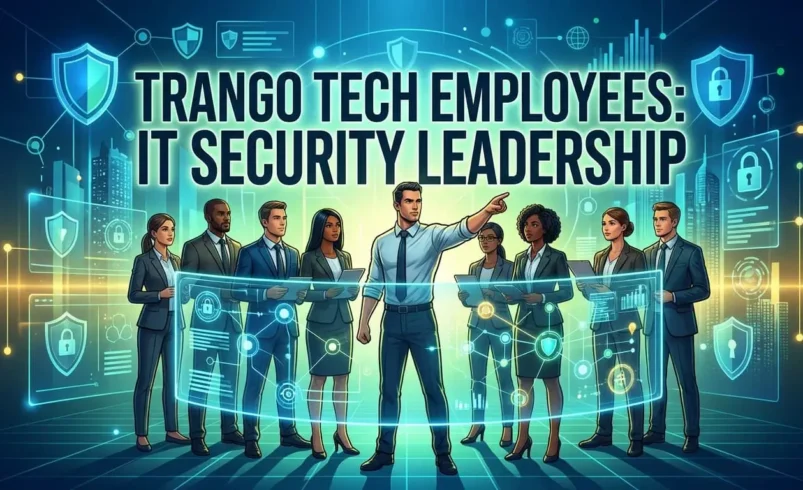
The relationship between Trango Tech employees IT security leadership deserves attention because it illustrates how cybersecurity responsibilities fit into a modern software development environment. Developers may create applications, infrastructure specialists maintain technical environments, and security professionals evaluate risks that could affect the company or its customers. These responsibilities overlap, making coordination between employees and security leadership an important part of technology operations.
However, understanding a company’s workforce requires separating publicly confirmed information from assumptions. A published job advertisement can reveal the qualifications a business seeks, but it does not automatically identify the person occupying the position. Similarly, a company’s employee count or public profile does not provide a complete picture of its internal reporting structure.
This article explores Trango Tech’s publicly presented business, its employee functions, the significance of its Information Security Lead recruitment, and the wider cybersecurity responsibilities associated with software development companies.
Quick Facts About Trango Tech
Company Detail
Information
Company name
Trango Tech
Industry
Software development and technology services
Business focus
Mobile apps, enterprise solutions, eCommerce and digital transformation
Publicly named CEO
Asad Ullah Khan
Founded
2003, according to its LinkedIn company profile
Pakistan presence
Karachi, Pakistan
Karachi office location
City View Tower, Shaheed-e-Millat Road, according to the official website
Employee categories
Development, cloud, consulting, recruitment, sales and business operations
Understanding Trango Tech and Its Business Operations
Trango Tech operates in an industry where businesses increasingly depend on customized digital products to manage customers, transactions, communication, and internal processes. Its website presents the company as a technology services provider working on mobile application development, enterprise solutions, eCommerce platforms, and other digital projects.
This business model requires a combination of technical knowledge and organizational coordination. A mobile application project, for example, may involve designers, frontend developers, backend engineers, database specialists, testers, project managers, and deployment professionals. Each person contributes to a different part of the product, but their work must fit together before a reliable application can reach its users.
The company’s publicly displayed portfolio illustrates this variety. Projects shown on its website include applications and platforms associated with logistics, entertainment, healthcare, and eCommerce. The portfolio identifies technologies such as React Native, Flutter, Flask, and native mobile development across different examples. These technologies represent different approaches to building and maintaining digital products.
Trango Tech also presents enterprise technology and Microsoft-related services, including Business Central, Dynamics 365, SharePoint, Azure, and Power BI. Such work requires professionals who understand how business systems communicate, how information is stored, and how applications integrate with existing organizational processes.
The diversity of these services helps explain why a technology company needs employees with different professional backgrounds. Software engineers alone cannot manage every aspect of a complex digital project. Infrastructure, quality, security, recruitment, sales, and customer communication all contribute to successful delivery.
The Importance of a Diverse Technology Workforce
A software development business depends on people who can translate customer requirements into practical technical solutions. Developers may focus on code quality and functionality, while designers concentrate on user experience and accessibility. Project managers coordinate deadlines, resources, and communication between stakeholders.
Cloud and deployment specialists handle another important responsibility. Their work can involve preparing environments, configuring infrastructure, managing deployment processes, and supporting applications after launch. When an application experiences performance or availability problems, these professionals may work alongside developers to identify the underlying cause.
Business development and sales employees also contribute to the company’s operations. They communicate with potential clients, understand project requirements, explain service capabilities, and coordinate commercial discussions. Recruitment professionals help identify people with the technical and communication skills needed to support those services.
The workforce therefore represents an interconnected system rather than a collection of unrelated job titles. Each department influences the quality of the final service, and security must be considered throughout that process.
What Do Trango Tech Employees Do?
The term Trango Tech employees covers a broad range of professional functions. The company’s official careers page provides a useful indication of the types of people it seeks to recruit. Its published vacancies have included software development, human resources, recruitment, information security, sales, and WordPress development.
These positions reveal that its hiring requirements extend beyond traditional programming roles. They also show how a technology services business combines engineering with operational and commercial responsibilities.
Software Developers and Engineers
Software developers are central to the work of a technology services company. They turn business requirements into functioning applications, websites, integrations, and digital platforms.
A full-stack developer, for example, may work on both the user-facing part of an application and the server-side systems supporting it. The advertised Full Stack JavaScript Developer position at Trango Tech mentions Node.js, React, REST APIs, databases, and real-time communication technologies such as Socket.io.
These skills are relevant to applications that need to process information, communicate with external services, and provide responsive user experiences. Developers must also consider maintainability, performance, testing, and security while writing code.
The company’s careers listing includes security and data protection best practices among the responsibilities associated with development. This is an important detail because application security should not be treated as a completely separate activity performed only after development has finished.
Cloud and Deployment Professionals
Cloud and deployment specialists help applications move from development environments into operational systems. Their responsibilities may include infrastructure configuration, deployment automation, environment management, monitoring, and troubleshooting.
A poorly configured environment can create problems even when the application itself has been developed correctly. For example, an exposed storage service, excessive account permissions, or improperly protected credentials may create unnecessary security risks.
Professionals working in this area need to understand how infrastructure decisions affect application reliability and information protection. They may also coordinate with developers to ensure that deployment processes follow established technical requirements.
Trango Tech identifies cloud and deployment among its areas of work on its careers website, demonstrating that infrastructure-related capabilities form part of its publicly presented service environment.
Human Resources and Recruitment Employees
A growing technology company needs more than technical specialists. Human resources professionals help manage employee-related processes, workplace policies, performance management, engagement, and organizational development.
The HR Business Partner vacancy displayed on Trango Tech’s careers page describes responsibilities involving employee engagement, conflict resolution, attendance, HR compliance, and cooperation with business leaders.
Recruitment employees have a different but closely related role. They identify potential candidates, evaluate qualifications, coordinate interviews, and support hiring decisions. Trango Tech has also advertised a Senior Recruiter position involving international and local recruitment.
These functions are important because technology companies often need to recruit people with specialized skills. Finding suitable developers, security professionals, and project managers requires an understanding of both the job requirements and the organization’s wider objectives.
Sales and Business Development
Sales professionals connect technology services with the businesses that need them. Their work may include identifying prospects, understanding customer requirements, explaining solutions, arranging demonstrations, and maintaining client relationships.
Trango Tech’s published careers information has included a Product Sales Executive position focused on the US market and PaaS-related opportunities. The listed responsibilities include lead generation, product demonstrations, customer communication, and coordination with technical teams.
This connection between sales and technical departments matters because customer expectations must be translated into realistic project requirements. A sales team may understand the business problem, while engineers determine how to build an appropriate solution.
Security can also become part of this conversation. Customers handling sensitive information may ask about access controls, hosting environments, compliance obligations, and how their data will be protected.
Why IT Security Leadership Matters at Trango Tech
As software companies handle increasingly complex applications and customer information, cybersecurity becomes an important part of business management. Security is not limited to preventing hackers from accessing a system. It also involves protecting information from accidental exposure, controlling employee permissions, maintaining reliable infrastructure, and ensuring that business processes follow appropriate security requirements.
This is particularly relevant to software development companies working with clients in industries such as healthcare, finance, eCommerce, and logistics. Different industries have different expectations concerning information handling, system availability, privacy, and regulatory compliance.
Trango Tech’s official careers page has advertised an Information Security Lead (GRC) position in Bahadurabad, Karachi. The listing is significant because it describes a combination of technical security responsibilities and governance-related activities.
The role includes experience with ISO 27001 and SOC 2, knowledge of HIPAA requirements, vulnerability assessment and penetration testing, cloud and application security, audits, remediation, and compliance reporting.
These requirements suggest that the advertised position is intended to connect cybersecurity practices with broader organizational risk management. It is not simply a role focused on troubleshooting computers or maintaining office networks.
However, the vacancy should be interpreted carefully. It establishes the company’s publicly stated recruitment requirements, not the identity of a current security leader or the complete structure of its security department.
What Is an Information Security Lead?
An Information Security Lead is generally responsible for coordinating activities that protect an organization’s systems, information, and technology environment. Depending on the organization, this person may work with software engineers, infrastructure specialists, compliance teams, legal professionals, and senior management.
The position can involve both technical and administrative work. Technical responsibilities may include reviewing vulnerabilities, evaluating security configurations, and coordinating penetration testing. Administrative responsibilities can include maintaining policies, preparing audit evidence, reviewing risks, and communicating security requirements.
A GRC-focused security leader also needs to understand how security decisions affect business operations. For example, introducing stronger access restrictions may improve protection, but the controls must still allow authorized employees to perform their responsibilities.
The challenge is to establish security practices that are effective, measurable, and practical.
Governance, Risk, and Compliance Explained
Governance, Risk, and Compliance, commonly called GRC, is a framework for organizing how an organization manages security responsibilities and related obligations.
Governance establishes accountability. It determines who approves security policies, who owns particular risks, and how important decisions are communicated.
Risk management identifies potential threats and weaknesses. It evaluates their likelihood, potential impact, and the controls available to reduce them.
Compliance focuses on meeting applicable requirements. These may come from laws, contractual agreements, industry frameworks, or customer expectations.
For example, a software company developing a healthcare application may need to evaluate how patient information is stored, which employees can access it, and how security incidents are handled. GRC helps turn these questions into defined responsibilities and documented controls.
This approach is useful because security cannot depend entirely on individual employees making good decisions. Organizations need repeatable processes that continue working as projects, personnel, and technology environments change.
Important Security Responsibilities Identified in the Job Listing
The Information Security Lead position published by Trango Tech includes several specialized requirements. Understanding these areas provides a clearer picture of the professional expertise associated with the role.
ISO 27001 Implementation and Auditing
ISO/IEC 27001 is an international standard for information security management systems. It provides requirements for establishing, implementing, maintaining, and continually improving an organization’s approach to managing information security risks.
A professional with ISO 27001 implementation experience should understand how to identify information assets, evaluate risks, select appropriate controls, and maintain supporting documentation.
The process also involves defining the scope of the information security management system. This is important because an organization needs to understand which business activities, systems, locations, and processes fall within the management system being assessed.
Auditing provides another layer of evaluation. It helps determine whether documented controls are actually implemented and whether the organization follows its established procedures.
For Trango Tech’s advertised role, ISO 27001 experience indicates that the company is seeking someone familiar with structured information security management rather than isolated technical fixes.
SOC 2 and Customer Trust
SOC 2 is an assurance framework used to evaluate controls relevant to the Trust Services Criteria. It is particularly relevant to service providers whose customers need confidence in how information and systems are managed.
The process can involve reviewing access controls, security monitoring, change management, incident response, vendor oversight, and other relevant practices.
A professional coordinating SOC 2 readiness may need to collect evidence, communicate with control owners, identify weaknesses, and follow remediation activities.
It is important to understand that mentioning SOC 2 in a job description does not establish that a company has completed a SOC 2 examination or received a particular report. Recruitment requirements describe the experience being sought, not necessarily the organization’s current certification or assurance status.
For businesses evaluating a technology provider, this distinction is important. They should request appropriate documentation rather than relying on a job advertisement as evidence of compliance.
HIPAA and Healthcare Information Security
HIPAA is a United States law that includes privacy and security requirements relevant to protected health information. Its importance increases when software development involves healthcare applications, medical records, appointment platforms, telemedicine, or systems used by healthcare organizations.
Healthcare information requires careful handling because unauthorized access can affect personal privacy and create serious organizational consequences.
Security professionals working on healthcare-related systems may need to evaluate:
Who can access patient information.
How sensitive information is transmitted and stored.
Whether access is limited according to job responsibilities.
How security incidents are reported and investigated.
How third-party service providers handle protected information.
Whether relevant agreements and security policies are maintained.
Trango Tech’s job listing specifically mentions HIPAA knowledge and healthcare security requirements. It also refers to Business Associate Agreements, suggesting that candidates should understand the contractual side of healthcare information protection.
The exact HIPAA obligations depend on the organization’s legal role and the services it provides. Simply developing healthcare software does not automatically establish that every company has the same legal responsibilities.
Vulnerability Assessment and Penetration Testing
Vulnerability Assessment and Penetration Testing, commonly abbreviated as VAPT, helps organizations identify weaknesses in their technical environments.
A vulnerability assessment generally focuses on discovering and prioritizing potential security weaknesses. Penetration testing goes further by using authorized testing techniques to evaluate whether selected vulnerabilities can be exploited.
These activities may examine web applications, APIs, networks, cloud configurations, authentication mechanisms, and other technical components.
The value of testing depends on what happens after weaknesses are discovered. A report listing vulnerabilities is only the beginning of the process.
Security professionals must help determine which findings are most serious, assign responsibility for fixing them, establish appropriate deadlines, and verify that remediation has been completed.
For a software development company, this can involve close cooperation between developers, testers, infrastructure specialists, and security personnel.
How IT Security Leadership Connects With Software Development
Security leadership becomes particularly important when it is integrated into the software development lifecycle. Waiting until an application is ready for release can make certain vulnerabilities more expensive and complicated to resolve.
A better approach involves considering security during planning, design, development, testing, deployment, and maintenance.
Secure Software Design
Before development begins, teams need to understand what information an application will process and which users will interact with it.
A healthcare application, for example, may involve patient accounts, appointment information, medical records, and communication between healthcare providers and patients. These features create different access and privacy requirements.
Security considerations should influence the application’s architecture. Teams may need to plan authentication, authorization, encryption, session management, logging, and data retention before writing significant amounts of code.
Security leaders can help developers understand these requirements and identify potential risks early.
Secure Coding Practices
Developers influence application security through the decisions they make while writing code.
Common vulnerabilities can arise from inadequate input validation, unsafe database queries, weak authorization checks, exposed credentials, and outdated software dependencies.
Secure coding practices help reduce these risks. They include validating user input, using appropriate authentication methods, protecting secrets, reviewing code changes, and maintaining dependencies.
Code reviews can also help identify problems that automated tools may not fully understand. A developer may notice that a particular feature allows access to information that should only be available to another user.
Security specialists can support this process by establishing guidelines, reviewing high-risk functionality, and helping engineering teams understand vulnerability patterns.
Testing Before Deployment
Testing verifies whether an application behaves as expected. Security testing adds another dimension by evaluating whether its functionality can be misused or accessed in unintended ways.
For example, testers may examine whether users can access another person’s account information by changing an identifier in a request. They may also review authentication behavior, API permissions, and error handling.
The results should be documented and prioritized. Serious weaknesses may require correction before release, while lower-risk findings can follow an approved remediation plan.
The appropriate decision depends on the severity of the issue, the affected system, and the organization’s risk acceptance process.
Monitoring and Maintenance
Security responsibilities do not end when software is deployed. Applications require ongoing maintenance because new vulnerabilities, configuration changes, and evolving threats can affect systems after launch.
Monitoring can help teams identify unusual activity, unexpected access attempts, and technical problems. Regular updates and security reviews help reduce exposure to known weaknesses.
For technology service providers, post-launch maintenance is also important because customers may continue using an application for years. Security controls must remain relevant as the product grows and its user base changes.
The Role of Cloud, Network, and Application Security
Trango Tech’s advertised Information Security Lead requirements include cloud, network, and application security. These areas are connected, but each involves different technical challenges.
Cloud Security
Cloud environments allow businesses to operate applications and store information without managing every physical server themselves. However, cloud services still require careful configuration and ongoing oversight.
Common cloud security concerns include excessive permissions, exposed storage, insecure interfaces, weak identity controls, and inadequate monitoring.
Professionals need to understand the principle of least privilege, which means giving users and services only the access necessary to perform their responsibilities.
They must also understand how credentials are stored, how environments are separated, and how sensitive information is protected.
Network Security
Network security focuses on controlling communication between systems and preventing unauthorized access.
Its responsibilities can involve firewalls, network segmentation, secure remote access, monitoring, and configuration management.
For a software company, network security may protect internal systems, development environments, cloud connections, and business applications.
Network controls should be designed according to the organization’s actual infrastructure rather than copied from a generic checklist.
Application Security
Application security focuses on protecting the software itself. This includes reviewing code, APIs, authentication, authorization, data validation, and third-party dependencies.
A weakness in an application can create risks even when the network and cloud infrastructure are properly configured.
That is why security leadership needs to understand how different technical layers interact. A secure network cannot compensate for an application that exposes confidential customer information through a poorly protected API.
Business Associate Agreements and Legal Coordination
One particularly notable part of Trango Tech’s advertised Information Security Lead requirements is the reference to Business Associate Agreements (BAAs).
A Business Associate Agreement is a contractual arrangement relevant to certain relationships involving protected health information under HIPAA. It establishes responsibilities between covered entities and business associates concerning the handling and protection of that information.
For example, a healthcare organization may use an external software provider to operate an application or manage a service involving patient information. Depending on the relationship, a BAA may be required to define the provider’s responsibilities.
Trango Tech’s recruitment listing specifically mentions working with legal professionals to draft, negotiate, and manage BAAs involving cloud providers, AI and large language model subprocessors, and customers.
This is significant because modern software companies increasingly rely on external technology services. Cloud infrastructure, analytics tools, AI APIs, and other third-party platforms can become part of an application’s technical environment.
Security leadership must understand which external providers can access sensitive information, what contractual protections apply, and whether the organization’s arrangements meet relevant requirements.
Why Legal and Technical Teams Must Cooperate
Legal professionals understand contractual language and regulatory obligations, while security specialists evaluate technical risks and operational controls. Neither function can effectively manage every aspect of the problem independently.
For instance, a contract may require a service provider to protect confidential information, but technical teams must implement the access restrictions, encryption, monitoring, and other controls needed to support that commitment.
Likewise, security professionals may identify a third-party risk that requires changes to contractual responsibilities or vendor arrangements.
Cooperation helps ensure that agreements reflect actual technical practices rather than promises that cannot be implemented or verified.
Employee Training and Security Awareness
Technology companies often invest considerable attention in technical security tools, but employees remain an important part of information protection.
A sophisticated security system can be undermined by a compromised account, an employee sharing confidential information through an unauthorized service, or an administrator granting unnecessary access.
This is why security awareness should be part of the employee experience.
Training should explain how to recognize phishing messages, protect login credentials, handle confidential documents, and report suspicious activity. Employees should also understand how to use approved software and request access to internal systems.
Different departments need different training. Developers may require secure coding guidance, while recruitment employees may need additional instruction on handling candidate records and personal information. Sales professionals may need to understand the appropriate sharing of customer documents and business communications.
An effective security program makes these expectations understandable and practical.
Access Management and Employee Responsibilities
Access management determines who can use particular systems and information. Employees should receive permissions appropriate to their responsibilities, and those permissions should be reviewed when their roles change.
For example, a software developer may require access to a development environment but should not automatically receive unrestricted access to every customer database.
Similarly, recruitment professionals may need access to candidate information without requiring access to application deployment systems.
These distinctions reduce unnecessary exposure and make it easier to investigate unusual activity.
Employee departures also require an established process. Access to business applications, email, cloud environments, and internal resources should be reviewed and revoked when no longer required.
Trango Tech’s Hiring Approach and Career Opportunities
The company’s careers page offers useful insight into the professional functions it is seeking to develop.
Its published vacancies have included positions such as Full Stack JavaScript Developer, HR Business Partner, Senior Recruiter, Information Security Lead (GRC), Product Sales Executive, and WordPress Developer.
These roles illustrate a combination of engineering, business operations, recruitment, and security-related expertise.
The Information Security Lead position stands out because of its specialized requirements. Candidates are expected to understand governance frameworks alongside practical security activities, including VAPT, cloud security, compliance reporting, and remediation.
For people considering a career in information security, this combination offers an example of how technical knowledge can connect with management responsibilities.
Skills That Can Help Candidates Prepare
Someone interested in a similar position should develop a balanced understanding of security frameworks and practical technical work.
Knowledge of ISO 27001 and SOC 2 can help candidates understand how organizations establish and evaluate security controls. Experience with risk registers, audit preparation, evidence collection, and remediation tracking can demonstrate the ability to manage security activities systematically.
Technical experience also matters. Familiarity with application security, cloud environments, networks, and vulnerability testing can help candidates understand the issues that security controls are designed to address.
Communication is another important requirement. Security professionals regularly explain technical risks to people who may not have a cybersecurity background. They must be able to describe problems clearly, recommend realistic solutions, and coordinate with different departments.
Candidates should also distinguish between theoretical knowledge and practical experience. Studying ISO 27001 is valuable, but implementing controls, supporting an audit, or managing remediation provides a different level of professional experience.
How to Apply for Trango Tech Jobs
People interested in available opportunities can visit the company’s official careers page.
The page provides information about advertised positions, responsibilities, experience requirements, and application opportunities. Because vacancies can change, candidates should check the latest listing before preparing an application.
A relevant CV should highlight experience that directly matches the advertised responsibilities. Technical candidates can emphasize programming languages, frameworks, databases, and completed projects. Security candidates should explain their experience with assessments, frameworks, audits, and risk management.
Applicants should avoid presenting themselves as certified auditors or experienced security leaders unless their qualifications and work history support those claims.
Challenges Facing IT Security Leadership in Modern Technology Companies
Security leadership involves more than choosing tools or preparing policies. It requires managing risks in an environment where technology, customer expectations, and business requirements continue to change.
Balancing Security and Development Speed
Software companies often work with deadlines and changing customer requirements. Security reviews can introduce additional work, particularly when weaknesses are discovered late in a project.
However, skipping security checks can create more serious problems after deployment.
The solution involves integrating security into normal development activities. Reusable guidelines, automated testing, clear approval processes, and early risk assessments can help teams address common issues without creating unnecessary delays.
Managing Third-Party Risks
External providers can introduce risks that are difficult to control directly. A business may depend on cloud hosting, payment services, analytics tools, software libraries, and AI platforms.
Each dependency should be evaluated according to the information it can access and the services it provides.
Organizations may need to review vendor security documentation, contractual commitments, access permissions, and incident notification procedures.
Third-party risk management is particularly important when external services process sensitive healthcare or customer information.
Maintaining Compliance Over Time
Compliance is not a one-time activity. Security controls can become outdated as systems change, employees join or leave, and business relationships expand.
Organizations need regular reviews to determine whether their policies still reflect actual practices. They must also track outstanding findings and ensure that corrective actions are completed.
For a GRC-focused security leader, maintaining this ongoing process is an important responsibility.
Communicating Risk to Management
Technical security findings are not always easy for business leaders to interpret. A vulnerability report may contain technical terminology without explaining the potential business consequences.
Security professionals need to translate these findings into understandable risks. They should explain what information or service could be affected, how serious the issue might be, and what resources are needed to address it.
Clear communication allows management to make informed decisions about priorities and risk acceptance.
What Customers and Business Partners Should Know
People researching Trango Tech may include job seekers, potential customers, business partners, and organizations considering its software development services.
Each group has different reasons to examine the company’s workforce and security responsibilities.
For customers, the most important question is whether a technology provider can meet the security requirements associated with a particular project.
A healthcare business, for example, may need to understand how patient information is handled and whether appropriate contractual arrangements are available. An eCommerce company may prioritize payment security, account protection, and the safe management of customer information.
A potential customer should ask specific questions rather than relying on broad statements about cybersecurity.
Useful areas to investigate include:
Whether relevant security certifications or audit reports are available.
How access to customer information is controlled.
Whether security testing is performed on relevant applications.
How vulnerabilities are reported and resolved.
What incident response procedures apply.
Which external providers can access customer information.
Whether contractual security requirements match the services being delivered.
These questions help customers evaluate the actual security arrangements relevant to their projects.
It is equally important to distinguish between a company’s advertised security recruitment requirements and evidence of completed security assessments. A job description can indicate the expertise an organization seeks, but it cannot independently prove that a particular certification has been achieved.
FAQs About Trango Tech Employees IT Security Leadership
Who is the CEO of Trango Tech?
Trango Tech’s official website publicly identifies Asad Ullah Khan as its CEO. His name appears in the company’s homepage presentation alongside its business overview.
What do Trango Tech employees do?
Trango Tech’s publicly presented workforce covers several professional areas, including software development, mobile applications, cloud and deployment, enterprise solutions, recruitment, human resources, sales, and information security.
Does Trango Tech have an IT security leadership position?
Yes. Its official careers page has advertised an Information Security Lead (GRC) position based in Bahadurabad, Karachi. The vacancy describes responsibilities involving governance, risk management, security assessments, audits, and compliance.
Who is the current IT Security Lead at Trango Tech?
The public job listing identifies the position but does not independently establish the identity of the person currently holding it. A verified company announcement or current professional profile would be needed to confirm an individual’s appointment.
What does GRC mean in Trango Tech’s security job listing?
GRC stands for Governance, Risk, and Compliance. It refers to the processes organizations use to establish security accountability, identify and manage risks, and meet relevant regulatory, contractual, and industry requirements.
Which security frameworks are mentioned in the Information Security Lead vacancy?
The advertised position specifically mentions ISO 27001 and SOC 2. It also requires knowledge of HIPAA and healthcare security requirements.
What technical security skills are relevant to this position?
The job listing mentions vulnerability assessment and penetration testing, cloud security, network security, application security, risk mitigation, and compliance reporting. These areas combine technical evaluation with organizational security management.
Does Trango Tech have ISO 27001 certification?
The existence of an Information Security Lead vacancy does not establish whether the company currently holds ISO 27001 certification. Businesses interested in its compliance status should request current certification documentation and verify its scope.
Where is Trango Tech’s Information Security Lead position located?
The official careers listing identifies Bahadurabad, Karachi, as the location of the advertised Information Security Lead (GRC) position. Applicants should confirm the current location and employment arrangements when applying.
How can someone apply for a job at Trango Tech?
Interested candidates can visit Trango Tech Careers to review current vacancies, experience requirements, and application instructions.
Why is IT security leadership important for software companies?
Security leadership helps software companies identify vulnerabilities, protect customer information, manage compliance requirements, and coordinate security responsibilities across departments. It also supports better communication between technical teams and business management.
Conclusion
Understanding Trango Tech employees and IT security leadership provides a broader view of how a software development company combines technical expertise with organizational responsibilities. Its publicly presented services cover mobile applications, enterprise solutions, eCommerce, and other digital technologies, creating a business environment that depends on cooperation between different professional teams.
The company’s advertised Information Security Lead (GRC) position is particularly relevant because it identifies a need for expertise in ISO 27001, SOC 2, HIPAA, vulnerability testing, cloud security, and risk management. These requirements illustrate the importance of connecting technical cybersecurity practices with governance, compliance, and business decision-making.
For employees, this highlights how security responsibilities extend beyond a dedicated IT department. Developers, infrastructure professionals, managers, recruiters, and other staff members all influence how information is handled.
For job seekers, the published vacancy offers insight into the qualifications associated with security leadership opportunities. For potential customers, it provides a starting point for asking more informed questions about security practices and contractual responsibilities.
Ultimately, a company’s security maturity should be judged by its actual controls, documented processes, and demonstrated practices rather than job titles alone. Understanding that distinction makes research into Trango Tech employees and IT security leadership more meaningful.